New rules for paying for heat are being prepared in Ukraine: will there be positive changes in payments?

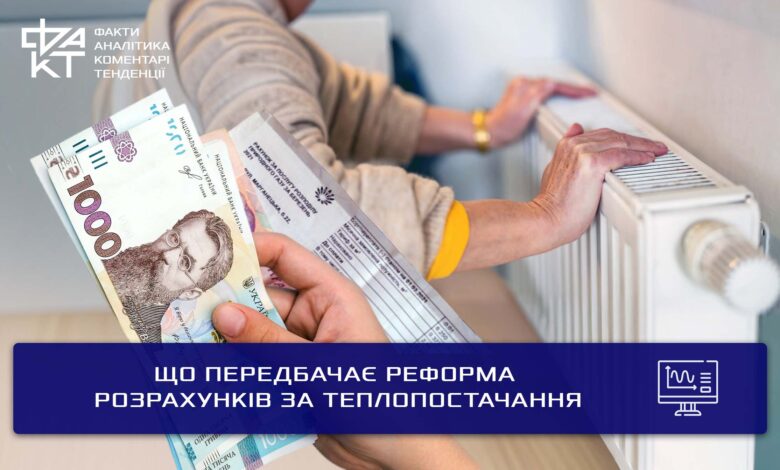
For most Ukrainian households, the heating bill remains the most opaque and conflicting expense item. For decades, the system has operated according to the logic of “loss sharing,” where the consumer actually paid for the inefficiency of heating networks and the errors of conditional standards. The draft law registered in the Verkhovna Rada promises a radical break with this practice, proposing a transition to calculations exclusively for actual consumption. Officials present their initiative as a civilized step towards EU standards, but behind the next declarations about the fairness of the charges lie great doubts and a number of systemic risks.
Payment reform: how Ukrainians are being transferred to personal responsibility
The proposed legislative initiative to reform the heating billing system looks like an attempt to finally dismantle the legacy of “collective responsibility” for energy losses. Instead of the usual blurry numbers on receipts, the bill proposes to introduce a mathematically based model, where each consumer becomes financially responsible exclusively for their own level of comfort and the technical condition of their home. This step should be a strategic maneuver towards European standards, where the transparency of calculations is higher than the convenience of administration for monopolists.
The transformation of the billing system is based on the principle of individualization, which radically changes the rules of the game for different categories of residents. Owners of apartments equipped with metering devices will finally be able to pay for actual gigacalories, ignoring any attempts by heating networks to impose those indicators that usually mask the inefficiency of the system. At the same time, for housing without meters, the mechanism will remain conservative, as charges will be made proportionally to the area, which will encourage residents to install equipment.
The resolution of the long-standing conflict around autonomous heating and common areas deserves special attention:
- Justice for “autonomists”: residents who have disconnected from centralized networks will no longer be hostages of general building costs, and their financial obligations will be limited only to heat transfer from transit risers that actually pass through their private property.
- Revision of entrances and basements: the bill eliminates the absurd practice of paying for “heating” cold corridors and dilapidated utility rooms where heating devices are absent or do not work.
- Integration of the service into the tariff: the costs of maintaining hot water supply systems are planned to be included directly in the cost of the service, which should simplify the structure of the payment and remove unnecessary manipulative lines.
Although current legislation prohibits increasing the cost of gas and heat for the period of war state and half a year after its completion, the real cost of utility bills continues to creep up relentlessly. Even if the base price per gigacalorie remains unchanged, the final amount in the check increases due to other components. For example, during 2024–2025, Ukrainians have already experienced a significant increase in the price of electricity (up to 4.32 UAH/kWh) and water supply in some regions, which indirectly affects the overall level of household expenses.
The hidden mechanism for the increase in cost is often hidden in the subscriber fee for network maintenance, which can be adjusted without violating the terms of the moratorium. According to officials, the new bill is precisely trying to streamline these “gray areas”, but for the consumer this often means redistribution of the load, rather than its real relief. In houses with critical communications and huge energy losses, the new rules may not bring the desired savings, since the physical condition of the networks remains the main factor in excess consumption.
According to the government, the introduction of energy-efficient calculations is an important part of Ukraine’s agreements with the IMF and the European Union, which insist on a gradual transition to market pricing. The current reform prepares the legal and psychological basis for the moment when the moratorium will be lifted. This is a transitional stage from a socially oriented model, where the state covers the difference in tariffs, to commercial relations, where the price of energy is determined by supply and demand.
The logic of the authors of the bill is to make the system resistant to future fluctuations. Those who have invested in insulation and metering will receive protection from excessive costs, while inefficient households will be forced to either modernize or pay the full price for their inaction. Given that the document is still under consideration in the Verkhovna Rada, its final version may undergo changes, but the vector for commercialization and individualization of responsibility remains an unchanged priority.
Individual accounting on paper: who really pays for network losses
The transformation of the heat supply billing system, which took place through the implementation of Resolution No. 830 and Methodology No. 315, turned individual meters from a tool for personal thrift into a legal decoration. Previously, an apartment owner who installed modern meters or simply left the apartment for a long time had the legal right to transfer zero readings to the heating network, but the modern logic of heat engineers considers such behavior as “energy parasitism”.
According to the absurd logic of the government, instead of direct resource consumption, the concept of a complete building heat circuit is taken into account, where each apartment, even with closed valves, supposedly inevitably receives heat through internal partitions and interfloor ceilings from neighbors who continue to heat their premises. The introduction of a minimum share of average consumption, which is usually about 4-5 Gcal/sq. m, actually legalizes the forced sale of the service, since the state proceeds from the presumption of the impossibility of completely cooling the apartment to the ambient temperature inside the residential building.
The distribution of the load for heating common areas and the operation of intra-building networks has become another lever of pressure on the wallets of residents, which often ignores the physical reality of specific objects. Although entrances, staircases and basements are formally common property for which all owners should be responsible, charges are often made according to regulatory formulas even in those buildings where radiators in the corridors have long been dismantled or have never functioned.
However, current legislative initiatives proposing to prohibit charging for such phantom services look like a banal attempt to extinguish social discontent. Technical arguments about the risk of fungus or structural damage due to “cold” apartments sound convincing only until we remember that the main burden of losses in heating networks simply falls on the shoulders of the most disciplined consumers.
A deep analysis of current energy policy indicates that behind the facade of “European standards” lies the desire to ensure a stable cash flow for chronically unprofitable utility companies. Since CHPs and heating networks are burdened with colossal debts and inefficient management, the introduction of mandatory minimum payments acts as a kind of insurance against energy efficiency of the population. It is not profitable for the monopolist for the consumer to save, because production capacities and bloated staffs require constant financial support, which is now guaranteed by the impossibility of obtaining a zero bill.
This approach makes any investment by an individual citizen in insulating their own apartment less profitable, since a “fair” distribution according to the method will still charge them for the expenses of their neighbors or losses in leaky mains. The minimum payment becomes a tax on property ownership, which does not depend on the actual amount of heat consumed.
At the same time, the complexity of mathematical calculation algorithms using numerous coefficients creates a “gray zone” where checking the correctness of the figures in the payment becomes inaccessible to the average citizen without professional legal and engineering training. The gradual rejection of state subsidies, which is required by international partners, is accompanied by the creation of mechanisms that maximally automate the collection of the full price of the resource, minimizing the chances of successfully challenging such actions in court.
The only effective safeguard against the arbitrariness of service providers and non-transparent methods remains the transition to collective housing management in the format of condominiums. Installing an individual heat point (ITP) with weather regulation can allow residents to move away from the role of passive tax objects and become active market actors who independently determine consumption limits for the entire building.
In such a system, the space for manipulation by management companies or monopolists is significantly narrowed, since the real data of commercial accounting becomes transparent to all owners. Only by taking responsibility for the technical condition of the entire building and rigorous auditing of each gigacalorie can the logic of a “shared boiler” be overcome, where individual savings become victims of systemic inefficiency.
Energy solidarity: how heat and costs are shared in Europe
The Western model of heat supply, which Ukrainian reformers often cite as a standard, is not actually monolithic. It is a complex compromise between property rights and collective responsibility for the integrity of the building. While Ukrainian society is only learning to perceive an apartment building as a holistic object, European practice has been based on the principle of “energy solidarity” for decades. Behind the facade of neat German or Danish facades lies a strict mathematical model, where no apartment is considered an autonomous island, and a “zero account” on the receipt is a legally impossible anachronism.
In the German Heizkostenverordnung system, the issue of “energy parasitism” is resolved through the unalternative division of the bill into two components. Local legislation prohibits charging solely based on meter readings, establishing a mandatory basic share of 30% to 50%, which the consumer pays simply for belonging to the building’s thermal circuit. This is an acknowledgement that heat migrates through interior partitions and ceilings, so a resident who has closed his valves is still “heated” at the expense of his neighbors. Thus, the German model turns individual thrift into a considered strategy, and not a way of enrichment at someone else’s expense.
Poland, which overcame the post-Soviet trauma of worn-out networks, went even further, introducing a complex system of adjustment coefficients (LAF). Polish legislators realized that the net market price per gigacalorie is unfair to residents of corner apartments or top floors, who objectively have to spend more resources to maintain the regulatory temperature. Instead of punishing the owner for the unfortunate location of the dwelling, the system redistributes the load so that residents of “warm” central apartments actually subsidize the thermal protection of the exterior walls of the house. This turns residents from competitors into partners interested in comprehensive insulation of the entire facade, and not just their own patch of wall.
The Scandinavian approach shifts the focus from social disputes to the plane of high technology and transparency. Here, centralized heating is perceived as a premium service, where the consumer pays for a stable microclimate. Thanks to the total implementation of intelligent Smart Metering systems, consumption data is read every hour without human intervention. This minimizes the scope for manipulation by suppliers, which is so often talked about in Ukraine. Moreover, in Scandinavia, the reverse logic applies, according to which, if the heating network operates inefficiently and loses energy to the ground, these losses cannot be hidden in citizens’ payments, since each house has a clear energy passport, deviation from which becomes the subject of lawsuits and fines for monopolists.
As we can see, the Western vector, which Ukraine strives for, emphasizes the obligation to maintain common property. However, Ukrainians have long been accustomed to the fact that if the government initiates another innovation, then behind beautiful promises, not an improvement is most often hidden, but another deterioration. If he does not comply with the requirements of the law and seeks only to replenish the state budget by any means, then it is hardly worth expecting fair prices for heating from the new law.