No free healthcare in Poland: what has changed for Ukrainian pensioners and unemployed refugees

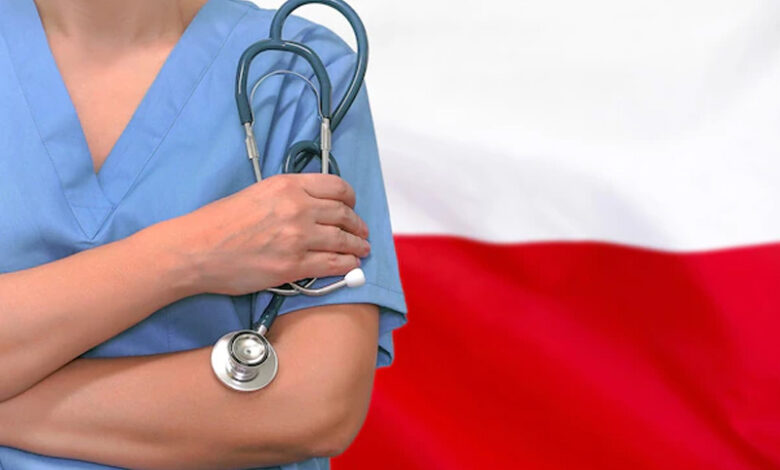
For Ukrainians living in Poland with temporary protection status, access to medicine has long become part of a broader issue of forced living conditions abroad, where not only safety, housing or work are crucial, but also the opportunity to receive treatment without the risk of being left alone with expenses that are unaffordable for many families. This issue is particularly acute for older people and those who, due to war, health or family circumstances, have been unable to find work, since they are the ones who are most dependent on state decisions that determine who retains the right to free health insurance and who loses it along with a sense of basic stability. This area examines the new rules that came into force in Poland on March 4.
What has changed for Ukrainians in Poland since March 4
Since March 4, Poland has changed the rules for access to free healthcare for Ukrainians with temporary protection status, and from now on such insurance is reserved only for certain vulnerable categories. However, pensioners and refugees who do not work and do not have a Polish pension may be left without it.
These are people of retirement age who live in Poland privately, but have never worked there and do not receive a Polish pension. This category is in the most difficult position, since an elderly person usually needs medical care more often than younger people, but under the new conditions may find themselves outside the scope of state insurance.
For pensioners, such a change has particularly tangible consequences, because the loss of free access to the healthcare system does not mean an abstract narrowing of rights, but the risk of being left without necessary consultations, examinations, treatment and support for chronic diseases. If for an able-bodied person the lack of insurance may still be a temporary problem related to finding a job or re-registration of status, then for older people who are not integrated into the Polish labor market, it looks like a much more serious complication.
While previously the protection status itself gave a broader sense of medical security, after the change in the rules the right to free services became much more precisely tied to the person’s specific social status, age, living conditions and life circumstances.
This change is important because it separates those who will continue to remain in the state health care system from those who will have to look for other ways to maintain access to treatment. For Ukrainians who were forced to find themselves in Poland and built their lives in conditions of prolonged uncertainty, such a change means revising the basic conditions of daily existence.
It is also noted that people who have worked in Poland for at least some time and receive even the minimum Polish pension also automatically have access to health insurance. This detail shows how important even a minimal connection with the Polish social security system becomes in the new conditions, because even a small pension status opens a person to access insurance that other Ukrainians of the same age would not have if they had not worked in the country.
In practical terms, this means that two people of retirement age living in Poland under similar living conditions may find themselves in a fundamentally different situation simply because one has a Polish pension and the other does not. That is why the new rules look to many not just as a clarification of the system, but as a division within the group of Ukrainian refugees themselves, where not only the need for medical care, but also the degree of inclusion in Polish social mechanisms plays a key role.
Who has retained the right to free medicine
After the introduction of the new rules, minors under 18, pregnant women, people living in collective accommodation centers, as well as victims of violence or torture will have free access to medical services. It is these categories that the Polish system continues to consider as requiring special protection, since they are people whose vulnerability is either obvious due to age or condition, or directly related to the violence and war trauma they have experienced.
This list clearly shows the logic of the new approach: the state leaves free healthcare not for all Ukrainians with temporary protection without exception, but for those groups that are considered the least protected and most dependent on support. This approach changes the very design of assistance, as a more universal rule gives way to a more selective model, where the right to free treatment is no longer perceived as an automatic consequence of the very fact of forced departure from Ukraine.
Why work has become the key criterion
The new rules clearly show that one of the main criteria for access to free medicine is a person’s participation in the Polish labor and social insurance system. If a Ukrainian is officially employed, health insurance is preserved, and it is valid subject to payment of contributions to the Polish social insurance system. This approach means that the right to treatment is increasingly linked not only to humanitarian status, but also to a person’s economic inclusion in the Polish system.
For many Ukrainians, this creates a clear divide between those who have official employment and those who, due to age, health or life circumstances, cannot rely on such a path. If earlier it was the forced nature of staying in Poland that was the main reason for accessing assistance, now it is becoming increasingly important whether a person participates in the contribution system, without which state insurance is no longer an obvious guarantee for them.
For those Ukrainians who do not work and do not have a Polish pension, the opportunities to obtain state insurance are significantly limited. One option is to take out private health insurance, another is to be covered by a working family member. However, neither of these options seems to be an equivalent replacement for the access to healthcare that one previously had through public insurance.
Private insurance comes with additional costs that can be prohibitive for many displaced people, especially those without a steady income, elderly refugees, or families already living on a tight budget. The option of including a family member in the insurance also depends on specific circumstances, because not everyone has an able-bodied relative who is already officially employed and can take them under their insurance coverage.
What does this change mean for Ukrainians in Poland
The revision of the rules for access to free medicine indicates that the stay of Ukrainians in Poland is increasingly moving from the plane of emergency humanitarian support to a system where social status, employment, and individual grounds for assistance are of decisive importance. This transition changes the very feeling of security, because for some people, life in the country ceases to be based on a general rule of support and increasingly depends on whether they meet specific criteria.
This change hits those who cannot adapt quickly to new conditions due to age or lack of work the hardest. While for an able-bodied person, health insurance can still be linked to official employment, for pensioners and unemployed adult refugees the new rules create a much tougher situation, in which access to treatment is no longer an obvious part of temporary protection, but becomes a matter of finding a separate solution.
At first glance, it may seem that this is just a change in the insurance system, but for people who find themselves abroad due to war, such solutions have a much broader meaning. Medicine in this case is related to money, the level of security, and how much a person can feel at least partially protected in a foreign country, where any illness without insurance quickly turns into a serious financial and psychological burden.