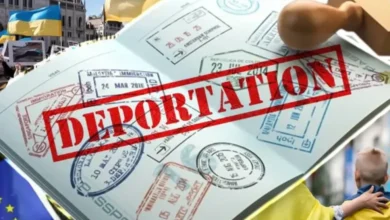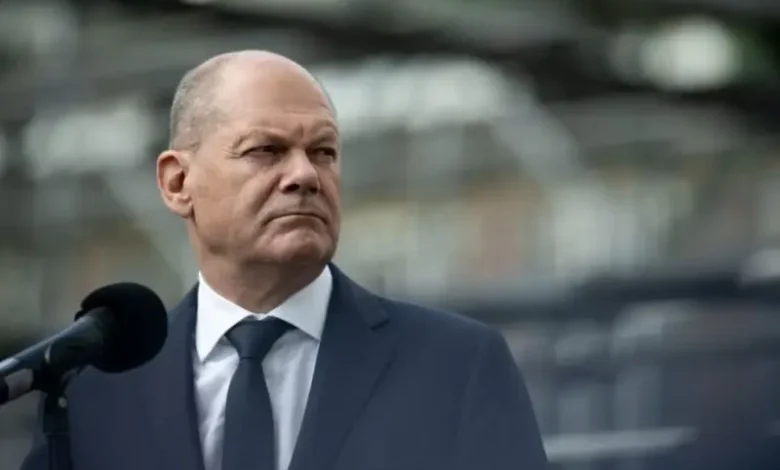
The war in Ukraine forced millions of people to seek refuge abroad, saving their lives and the lives of their loved ones. European countries, especially Germany and Poland, have become the main destinations for many Ukrainians, providing them with temporary protection, access to social services and financial support. However, over time, a certain fatigue from the long stay of refugees began to appear in European society. During his speech in the Bundestag, German Chancellor Olaf Scholz voiced a key thesis: Ukrainian refugees who remain without work should more actively integrate into the labor market or consider the possibility of returning to their homeland.
Call for employment or return home
During the government’s hearings in the Bundestag, Olaf Scholz said that too many Ukrainian refugees remain unemployed despite their long-term stay in Germany. The chancellor emphasized that Ukrainians need to be more actively involved in the country’s economic life.
“Too many have been here long enough, in fact, and now they need to finally start working.” – said Scholz, reports ntv.
He noted that after completing language courses and adaptation programs, Ukrainians must either find a job or return to their homeland. According to Scholz, the current government programs to stimulate employment have not given the desired results, which requires new approaches to solving this problem.
The idea of creating a Ukrainian agency in Germany and Poland
Scholz noted that he discussed in detail the issue of employment of Ukrainian refugees with the President of Ukraine Volodymyr Zelenskyi.
“He (Zelensky – ed.) informed me that he intends to create a Ukrainian agency in Germany and Poland that will help Ukrainians to either return to their homeland or get a job in Germany, so that we can jointly move in this direction.” – stressed the chancellor of Germany.
The purpose of this agency is to help Ukrainians find work or organize their return to Ukraine. Such an initiative is designed to create conditions for the active involvement of Ukrainians in the labor market or, at their request, to ensure a safe and organized process of repatriation.
Why is Germany raising this issue now?
Rising spending on social programs, particularly for refugees, is one of the factors influencing German policy. The country faced economic challenges that required a more efficient allocation of resources. Additionally, voices calling for a clearer integration of refugees or their return began to be heard in society.
In this context, Scholz’s statement reflects the sentiment of a section of German society that wants to see concrete results from refugee aid programs. This is a signal for Ukrainians that staying in Europe can no longer be perceived as a long-term prospect without active participation in the life of the country that received them. However, for the effective implementation of this approach, it is important to provide sufficient support – both in employment and in returning to the homeland. Cooperation between Ukraine and Germany in this matter may become the key to solving the complex challenges faced by the displaced.
Reaction of Ukrainians and challenges of integration
For many Ukrainian refugees, Sholtz’s statement came as a surprise. Some of the immigrants are still adapting to the new environment, overcoming the language barrier and looking for employment opportunities. Others remain in a state of uncertainty due to the unstable situation in Ukraine, which makes it difficult to make a decision about returning home. At the same time, Zelenskyi’s initiative to create an agency can be an important step to facilitate the adaptation of Ukrainians in Europe or their gradual return to Ukraine.
The issue of Ukrainian refugees remains complex and multifaceted. European countries are trying to find a balance between supporting those in need and ensuring efficient use of resources. For Ukrainians, this means that it is necessary to adapt to new realities, take an active part in the life of the communities that accepted them, or prepare to return home, if this becomes possible. In any case, the joint efforts of governments and communities can help find solutions that meet the interests of all parties.