Over a million people need evacuation: human rights activists call for creating decent conditions for citizens with limited mobility

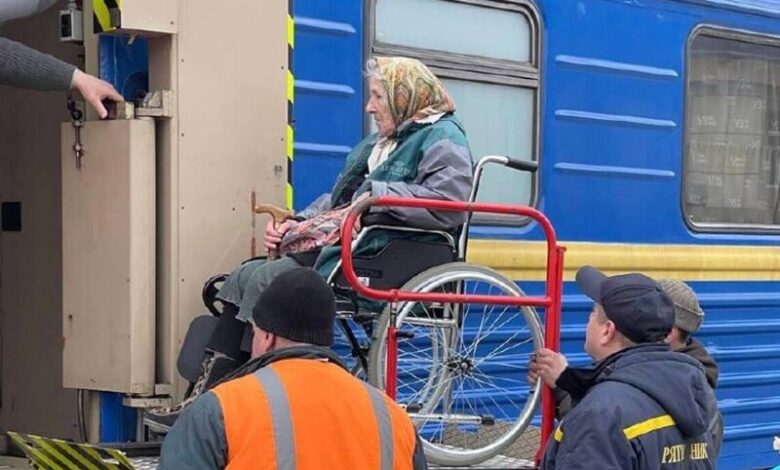
Due to the war in Ukraine, a significant part of the population has found itself in dangerous regions and needs to be evacuated to safer places. However, the temporary accommodation system does not provide adequate conditions for people who need constant care, among whom children and people with limited mobility are particularly vulnerable. The lack of clear procedures, the limited number of free places and unregulated periods of stay in stationary institutions create situations where people remain in unlivable conditions for a long time, which increases their physical and psychological stress.
Scale of evacuation and urgent needs of people
According to human rights organizations, more than a million people currently need to be transferred to safer regions of the country. The largest evacuation flows are observed in Donetsk and Dnipropetrovsk regions, where about 237,000 residents are awaiting transportation. Approximately 100,000 of them are children and people with limited mobility who need special conditions: affordable housing, constant social support, medical care and psychological support.
Human rights activists emphasize that existing temporary accommodation facilities, boarding schools and hospitals are not able to accommodate everyone. As of the end of 2025, only 147 free places remained, which demonstrates a large-scale gap between needs and available resources. The lack of procedures for regulated stay leads to the fact that displaced persons remain in temporary institutions for an indefinite period of time, which negatively affects the physical and psycho-emotional state, especially of children, for whom instability in the environment means an increased level of anxiety.
Human rights defenders’ appeal to the government
Human rights and public organizations have appealed to the government and international partners to guarantee safe evacuation and create decent living conditions for people in need of inpatient care, among whom children and people with limited mobility stand out in particular. According to experts, these are the categories of the population that are most vulnerable during displacement, as they need not only physical security, but also constant social and medical support, which the existing temporary facilities provide only partially or not fully.
Common position published the East SOS charity foundation, which emphasizes the need to create transitional solutions in the support system during war and mass evacuation. The statement details that such solutions should include the organization of supported living or residential care without interruption, so that people staying in temporary facilities have continuous access to necessary services, including medical care, nutrition, psychological support and social integration.
Human rights and civil society organizations emphasize that a comprehensive approach to resolving the problem of displacement is key. They call for the creation of mechanisms for crisis temporary accommodation, which include regular assessment of people’s needs and the identification of further forms of support, so that temporary facilities do not become long-term places of residence without social integration.
One of the central demands of human rights defenders is to ensure access to supported living and residential care for children and people with limited mobility. They insist that these services be recognized as socially significant and receive funding from the state budget, since the lives and safety of the most vulnerable categories of displaced persons depend on their availability.
Human rights activists warn that the lack of a systemic approach leads to specific negative consequences: children remain without access to medical care and education, citizens with limited mobility do not receive proper care, families are forced to live in crowded premises without conditions for a full life, and the psychological trauma of displaced persons is deepened due to prolonged stay in stressful conditions. According to human rights activists, without timely intervention, temporary problems turn into long-term social crises that require significant resources and comprehensive state and international support.
Human rights organizations offer a number of specific steps to improve the situation:
-
determining standards for temporary accommodation that ensure safety, accessibility, medical care and social support;
-
creating a centralized system for monitoring the occupancy of institutions and periods of stay of displaced persons;
-
state funding of inpatient care and supported living as socially significant services;
-
engagement of international partners to modernize institutions, organize safe evacuation, and develop integration programs in communities.
Implementation of these measures allows not only to guarantee the physical safety of displaced persons, but also to ensure social integration, reduce psychological trauma, and reduce the risk of violation of the rights of children and people with limited mobility.
The joint statement was joined by the charitable foundation “SOS East”, the ZMINA Human Rights Center, the NGO “Understanding the Crisis”, the CF “Stabilization Support Services”, the NGO “Donbas SOS”, the NGO “KRYMSOS”, the Crimean Human Rights Group, the Public Holding “GRUPA VPLIVU”, the CF “ROKADA” and the CF “Right to Protection”. Their joint position emphasizes the need for a comprehensive approach to organizing evacuation and creating conditions for the safe residence of the most vulnerable groups of the population.