People’s Deputy Yulia Yatsyk spoke about the scale of illegal border crossings of Ukraine during the war

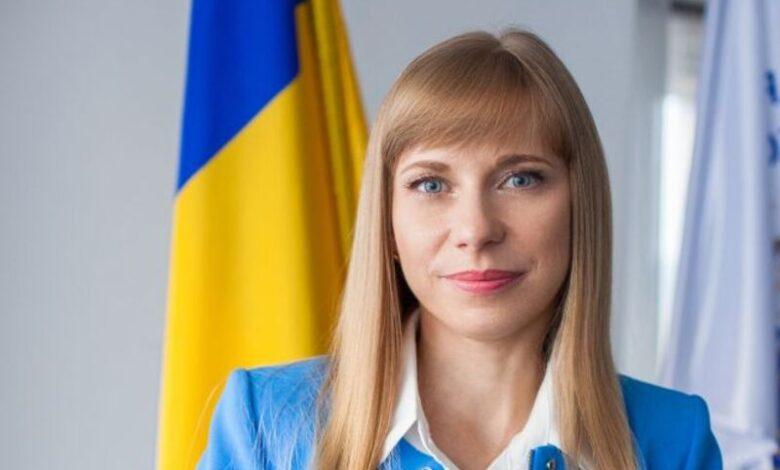
The full-scale war, now in its fourth year, has changed perceptions of duty, responsibility, fear and flight. She posed painful questions to society for which there are no simple answers: should every man fight? Does he have the right to escape if he can’t stand the pressure? What should the state do if there are tens of thousands of them? But while society is debating whether escape is justified in individual cases, there is another truth, harsh and dry: during the war, tens of thousands of men of draft age tried to cross the border without having the legal right to do so. The problem of evasion of service has become a mass social phenomenon, which is why the meeting of the Temporary Investigative Commission of the Verkhovna Rada, which took place on May 20, was dedicated to it. People’s deputy Yuliya Yatsik, one of the active participants of the commission, openly laid out the scale of what she calls “state-sanctioned organized flight.”
Yuliya Yatsyk said that key officials were present at the meeting: representatives of the State Border Service, the National Police, the Prosecutor General’s Office, the Security Service of Ukraine, the Ministry of Community and Territorial Development. The commission received consolidated data from all authorities dealing with the issue of illegal border crossing during martial law. And these figures are impressive not only in scale, but also in impunity.
As the people’s deputy reported, almost 30,000 men have been detained since the beginning of the full-scale war during attempts to cross the border illegally. Another 44,900 people were able to cross the border illegally, that is, they managed to avoid detention. They have been outside Ukraine for a long time. In total, there are more than 74,000 men of draft age who chose to flee instead of serving.
According to Yatsyk, more than 7,000 criminal proceedings were opened. But only slightly more than 400 of them ended in court verdicts. The rest of the cases are either closed, or “hanging”, or formally opened without further action. The deputy says directly: we are dealing not with isolated cases, but with a tacitly recognized way to avoid service – with corruption, falsifications, official support and indifference.
The People’s Deputy voiced the specific ways in which men leave the country. The most common of them is crossing the border using fake documents. These are false conclusions of military medical commissions about unfitness for service, and certificates of multiple children, which do not actually correspond to reality, and court decisions on child maintenance, issued on the basis of forged documents. Certificates of study abroad or rehabilitation are widely used – formally legal, but in practice compiled to cover escape.
The second scheme is to escape without passing border control. Through the “green” section of the border, bypassing the official checkpoints. In this case, we are talking about the illegal organization of routes, often with the participation of guides, for a monetary reward, sometimes with the involvement of law enforcement officers.
Another common practice is the use of passports of other countries, obtained legally or through sham marriages or citizenships of previous generations. There are also cases when men with Ukrainian passports left through the temporarily occupied territories, then through Russia, and thus ended up in third countries.
A separate array is the use of the “Path” system. It was created for drivers of humanitarian and medical transport. But it is widely used by those who want to escape. People leave the country as drivers, but do not return. And sometimes, as Yatsyk emphasized, the state and law enforcement agencies themselves send letters to the border service with a request to “facilitate” specific persons in crossing the border. And these are not individual decisions, but an official cover for evasion.
Yuliya Yatsyk emphasized:
“We are not just dealing with breaking the law. We are dealing with the substitution of concepts. Service at the front became a matter of lot, luck or connections. And this is the main threat — because the more evaders, the greater the burden on those who serve.”
In addition, the people’s deputy voiced the problems of the border crossing system during the war. The first and basic of them is the lack of a clear regulatory framework for border guards who make decisions regarding the right of a person to cross the state border. According to Yulia Yatsyk, there is no single approved list of documents that the border guard should demand from a citizen leaving Ukraine. The decision is actually made each time individually, subjectively, based on general norms and logic. This creates room for ambiguous interpretation, selectivity and, in some cases, abuse.
The second problem is the destruction of the humanitarian direction due to the restriction of access to the “Path” system for volunteers. As Yatsyk emphasized, after the closure of “Shlyah” there was a serious shortage of logistical opportunities for volunteers. This had a negative impact on providing the military with humanitarian aid, medicines, and equipment, because previously many volunteers delivered goods through this system. At the same time, there was no real control over the “Way” before, so the system became a tool for abuse, and its limitations – a blow to honest volunteers.
The third problem is the lack of a digital trail of documents in the border system. As the deputy emphasized, the DPSU electronic database does not store any copies or scans of documents on the basis of which border guards allow persons to cross the border. As a result, it is impossible to check the legality of a particular person’s departure retrospectively. Neither the court, nor the control bodies, nor the border guards themselves have the technical resources to check whether a person really had a document that granted the right to leave.
The fourth problem is the lack of an effective control mechanism for the return of persons who have left temporarily. According to Yatsyk, border guards do not record and monitor cases of non-return of persons who crossed the border with a clearly limited period of stay (for example, drivers, athletes, civil servants). Therefore, such persons do not return to Ukraine en masse, and the relevant law enforcement agencies do not receive information in time to react, open proceedings or search for violators.
The fifth problem is abuse by state and law enforcement agencies, which themselves initiate letters to the border service with a request to “facilitate” the crossing of the border by specific conscripts. According to Yulia Yatsyk, the State Government, military administrations, ministries, and other state institutions provide such letters without control, without proper legal justification and without checking the circumstances. This opens up a wide field for corruption, the formation of “white lists” and illegal facilitation of the departure of conscripts.
According to Jatsyk, the temporary investigative commission has already requested information about such letters in order to verify the scale of alleged abuses.