
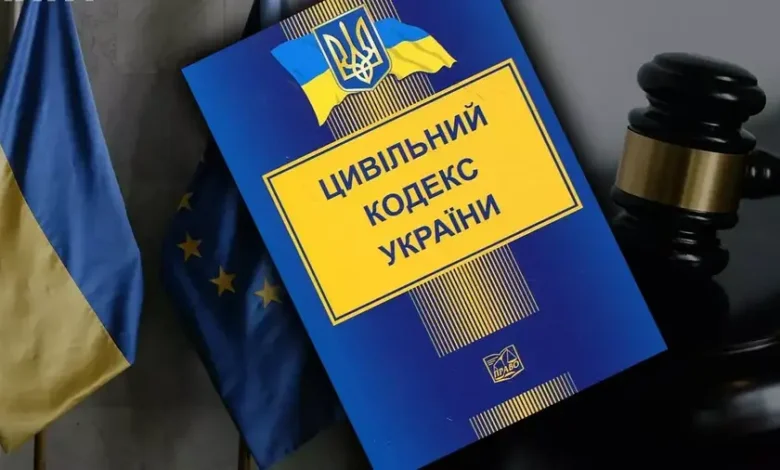
The Verkhovna Rada supported in the first reading the draft of the new Civil Code, which is supposed to update one of the key parts of Ukrainian legislation. The document concerns the private life of citizens, family relations, property rights, inheritance and other areas that people encounter in ordinary life situations. Despite the stated goal of modernizing civil law, the draft law caused a sharp reaction in society due to the provisions on the definition of family, the divorce procedure and the legal status of same-sex couples, so after the first reading, public attention focused on which norms would remain in the text until the final vote.
The Verkhovna Rada supported the new version of the Civil Code in the first reading
On April 28, the Verkhovna Rada adopted as a basis draft law No. 15150, which proposes a new version of the Civil Code of Ukraine. 254 people’s deputies voted for the document, after which it moved to the stage of preparation for the second reading.
The parliament explains that the purpose of the bill is to modernize civil law, which should correspond to modern private, property, inheritance and international relations. The authors of the document propose to structure the code in nine books, which should collect norms on personal rights, property, obligations, inheritance, family issues and international private law.
The first scandal surrounding the update of the Civil Code arose after the registration of bill No. 14394, which the Chairman of the Verkhovna Rada Ruslan Stefanchuk submitted on January 2, 2026. According to the authors, the 832-page document was prepared by 247 experts, and was supported by 138 people’s deputies, mainly from the “Servant of the People” faction.
The norm, which was interpreted as a possibility of lowering the marriageable age to 14 years, caused public outrage. After criticism, this provision was removed, and another bill was submitted for consideration — No. 15150, which the relevant committee called a revised version of previous developments.
Why there are still complaints about the new draft of the Civil Code
After the removal of the most resonant norm, the discussion around the document continued, as lawyers, human rights activists and some deputies saw risks in the provisions on family, divorce and the legal status of same-sex couples. The most questions were raised about how the draft defines a family, what mechanisms it offers for divorce and whether it leaves room for judicial recognition of de facto partnerships.
Deputy Inna Sovsun criticized the bill because of provisions that, in her opinion, return an outdated approach to family relations. She drew attention to the norm according to which the court can set a deadline for reconciliation during the dissolution of marriage, and if there are joint children, such a stage becomes mandatory.
A separate wave of criticism was caused by the provisions concerning the surname after divorce. Lawyers noted that according to the text of the draft, a husband can demand that his ex-wife return her pre-marital surname if he considers her behavior in marriage immoral or unworthy.
The draft law introduces the concept of common decency, which is associated with a system of moral norms and social ideas about acceptable behavior. Critics of the document fear that such wording may create space for different interpretations in courts, especially in cases where a person’s private life will be assessed through moral categories.
Lawyers draw attention to the fact that vague moral concepts in civil law can affect the protection of personal rights, family conflicts, reputational disputes, and issues of discrimination. Because of this, some experts are demanding that such provisions be clarified before the second reading.
Public organizations that protect the rights of the LGBT community criticize the draft because of provisions that may limit the opportunities of same-sex couples. According to the National LGBTI Consortium, the document contains discriminatory norms, since it will be impossible to recognize a same-sex couple as a family union even through a court.
Human rights activists point out that the norm on de facto family union is provided only for opposite-sex partners. Because of this, same-sex couples may lose legal instruments that are important in matters of property, inheritance, access to information about the partner’s health, cohabitation, and other life situations.
Public organizations also state that such a wording may contradict the European Convention on Human Rights, the practice of the European Court of Human Rights, and the EU’s requirements in the field of fundamental rights. In their position, the update of the code should take into account the legal recognition of same-sex couples, since this issue is already part of the European integration dialogue.
In the previous draft law, human rights activists also drew attention to the provision on the automatic recognition of marriage as invalid if one of the spouses has made a gender transition. Experts criticized this due to the lack of a clear definition of the moment of such a change, which could create risks for marriages concluded on legal grounds after updating documents.
Human rights organizations believe that such norms require very precise wording, since any uncertainty in this area can affect already formalized family relationships, property rights and legal status of a person.
The organizations “KyivPride” and “KharkivPride” called on the public to monitor the process of finalizing the draft law and support the amendments prepared by LGBTIQ+ organizations. Activists emphasize that the final version of the code must take into account the real situation of people living in partnerships without legal recognition.
Public figures also joined the criticism. Singer Melovin criticized the previous draft law No. 14394 in a video message, stating that its provisions could create problems in the areas of marriage, domestic violence, and alimony.
What Ruslan Stefanchuk explains
After public criticism, the Speaker of the Verkhovna Rada, Ruslan Stefanchuk, stated that draft law No. 15150 lacks provisions on allowing marriage from the age of 14. According to him, the document establishes the marriageable age at 16.
Stefanchuk also assured that the new text does not introduce a ban on divorce during the wife’s pregnancy or within a year after the birth of a child. He separately noted that the updated version does not contain provisions that could be interpreted as coercion to enter into marriage, as well as norms on strengthening the grounds for the removal of children.
Regarding engagements, the Speaker of the Parliament explained that the provision on the possibility of compensation for expenses and moral damage in the event of refusal of marriage is already contained in the current legislation. This norm is being transferred to the new code without changing the content.
According to Ruslan Stefanchuk, the provisions on children, parental rights and adoption in the draft were not adjusted. He also stated that the definition of marriage as a union between a man and a woman complies with the Constitution of Ukraine, therefore this norm remains in the text.
The Speaker of the Parliament explains the need for a new code by the fact that the current Civil Code was adopted in 2003, and during this time technologies, methods of communication and private relationships have changed. He gives an example of outdated norms on the secrecy of telegraphic messages and the lack of modern regulation of messengers, accounts and digital tools.
European context and requirements for Ukraine
In EU countries, approaches to family law differ, since this area falls under the competence of national governments. Some states allow same-sex marriages, including Spain, France, the Netherlands and Germany. Other countries have civil partnerships, including Sweden, Slovenia and Estonia, while in Poland, Bulgaria and Lithuania the law defines the union as between a man and a woman.
In 2025, the Court of Justice of the EU ruled that member states must recognise same-sex marriages concluded in other EU countries, even if such marriages do not exist in their own national legislation. For Ukraine, which is moving towards EU membership, this issue is relevant because of the requirements for respect for private and family life and the prohibition of discrimination.
The European Commission has stressed that Ukraine must fulfil its obligations under the “Fundamentals” negotiating cluster, as well as in the chapter on the judiciary and fundamental rights. These expectations include legal recognition of same-sex couples, so the discussion around the Civil Code is linked to the broader process of European integration.
What will happen next
After the first reading, draft law No. 15150 should be finalized for the second reading, during which deputies will be able to submit amendments to controversial provisions. The greatest attention, judging by the reaction of society, will be focused on the norms on family, divorce, de facto partnerships, common-law relationships and guarantees of non-discrimination.
Further work on the document will show which provisions will remain in the final text and which will be changed after criticism from lawyers, human rights activists and public organizations. For society, this process is important because of the direct impact of the new code on private life, and for the state – because of the need to combine the renewal of civil law with European standards and legal certainty.


