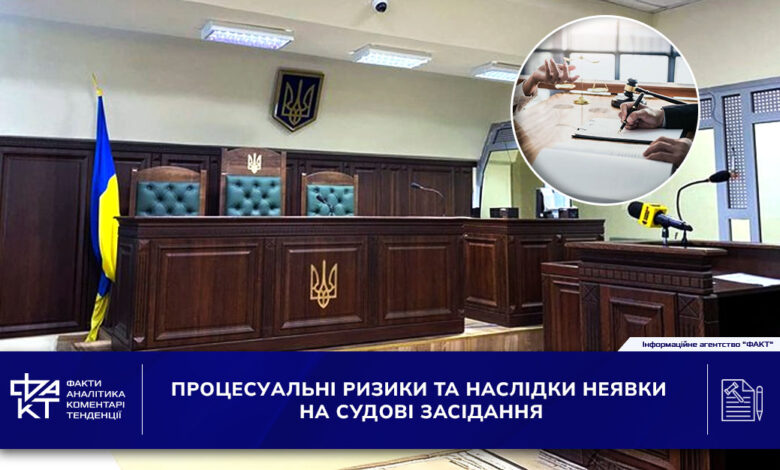
Citizens often mistakenly imagine the court as an “automatic mechanism” that issues a decision immediately after filing a claim. However, the legal process is a clearly regulated procedure where each step is of great importance. The court does not consider the case “according to documents”, but in the presence of disputed circumstances, evidence and participation of the parties. The absence of documents, technical errors, seizure of property or other obstacles can significantly affect the course of the proceedings. The legislation of Ukraine provides that the protection of violated rights is possible only within the framework of a specific process, and not “automatically”.
Lawyers of the law association “Repeshko and Partners” explained the nuances of participation in the legal process, as well as cases when personal presence at the hearing is truly critical. They explained that the “file documents and wait for a decision” approach in most cases does not work, and the participation strategy depends on the specific type of case: civil or administrative.
Quite often we encounter a superficial attitude of citizens to the pre-trial process as such. Many people believe that it is enough to file a claim with the court office, and after a couple of months the court will automatically issue a decision, and exactly what the citizen wants. Unfortunately, this is not how it works. Citizens go to court when there is a dispute, errors in the documents, missing documents, or other unexpected obstacles (for example, there is an arrest) and another body cannot issue the document. If everything is simple and indisputable, then the relevant body issues the desired document, but when everything is not so simple, the court deals with the case.
The Civil Procedure Code of Ukraine states that every person has the right, in accordance with the procedure established by this Code, to apply to court for protection of their violated, unrecognized or disputed rights, freedoms or legitimate interests. The same is provided for by the Code of Administrative Procedure (it is under its rules that a dispute with state authorities, such as, for example, the recalculation or assignment of a pension, is conducted). Please note that this is not about the automatic restoration of justice, but about a certain regulated process.
It should be noted that the main principle of judicial proceedings is the adversarial nature of the parties. In this case, the participants in the case have equal rights to exercise all procedural rights and obligations provided for by law.
Adversarial means that each party must prove the circumstances that are relevant to the case and to which it refers as the basis for its claims or objections, except for cases established by law. In addition, it is each party that bears the risk of consequences associated with the performance or failure to perform procedural actions.
The court does not simply consider cases based on documents, it manages the process, ensures that everything happens fairly and according to the rules, and ensures a balance between the parties. It helps the parties understand their rights and obligations, explains the consequences of their actions or inaction, and, if necessary, promotes the peaceful settlement of the dispute. In addition, the court monitors that no one abuses their rights and takes measures to ensure that the participants comply with their procedural obligations, while maintaining objectivity and impartiality in all decisions.
As we can see, the item “issues a decision in exchange for the documents provided” is missing from the legislative list. Therefore, the success of your case depends on how responsible you will be and how you will appear at the court session.
In certain cases, lawyers do not advise going to court, as it may sound unexpected. We are talking, for example, about the plaintiff in a divorce case. However, the fact is that in this case, along with the statement of claim, an application for consideration of the case without the participation of the plaintiff must be submitted to the court. Why is this done? Divorce always occurs, as the plaintiff insists on this, however, now there are cases when one of the spouses does not know where the other is and understands that he will not go to court. Therefore, in order not to waste the plaintiff’s time, an appropriate application is written, because if the defendant does not appear in court, the session must be postponed at least twice, and only then a decision on the case is made.
There are still cases of establishing the fact of death in the occupied territories, decisions on them are issued in a day or two if there is sufficient evidence, that is, a properly prepared package of documents. Currently, these are almost all categories of cases in which it is possible not to go to court.
Consequences of failure to appear in court in a civil case
Failure to appear at a court hearing by any participant in the case, provided that he has been duly notified of the date, time and place of this hearing, does not prevent the consideration of the case on the merits, except for cases specified in the CPC.
The court postpones the consideration of the case in the court hearing for the following reasons:
1) failure to appear at a court hearing by a participant in the case, in respect of whom there is no information about the delivery of a notification of the date, time and place of the court hearing to him;
2) the first failure to appear at a court hearing by a participant in the case, who has been notified of the date, time and place of the court hearing, if he has reported the reasons for failure to appear, which the court has recognized as valid;
3) the occurrence of technical problems that make it impossible for a person to participate in a court session via videoconference, except for cases when, in accordance with this Code, a court session may be held without the participation of such a person;
4) the need to request new evidence, in the event that a participant in the case has justified the impossibility of filing a corresponding motion within the framework of preparatory proceedings;
5) if the court finds it necessary for the party who filed an application for consideration of the case in its absence to give personal explanations. The plaintiff or defendant may be summoned for personal explanations even when their representatives are participating in the case.
If a participant in the case or his representative has been duly notified of the court session, the court shall consider the case in the absence of such a participant in the case in the event of:
1) failure to appear at the court session of a participant in the case (his representative) without good reason or without notification of the reasons for failure to appear;
2) repeated failure to appear at the court session of a participant in the case (his representative), except for the defendant, regardless of the reasons for failure to appear;
3) failure of the representative to appear at the court session, if the person he represents or another representative of the representative appeared at the court session;
4) failure of the participant in the case to appear at the court session, if his representative appeared, except for cases when the court recognized the appearance of the participant in the case as mandatory.
It should be noted that in the event of repeated failure to appear at the court session of the defendant, who has been duly notified, the court decides the case on the basis of the data or evidence available in it (renders a decision in absentia). As we see, this is not a desirable consequence of the consideration of the case for the defendant, because the plaintiff provides the court with exactly those documents that are beneficial to him and this is his right, which is confirmed by the same principle of adversarial proceedings. The plaintiff is not responsible for concealing any evidence or not providing it to the court. That is why participation in the case as a defendant is extremely important. The position “it will be resolved somehow, the truth is on my side” can lead to a rather unexpected court decision, the cancellation of which will require both time and money.
As for the plaintiff’s appearance, here too, everything is not so simple. In the event of the plaintiff’s repeated failure to appear at the court session without good reason or failure to notify him of the reasons for his absence, the court leaves the statement of claim without consideration, except if he has submitted an application for consideration of the case in his absence, and his failure to appear does not prevent the resolution of the dispute.
That is, if the plaintiff has submitted documents to the court and is waiting for a quick decision in his favor, he can expect only one thing – the court will return all the documents submitted by him without making any decision. The law provides for the exclusion of the plaintiff’s participation – if he has received an application for consideration of the case in his absence. However, we do not recommend writing such a statement to the court until the assistant judge or secretary tells you about it. After all, each judge has his own vision of the case being considered.
If there is an identical package of documents, one judge will make a positive decision, and another may say that in order to make a positive decision, a certain document must be attached to the case materials, and without it the court will refuse. Therefore, if the plaintiff misses this moment due to failure to appear in court, when the judge can suggest the absence of a certain document, the whole case will go nowhere. The judge may decide to summon the plaintiff to court regardless of the existing application from him, but in the current situation such a summons may either get lost or not reach the addressee at all.
Consequences of failure to appear in court under the Code of Administrative Procedure
In the case of failure to appear in court under the Code of Administrative Procedure, the matter is slightly different. This type of court case has its own difference in that it is more work with documents and authorities. The Code of Administrative Procedure of Ukraine provides that the failure to appear at a court session of any participant in the case, provided that he has been duly notified of the date, time and place of this session, does not prevent the consideration of the case on the merits, except for the cases specified in this Article.
The court shall postpone the consideration of the case in the court session within the time limit established by this Code for the following reasons:
1) failure to appear at a court session of a participant in the case, in respect of whom there is no information about the delivery to him of the notification of the date, time and place of the court session;
2) the first failure to appear at a court session of a participant in the case, who has been notified of the date, time and place of the court session, if he has reported the reasons for the failure to appear, which the court has recognized as valid;
3) the occurrence of technical problems that make it impossible for a person to participate in a court session via videoconference, except for cases when, in accordance with this Code, the court session may be held without the participation of such a person;
4) the need to request new evidence, in the event that the participant in the case has justified the impossibility of filing the relevant motion within the framework of the preparatory proceedings;
5) if the court finds it necessary for the party who filed the application for consideration of the case in its absence to give personal explanations.
The plaintiff or defendant may be summoned for personal explanations even when their representatives are participating in the case.
If the participant in the case or his representative was duly notified of the court session, the court shall consider the case in the absence of such a participant in the case in the event of:
1) failure to appear at the court session of the participant in the case (his representative) without good reason or without notification of the reasons for the failure to appear;
2) repeated failure to appear at the court session of the participant in the case (his representative), regardless of the reasons for the failure to appear;
3) failure of the representative to appear at the court session, if the person he represents or another representative of him appeared at the court session;
4) failure to appear at the court session of a party to the case, if his representative appeared, except for cases when the court recognized the appearance of the party to the case as mandatory.
In the event of repeated failure of a duly notified defendant to appear at the court session, the court shall decide the case on the basis of the evidence available in it.
At the request of a party and taking into account the circumstances of the case, the court may postpone its consideration in the event of the representative’s failure to appear at the court session, if the person he represents or another representative of the party appeared at the court session.
In the event of the plaintiff’s failure to appear at the court session without good reason or failure to notify him of the reasons for the failure to appear, if he has not submitted an application for consideration of the case in his absence, the court shall leave the statement of claim without consideration if the failure to appear prevents the consideration of the case. If the defendant insists on considering the case on its merits, the case shall be considered on the basis of the evidence available in it. This is the difference from civil proceedings where the plaintiff’s failure to appear means leaving the claim without consideration in any case. The provisions of this part shall apply to a plaintiff who is not a subject of public authority only in the event of repeated failure to appear.
If there are no obstacles to the consideration of the case in court, as defined above, but all participants in the case did not appear at the court session, although they were duly notified of the date, time and place of the trial, the court has the right to consider the case in written proceedings if there is no need to hear a witness or expert.
Please note that in the event of concluding an agreement with a lawyer, he will go to court instead of you. The court may decide to summon a party to court in the presence of a lawyer, as the court needs to obtain certain explanations from the party regarding the circumstances of the case, which can only be given personally by a citizen who is a participant in these disputed relations.
Therefore, we advise you to always carefully assess the need for personal participation in court together with a qualified lawyer. In most civil cases, the presence of the defendant is important, because failure to appear may lead to the adoption of a default judgment, which may not be in your favor. However, in certain administrative cases or if a complete package of documents is available, the hearing may be held without your presence. Therefore, before deciding whether to go to court, you should seek advice from a specialist who will take into account the type of case, the risks, and the specifics of the judge hearing your case.