“Political formulas do not work in isolation from the battlefield”: Andriy Biltsky spoke about the conditions of peace negotiations and the new defense architecture

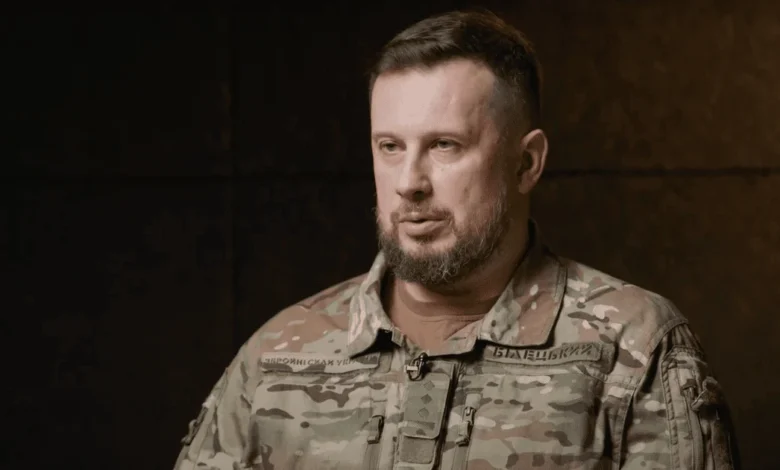
Ukrainian position in negotiations to end the war largely depends on real combat capability at the front, and not just on political declarations. The commander of the 3rd Army Corps, Brigadier General Andriy Biletsky revealed his own vision of the relationship between operational efficiency and the ability to negotiate peace. He argues that the success of diplomatic initiatives is determined by the extent to which Ukrainian forces are able to control the space and pace of battle, depriving the enemy of the ability to launch an offensive without critical losses. In conditions of such superiority, negotiations cease to be a gesture of goodwill and become an instrument of influence that can be used on one’s own terms.
According to his assessment, peace is not an autonomous political process, but a logical consequence of a change in the balance of power. When the Russian side loses the ability to conduct an effective offensive due to a shortage of resources or high losses, Ukraine’s strategic initiatives become dominant, and negotiations are possible without the risk of compromise to the detriment of defense capabilities.
Transformation of enemy tactics: “infiltration” as mass infiltration
Biletsky separately distinguishes between the classical concept of infiltration and its variant used by Russia. In the traditional sense, infiltration involves trained groups operating in poorly covered gaps in the defense, creating control and opening the way for a mechanized offensive. According to Russian tactics used at the front, this is a much less organized approach: small groups of two or three people infiltrate deep behind Ukrainian positions, counting on limited reserves for a counterattack.
Biletsky notes that such actions are accompanied by huge losses, and the source of personnel is mainly “asocial lower classes of Russia” and foreigners, some of whom come from Africa, India and Bangladesh. In practice, such groups often do not survive deep fighting: an example is the case when out of 120 people, only 17 remained alive after four days in the rear, before they even reached the front lines.
Ukraine’s countermeasures: depth of observation and mobile reserves
According to Biletsky, countering mass infiltration into the rear depends on two key elements. The first is to create an echeloned observation and attack system to a depth of up to 20–25 km, which includes UAVs, ground robotic complexes, electronic warfare, sensors, and radar. The second aspect is the presence of mobile trained reserves capable of quickly destroying detected enemy groups before they receive logistical or artillery support.
Biletsky notes that thanks to these methods, the 3rd Army Corps effectively controls the territory in the Lymansky and Borovsky directions, where three armies of Russian groups are operating against it. Small “cells” of infiltration at 500 m are destroyed within a few days, which ensures the stability of the defense and allows for more effective use of artillery and mortar resources.
In addition, Biletsky emphasizes that the presence of controlled enemy cells behind creates risks for the infantry, since defense resources have to be pulled back. Control over “spots” allows not only to optimize the distribution of forces, but also to increase the overall stability of positions. He gives the example of Lyman, where, despite predictions of the city’s rapid fall, the corps retains control over settlements, and the Russian side was unable to fully occupy even part of the Luhansk region.
The military notes that there can never be too many resources, especially with regard to ground robotic complexes and UAVs. Despite the shortages of these means, he assesses the standard ammunition as sufficient to carry out tasks without catastrophic consequences. The main problems are related to the lack of modern technological surveillance systems and the limited number of mobile reserves that allow for the rapid elimination of small enemy groups in the rear.
Strategic deadlock as a prerequisite for negotiations
In the logic outlined by the corps commander, negotiations are possible only if there is a strategic deadlock for one of the parties, because it is the inability to achieve an acceptable result by military means that forces the use of political instruments. If the advance is blocked systematically, if losses become unacceptable, and the pace of the offensive breaks down even on the approaches to the forward positions, the war enters a phase of exhaustion, where further escalation does not yield operational gains.
In this sense, Biletsky emphasizes that defense must transform from a reaction into an instrument of influence. It is about creating such a front configuration in which the enemy cannot accumulate forces for a large-scale breakthrough, and any attempt at maneuver is recorded and destroyed even at the preparation stage. It is under such conditions that negotiations do not look like a concession, but become the result of a change in the balance of capabilities.
Control in depth as a new defense architecture
Describing the principles of building defense, the corps commander actually speaks of a multilayered control system, where observation, detection, and destruction do not exist separately, but form a single network. In the absence of observation depth, the enemy gets a chance to accumulate small groups in the “gray zone”, gradually expanding its presence, while the presence of continuous monitoring allows for the detection of movement before it becomes a threat to the front line.
The depth of 20–25 kilometers in question means the ability to control not only the immediate line of contact, but also approaches, logistics, and routes of advance. This model reduces dependence on the number of infantry, as some of the functions are taken over by technological means. At the same time, it places increased demands on coordination, speed of decision-making, and the ability of reserves to act autonomously, without waiting for lengthy approvals.
Lyman and Boriv directions in the general configuration of the front
As Biletsky notes, the significant length of the area held by the 3rd Army Corps creates a special responsibility for the stability of the front. The presence of three Russian armies in the Lyman and Boriv directions creates constant pressure, which requires not only defensive actions, but also systematic control over internal threats associated with infiltration.
From the words of the military, it follows that the depth of infiltration, which previously reached several kilometers, has gradually been reduced to local foci, which are eliminated within a few days. Such dynamics indicate a restructuring of the response system and improved coordination between units. The example of Lyman, which retains control despite previous predictions of a possible collapse, is presented in this context as an illustration of the fact that the stability of the front depends on the ability to close “spots” in the rear faster than they turn into full-fledged threats.
The enemy’s human resources and the limits of their use
Evaluating Russian tactics, Biletsky draws attention to the nature of the personnel of the units carrying out infiltration and the high level of losses that accompany such actions. The massive use of small groups without sufficient support leads to significant depletion of personnel, but the tactic continues to be used if there is a reserve of people.
The example he gave of a unit that lost the vast majority of its personnel over the course of several days demonstrates that the focus is on quantitative resources, not on preserving trained personnel. This approach may provide a short-term effect in the form of penetration into the depths, but does not guarantee long-term holding of positions without significant losses.
The technological dimension of war and supply limitations
Despite assessing the sufficiency of standard ammunition, the corps commander emphasizes that it is modern technological means that remain in the area of greatest shortage. Unmanned systems of various types, ground-based robotic complexes, electronic warfare means and sensor platforms determine the quality of space control, and their shortage limits the possibilities of expanding the depth of observation.
In view of this, strikes on energy infrastructure and production facilities associated with the manufacture of such systems are seen as an attempt to influence the technological component of defense. War in this dimension takes on the character of a struggle for the ability to see, hear and react faster than the enemy.
Summing up his own position, Biletskyi actually reduces the possibility of peace to the issue of the ability to change the operational balance. According to his logic, only a sustainable advantage in space control, the preservation of key areas and blocking the enemy’s offensive capabilities create the basis for negotiations in which Ukraine will not find itself in a position of forced concessions.