A full-scale war is not just a front and artillery, but a system of decisions that daily affects how many people survive, how many positions can be held, and whether the country will survive in general. In such conditions, any illusions, political manipulations or populist efforts to be “pleasing” for society can have lethal consequences. When the price of decisions is human life, procrastination, fabrications and attempts to “get around the pain” turn from politics into a crime.
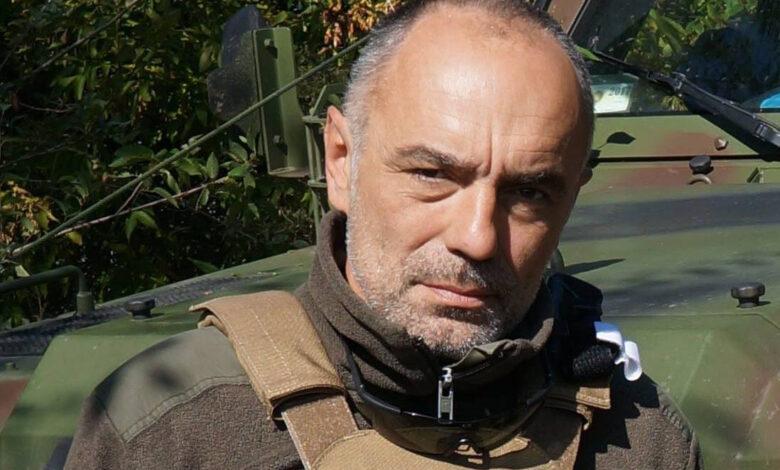
That is why officers, volunteers and engineers, who are not in the conditional rear, but are directly involved in the defense, emphasize: in the war for survival, models built on populism do not work. Yes believes and Yuriy Kasyanov — officer of the Armed Forces, radio engineer, specialist in aerial reconnaissance, founder of the “Matrix-UAV” research and development bureau. His approach is a systemic vision through the prism of historical analogies, technological thinking and sober analysis. He consistently opposes populism as an approach to defense policy, believing that trying to balance military necessity with public convenience only complicates the situation.
Kasyanov believes that one of the key problems of the Ukrainian attitude to the war is that many perceive it as something unprecedented. Such ideas provoke efforts to invent a “Ukrainian bicycle” — to create specific Ukrainian models of mobilization, defense industry, and air defense. On the other hand, as Kasyanov emphasizes, all this happened a long time ago – and the mechanisms have existed for a long time.
He reminds that back in the First World War, countries were faced with the same problems as today – a lack of resources, a drop in motivation, and a shortage of volunteers. As an example, he cites the experience of Great Britain: in 1914-1915, a wave of patriotism caused mass voluntary mobilization – 500,000 Britons signed up for the army, although only 100,000 were needed. But later on, the number of volunteers became less and less – as it is now in Ukraine – and the government was forced to introduce compulsory military service.
The expert explains that in January 1916 Great Britain introduced general conscription. First, unmarried men aged 18 to 41 were mobilized, and later, married men as well. The age was raised to 50 years. He compares this with the Ukrainian framework of 25-60 years and points to the importance of a precise, balanced approach.
The Armed Forces officer also draws attention to the resistance to mobilization even in countries with stable democratic traditions. In April 1916, 200,000 protestors gathered in Trafalgar Square in the center of London – evaders and members of their families. But despite mass actions, state policy has not changed. It was almost impossible to deviate from the draft, and mobilization continued until 1920. During this time, five million people passed through the British army, of which 2.5 million were conscripted.
Kasyanov draws attention to the fact that, in general, much fewer people are mobilized in Ukraine. According to his estimates, about 900,000 people died during the full-scale war. By comparison, Britain raised five million soldiers in a few years with a much smaller population. He emphasizes: these data should not be taken as calls for numerical pursuit, but as an example of real military mobilization capacity, if it is supported by political will.
Turning to the Second World War, Kasyanov points out that already in May 1939, Britain began mobilization again – even before active hostilities. Initially, men aged 20–22 were recruited as the most physically fit. After the German attack on Poland, all men aged 18–41 were mobilized. In three months, one and a half million people out of a population of 47 million enlisted in the army, not counting the colonies.
Kasyanov especially focuses on the years 1942–1943. It was then that Britain began to draft not only men under the age of 51, but also women — unmarried, without children under the age of 15. From 1943, the mobilized were sent not only to the army, but also to mines, to production – wherever there was a critical shortage of personnel.
In just six years, 3.5 million people passed through the British army, of which 383,700 died, that is, about one in ten.
“All wars are always immoral, and violent mobilization is even more so. However, when the choice is small – either mobilization or occupation, morality recedes into the background, and one should simply do as others have done in world history, and not reinvent our Ukrainian bicycle and not try to please everyone.” – summarizes the expert.