
Private military companies in the war with Russia: squads of oligarchs or necessity? (part 1)

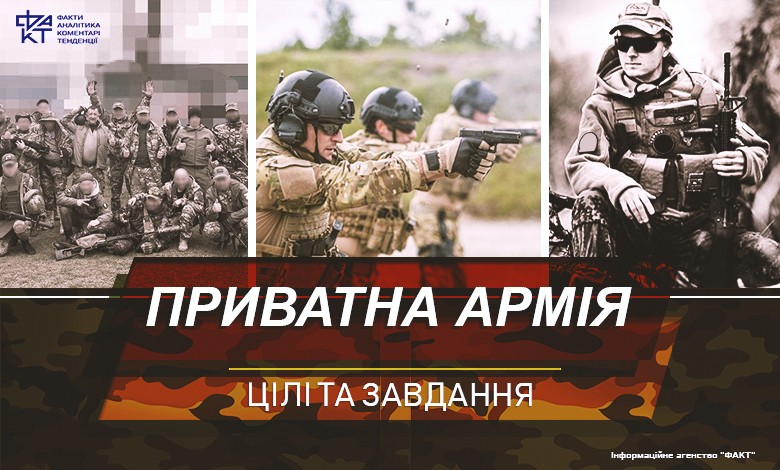
In the course of the Russian-Ukrainian war, the topic of private military companies and their potential role was repeatedly discussed, especially during the period of Prigozhin’s military putsch. However, there are so many lies and conjectures mixed in that it is necessary to first thoroughly understand the history, tasks and goals of private military companies before considering their role in our war.
First a bit of history. However, before proceeding directly to historical experience, it is necessary to note several issues of the methodology of studying this experience. The fact is that any fact of history is directly related to the context, and they cannot be considered separately. There are two main approaches to history. The first approach considers the history of all nations and all countries to be equally valuable. All this sounds very beautiful, but the problem is that then it becomes unclear why we still do not build pyramids and mummify our dead? Or, for example, why do we still not make human sacrifices and tear out the hearts of those on whom the lot fell? The second approach to history starts from the fact that all today’s civilization on Earth is primarily a consequence of the civilization of the Christian European West. It was here that political pluralism, the separation of church from society, representative democracy, and the concept of human freedom were born.
In military affairs, the difference between the tradition of the West and the East, or, respectively, the North and the South, lay in the principles of the organization of military formations. The East has always been built solely on the armies of rulers: only the supreme head of state could dispose of the armed forces. Of course, he could assign someone to perform these functions, but every military campaign was an exercise of the emperor’s will. However, there were exceptions here as well. It is undisputed that, for example, Genghis Khan’s army clearly used some elements of the PMK strategy.
The situation was completely different in the West. The tradition of private military companies that solved their personal tasks was born here very early. Sometimes they received the approval of the supreme authority, sometimes not. This is one of the biggest differences between the civilization of the West and the East. In fact, we can talk about the first PMVs in the history of mankind using the example of Greek mercenary units, which were widely used in Ancient Egypt during the New Kingdom period and the Persian Empire. The ancient Greek PMCs of those years were actively used in the power struggle in the late period of the Persian Empire, numerous sources have even been preserved about this – the ancient Greeks had already learned to write memoirs. These private military units were well organized and armed, few could resist them in the East. They always relied only on themselves and were ready even for the fact that they could be betrayed. A similar story is described in one source and probably became the basis of a famous book by the famous fantasy author Andre Norton. The heyday of the Roman Empire stopped the development of PMC, although, for example, the army of the famous Hannibal was also built according to the principles of PMC. However, the defeat of Carthage in the Punic Wars led to the actual end of the mass use of PVC.
What is the uniqueness of the PMC from the example of the history of the wars of the ancient world?
Even then, two main approaches to the formation of the armed forces appeared. The first is the Eastern approach, or hierarchical. Although the hierarchical structure of social management, as a mass phenomenon, appeared only in the 19th century, in fact, in army structures, it happened at the dawn of the history of civilizations. Such an army is strong because of its leader (ruler), who only requires his subordinates to carry out his orders. His confidants – officers-officials convey the decision of the commander of the soldiers down the chain. The soldier’s task is to carry out the order that was given to him. Of course, the personal qualities of the soldier are fundamentally important for the outcome of the battle, however, in general, such an army is able to use poorly trained soldiers, whose task is only to perform what is assigned to them. In the East, the vast majority of the armies of agricultural empires were organized in this way.
The second option requires a completely different type of soldier. It relies on professional and experienced soldiers and officers capable of acting on their own initiative. Such armies arise in two cases: they are either armies of nomads, such as Genghis Khan, or armies of a large number of small states, where well-trained groups of experienced professional soldiers are formed. Usually in the ancient world, such armies had their own unique weapons that gave them a tangible advantage over the enemy. Like Mongolian onions for Genghis Khan, or hoplite weapons for Greek mercenaries.
In order for an army built according to the second type to turn into a PMC, it is necessary to have clear ownership structures in society. Ancient Greek PMCs arose because fully civilized contracts were already concluded in Greek polises, and the hiring of Greek soldiers by Persian or Egyptian military commanders was a typical example of contractual relations. However, in the ancient world, all these were only isolated exceptions. Everything changed, as in Europe, during the Renaissance, Christian states were formed, built on the principles of private property. The peculiarity of these countries was the presence of developed legal relations, the existence of civil society and extremely weak government structures. The expansion of these states was possible only through private initiative. Except for France during the empire period – the reign of the Sun King. He tried to solve the task of expansion, in particular, with the hands and officials. In fact, this attempt failed. But the private initiative turned out to be very successful.
Similar private military campaigns were built according to the following scheme: groups of investors, usually large or medium-sized merchants, were united for a trading expedition, which had to be carried out in potentially dangerous conditions. An example of such trade and military expeditions was, for example, the mission of English merchants to the court of Ivan the Terrible.
In the cities of the Hanseatic League, England, in France, Italy, trade and military enterprises appear, taking into account which the institute of privateering was created. This phenomenon especially flourished with the improvement of firearms and the conquest of the Americas. A privateer was a captain who received an official license from one of the European monarchs to participate in military operations on the side of this monarch. The privateer participated in military operations on his ship, and at his own expense. In payment for his “work”, he had the right to use seized property with the mandatory deduction of a part of his production from the crown. A privateer was officially considered not a bandit, not a pirate, not a robber, but a legal royal captain who fought on self-support terms. The king did not pay the captain anything. On the contrary, the privateer had to deduct a share of the booty from the crown. Not a small share, I must say. That is, the privateer officially received a contract with the government of the warring country, in that he is not a pirate, but a private contractor who organizes military operations in the interests and by order of the supreme power of the country. Not only that, but a privateer’s license is also a trade agreement on the distribution of production.
A typical example of the difference between a privateer and a warship of the government at the time: the distribution of the spoils. On warships, the booty was divided according to the status of the sailor: the main share went to the captain of the ship, then to the officers of the ship, and only a small part to all the sailors. On a privateer, the distribution was completely different: a part of the booty went, of course, to the flag of the privateer – the government that issued the license, and in the future the division of the booty was almost equal – the captain could receive two or three shares of one sailor, but no more. Nothing to do with the distribution of spoils in royal fleets. In addition, for a warship, the booty was only the ship itself: in the event of the capture of enemy ships, the British Government bought back these captured enemy ships at fixed rates. If they were merchant ships, the government also bought their cargo, which was also included in the total income of the ship’s crew. However, the redemption price was, of course, convenient for the treasury of the crown. But the privateers themselves were engaged in the sale of their booty, and the prices were, of course, different from those set by crown officials.
Another variant of the PVC of that time were companies that united traders to work in remote areas where it was necessary to have military cover. These were usually monopolies to which the governments of England, Holland, France and a number of other countries granted exclusive rights to these territories. That is, trading companies had their own private armed forces. The most famous example is the English East India Company, which had its own soldiers, officers, cavalry, and guns. And, by the way, they had the same uniform as the Royal British Army. Although it was a private army and it was the company that established all the rules for its operation.
It must be said that even the Muscovy kingdom – Muscovy used these methods, although, in general, Muscovy was organized according to the principles of eastern despotism. In the European part of the country, a purely eastern division of the population into “draft” and “servile” (according to the principles of the Horde) prevailed, as it should in a despotism. Here, the grand dukes, and then the tsars, did not allow the slightest self-activity in the field of armed forces. But in the east of Muscovy, the colonization of Siberia and the Far East is taking place precisely on the principles of a private military company – by private detachments of industrialists and Cossacks. A typical example is the story of Yermak. The famous development of the Wild West of the USA in the second half of the 19th century was also actually carried out by private military companies. At the head of the security of the settler caravans were usually well-trained groups of professionals who helped and protected the settlers in the Indian territories.
Another example of such small private military companies were “bounty hunters”. They were professional shooters, they were paid money for detaining or killing officially recognized criminals. The event is, of course, extraordinary, in fact, violating the US Constitution, but to fight rampant crime in the Wild West, “bounty hunters” turned out to be extremely effective.
What is the reason for using this form of organization of the armed forces? Efficiency! Private military companies were far more efficient than government entities. They had a very high efficiency. In fact, until the 20th century, European government armies operated only in the European theater of military operations, and only partially on the American continent. But even here the principles of PMC remained very important. For example, the main opponent of Napoleon was, as is known, Arthur Wellesley, the 1st Duke of Wellington. Undoubtedly, his talent as a commander was very important, but Wellington’s strength was, above all, in his army, built largely on the principles of the PMC.
The actual end of that period of development of private military companies in the West was the First World War. Actually, during this war, a modern mass army emerged, with a system of mobilization and a clear hierarchy of power. All spontaneity and initiative were completely eliminated from this area. From the point of view of those years, the armed forces could only be state, and built according to a rigid hierarchical type. This was the result of a long positional war.
The First World War demanded such a frantic tension of forces, such terrible sacrifices that it fundamentally changed the entire world system of the Western countries. Until 1914, even the “most bureaucratic” countries of those years, such as the German Empire or the Russian Empire, had, in fact, little centralization of power. Outside the capitals, the imperial bureaucracy played an extremely small role. Accordingly, the armies were built according to the principles of actual self-government. There was a very large role of officers’ meetings, caste officers’ courts, officers’ honor, etc. The terrible “anvil of death” changed the entire course of events, and as a result of the war, the bureaucracy – the main winner of the First World War – was victorious in all European countries.
The role of initiative from below and professional skill, against the background of military-technical progress, seemed unimportant. The main strength of the army is proper instructions, statutes – all that is necessary to transform a mobilized person into a soldier of a mass army. The role of generals increased sharply, and the role of officer honor, officer courts, and caste requirements for officers lost importance. The long positional war, with its frenzied shelling, its deadly machine-gun attacks, its mass gas murders, seemed to have simply broken the army’s caste system.
Read more about PVC in the following article.
Leonid Shtekel


