
Register of citizens’ accounts: the first step towards digital transparency or a new tool for surveillance? (continued)

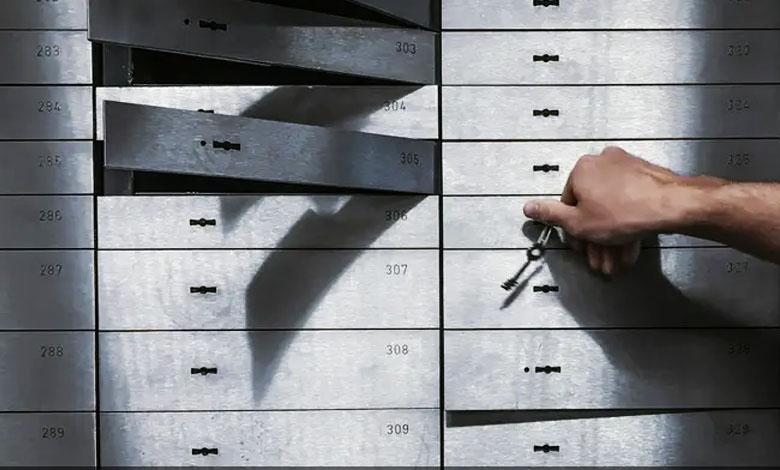
IA “FAKT” started talking about the fact that the Cabinet of Ministers has approved a draft law on the creation of a register of bank accounts and personal safes, which provides for the automatic transfer by banks to the tax authorities of the opening or closing of an account, without data on the amount or movement of funds. The goal is adaptation to EU standards and SEPA.
However, it is currently unclear who will have access to the data and how privacy will be protected. There is a risk of abuse, as through electronic interaction the registry can become accessible to law enforcement agencies, and technical security guarantees and liability for leaks are not detailed.
The government also plans to create a register of real owners of companies and trusts, determine the status of so-called “whistleblowers” and update sanctions for hiding beneficiaries. The initiative is billed as anti-corruption, but critics warn that without transparent access regulations and independent audits, it could turn into a tool of control and pressure rather than transparency.
When the government looks into your wallet: risks for taxpayers in the light of the new bank account register
Now it’s tax time has the right to deduct money from bank accounts without a court order, if a person has declared taxes himself, but has not paid them within 90 days after the due date. In all other cases, in particular, to block an account, a court decision is required.
When the tax office has more information about the accounts of citizens and companies, it will be able to more easily find those who do not pay taxes. This means that the number of checks can grow up. Already after the resumption of inspections in 2023, there were many more such cases.
Due to increased controls, many people may start to worry that their financial data will not be protected. This can reduce trust in banks — and people will start keeping money “under the pillow” instead of in banks. The study showed that the tax service completely trust less than 8% of people, and almost half do not trust at all.
Who will control the control
At the moment, it is not clear what the key players think about the idea of creating the Register: banks, the National Bank, deputies, business associations and the ombudsman for the protection of personal data.
So far, there are no official statements to show that this initiative is truly agreed with all stakeholders. Banks and NBU usually perform for transparency, but only when there are clear rules of the game — who has access to people’s financial data and when. They repeatedly emphasized: no decisions can be made without security and confidentiality guarantees.
Deputies of the financial committee of the Verkhovna Rada usually support the fight against shadow money, but they themselves admit that too much power in the hands of fiscal officials can turn into abuse. But business representatives — the European Business Association, SUP, APU — are wary of draft laws that could give the tax office even more levers of pressure. Their main fear is unpredictability and the risk of “raids” on businesses under the pretext of “struggle for transparency”.
Finally, there appears to be a disturbing silence from the Ombudsman and the institutions responsible for the protection of personal data. According to European standards, any interference in the private life of citizens must be thoroughly justified, agreed with human rights defenders and understood by society.
Otherwise, the risk is obvious: people may lose trust in banks, move into a cash “shadow” and further distance themselves from the state. If the goal is to build a civilized financial system, then there must be not only strict control, but also the responsibility of those who control. And before opening Pandora’s box, it is worth asking: is the state ready for the challenges it creates?
Will there be a transition period and when will the system work
The government promised that the Unified register of bank accounts will work until the middle of 2027. First, a special law must be passed, then the software must be developed, tested, and later officially launched.
It will be created a special working group of representatives of the tax department, the Ministry of Statistics, the National Bank of Ukraine and other bodies. They should develop clear instructions for banks: what exactly to transfer to the register and how it should work technically.
So far, the draft law does not provide for banks to inform people about the transfer of their data to the register. But since it is about personal data, such transparency is important: both the public and human rights defenders can demand it.
That is, the new system will not appear tomorrow – it is a process for several years. But it is already important to discuss how it will work, who will have access to the data and whether ordinary bank customers will know about it.
Who are whistleblowers and what can they change?
Imagine that you work in a company or government institution and you see that the real owner of the business is being hidden there or “gray” operations are being carried out. You report it — and thus become a whistleblower. But not every person who saw something and wrote a post on Facebook will receive official status. The law requires several conditions: you must know the information from the inside – from work or duties, and have a reasonable belief that it is true. This is clear said in the materials of the NAZK and judicial authorities.
A person who officially reports corruption or concealment of beneficiaries, has right to privacy, protection from dismissal or harassment – employer does not have the right to fire or punish you for telling the truth, free legal aid in case of pressure or lawsuits. And also a reward, if the state returns the money thanks to you, you can pay out up to 10% of the amount, but not more than three thousand minimum wages.
Whistleblowers can become key heroes when it comes to exposing hidden beneficiaries: they are the ones who can launch anti-corruption investigations and expose shadow ownership. But in order for people not to be afraid to report such things, they need real support, not just a law “on paper”.
If the state really wants to eradicate “blind spots” in the financial system, it should not only introduce registries, but also support those who dare to tell the truth. And here every provision on the protection of whistleblowers is not just a formality, but a guarantee that justice will not turn against the one who seeks it.
How to protect your bank details if something goes wrong
When the Unified Register of Bank Accounts becomes operational in Ukraine, the question naturally arises: what will happen if someone illegally uses my data? Will I know who viewed my accounts? Can I appeal something?
Yes, you can. Law of Ukraine “On Protection of Personal Data” guarantees you have these rights. And although there are no separate instructions for the registry itself, the main protection mechanisms have already been prescribed. You have the right to know exactly what personal data is stored about you, who is processing it, for what purpose and to whom else this data may have been transferred.
If you suspectedthat your data was used illegally (for example, the tax office gained access without reason or was transferred to the wrong person), you can submit a written request to the institution asking for an explanation or to stop processing your data, appeal to the Ombudsman with a complaint or file a lawsuit if nothing has helped.
It is not yet clear whether the bank account register will have a feature that would allow a person to independently verify who viewed their information and when. Such a function works, for example, in some electronic medical systems — and it would be quite logical to implement it here. But for this it is necessary that the law directly provides for it. The public and human rights defenders will definitely demand this.
You have every right to know what data about you is stored, who sees it, and to request that this data be corrected or deleted if it is being used without your permission. If no one responds, you should contact the Ombudsman or the court. The law is on your side.
Tatyana Viktorivna


