
Registration of residence in a summer house or garden house: how this mechanism works in practice

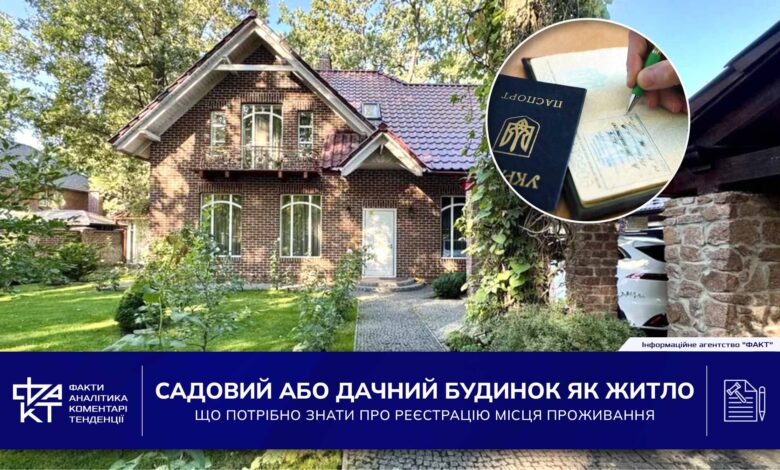
Registration of a place of residence in a garden or summer house has long been an important issue for people who, due to changes in life circumstances, have settled outside the usual housing stock and use such real estate as permanent housing with a kitchen, bathroom, heating and other conditions for daily life. Difficulties arise at a time when actual residence in the house collides with the registration procedure, where the technical condition of the object, documents on it, and how the registration authority assesses the suitability of such a house for permanent residence are important.
Lawyers of the law association “Repeshko and Partners” using the example of judicial practice commented on how in such cases the human right to choose a place of residence, the status of a garden or summer house, requirements for the suitability of real estate for living and the grounds on which the registration authority may agree or refuse to register an address are correlated.
Modern realities have forced many citizens to change their place of residence not of their own free will, so the issue of housing becomes relevant not only for internally displaced persons. Various life situations lead to the fact that a summer house or garden house remains almost the only possible or affordable housing in the current situation. However, given the special condition of such real estate, we are often asked: is it possible to register a place of residence (register) in it in order to obtain a legal link to the place of residence?
The answer to this question is given by the decision of the Supreme Court of Ukraine dated October 10, 2019, case No. 2340/4673/18. According to the plot of the case, a citizen filed an administrative lawsuit with the State Registration Department of the Cherkasy City Council after he was denied registration of a place of residence at the address of the garden house. In his lawsuit, he asked the court to declare the refusal decision, adopted on November 2, 2018, illegal and to cancel it, as well as to oblige the registration authority to register his place of residence at this address. The plaintiff explained his position by saying that the refusal was groundless, since it was justified only by the fact that the house in which he wanted to register does not belong to residential facilities. In his opinion, this was not enough to refuse registration.
During the consideration of the case, the Cherkasy District Administrative Court replaced the defendant: instead of the State Registration Department of the Department of Organizational Support of the Cherkasy City Council, the Department of Organizational Support of the Cherkasy City Council itself took part in the case.
After considering the case materials, the Cherkasy District Administrative Court sided with the plaintiff. This decision was later supported by the Sixth Administrative Court of Appeal. The courts found the decision to refuse to register the place of residence at the address of the garden house unlawful and canceled it, and also obliged the Department of Organizational Support of the Cherkasy City Council to re-examine the citizen’s application and register him at this address.
The defendant did not agree with these conclusions and filed a cassation appeal to the Supreme Court, after which the case was submitted for consideration by the cassation instance. The courts of previous instances established that the citizen is the owner of the garden house. This was confirmed by a certificate of ownership of real estate and an extract from the State Register of Property Rights to Real Estate.
In addition, the citizen, through the administrative services center, submitted an application for registration of residence at the address of the garden house to the State Registration Department of the Organizational Support Department of the Cherkasy City Council. In this application, the owner of the real estate, who was the plaintiff’s wife, confirmed in writing her consent to his permanent residence in this house and certified this with her personal signature.
The State Registration Department of the Organizational Support Department of the Cherkasy City Council refused the applicant to register his residence. The officials cited the alleged submission of false documents as the basis for this decision, explaining that the real estate at the address of which the man requested to register it is not residential.
When considering this case, the Supreme Court first of all drew attention to the general constitutional principles that must be observed by government bodies and local self-government. The decision emphasized that, in accordance with Part Two of Article 19 of the Constitution of Ukraine, such bodies and their officials are obliged to act only on the basis of the law, within the limits of the granted powers and in the manner provided for by the Constitution and laws of Ukraine.
The Court further recalled the guarantees enshrined in Article 47 of the Constitution of Ukraine, which provides for the right of every person to housing. The state, as stated in the Fundamental Law, must create conditions under which a citizen can build housing, purchase it as property or rent it.
Separately, the Supreme Court referred to Protocol No. 4 to the Convention for the Protection of Human Rights and Fundamental Freedoms, which guarantees the right of a person to move freely and choose his place of residence within the territory of a state if he is there on lawful grounds. The same document also enshrines the right of everyone to leave any country, including his own. Restrictions on such rights are permitted only in cases expressly provided for by law and only when they are necessary in a democratic society for the protection of national or public security, the maintenance of public order, the prevention of crime, the protection of health or morals, or the protection of the rights and freedoms of others.
The Court also emphasized that the issue of freedom of movement and choice of place of residence in Ukraine is regulated by the Law of Ukraine “On Freedom of Movement and Free Choice of Place of Residence in Ukraine” dated December 11, 2003 No. 1382-IV. In this law, free choice of place of residence or stay is defined as the right of a citizen of Ukraine, as well as a foreigner or stateless person legally staying on the territory of the state, to independently choose the administrative-territorial unit where they want to live or temporarily stay.
It should be noted that the place of residence is housing located on the territory of the administrative-territorial unit in which the person lives, as well as specialized social institutions, social service and social protection institutions, military units. According to Part 1, 3 of Art. 6 of Law No. 1382-IV a citizen of Ukraine, as well as a foreigner or a stateless person who permanently or temporarily resides in Ukraine, is obliged to register their place of residence within thirty calendar days after deregistration of their place of residence and arrival at a new place of residence.
For registration, a person or his representative submits to the registration authority (including through the center for providing administrative services): a written application; a document containing information about the place of residence. In this case, if the child has not reached the age of 16, the following shall be submitted: a birth certificate; a receipt for payment of the administrative fee; documents confirming the right to reside in housing, stay or registration in a specialized social institution, social service and social protection institution, service in a military unit, the address of which is indicated during registration; a military ID card or a certificate of registration (for citizens who are subject to military registration or are on military registration).
Article 9-1 of Law No. 1382-IV defines exhaustive grounds on which the registration authority may refuse to register or deregister a place of residence. Such a refusal is allowed in three cases: if a person has not submitted documents or information stipulated by this Law; if the documents submitted by him contain inaccurate information or these documents are invalid; if an application for registration or deregistration has been submitted by a person who has not reached the age of 14. The law also separately establishes the procedure for making such a decision: it is made on the day of the person’s application, and the application for registration or deregistration of a place of residence is returned to the applicant with an indication of the reasons for the refusal.
For a correct understanding of the content of this dispute, the norms of civil law are also important, which determine what is considered a place of residence and what is covered by the concept of housing. According to Part One of Article 29 of the Civil Code of Ukraine dated January 16, 2003 No. 435-IV, the place of residence of an individual is the dwelling in which he or she lives permanently or temporarily. In turn, Part One of Article 379 of the Civil Code of Ukraine specifies that the dwelling of an individual is a residential building, apartment, other residential premises intended and suitable for permanent or temporary residence in them.
No less important in this case is the content of Article 4 of the Housing Code of the Ukrainian SSR dated June 30, 1983 No. 5464-X, which determines the composition of the housing stock. According to this norm, residential buildings, as well as residential premises in other buildings located on the territory of the Ukrainian SSR, form the housing stock. The housing stock includes residential buildings and residential premises in other buildings owned by the state, that is, the state housing stock; residential buildings and residential premises in other buildings owned by collective farms and other cooperative organizations, their associations, trade unions and other public organizations, i.e. public housing stock; residential buildings owned by housing and construction cooperatives, i.e. housing and construction cooperatives fund; residential buildings, parts of houses and apartments owned by citizens on the right of private ownership, i.e. private housing stock; apartments in multi-apartment residential buildings, single-apartment estate residential buildings, as well as residential premises in other buildings of all forms of ownership provided to citizens who, in accordance with the law, require social protection, i.e. social housing stock.
It is precisely because of this legislative definition of the concept of housing and the composition of the housing stock that in cases of this category, the decisive importance is not the household name of the real estate object, but its legal nature, purpose and suitability for permanent or temporary residence. The housing stock also includes residential buildings belonging to state-collective farms and other state-cooperative associations, enterprises and organizations. In accordance with the Fundamentals of Housing Legislation of the USSR and the Union Republics, the rules established for the public housing stock apply to these buildings. At the same time, the housing stock does not include non-residential premises in residential buildings intended for commercial, domestic and other non-industrial needs.
An analysis of the above requirements of the current legislation gives grounds for concluding that the registration of the place of residence of an individual is carried out if the individual has housing. Housing, within the meaning of the above requirements of the legislation, is a residential building, apartment, other residential premises intended and suitable for permanent or temporary residence in them. Therefore, for the purposes of registration of the place of residence, a house or other premises must meet such characteristics of housing as adaptation and suitability for permanent residence in them.
The grounds for refusing the plaintiff to register his place of residence at the address: garden house were determined by the defendant that the house in which the citizen requests to register his place of residence is a garden house and does not belong to the housing stock, and therefore the specified garden house is not intended for permanent residence, in connection with which it is not possible to register the plaintiff at this address.
The courts of previous instances established that the garden house meets the requirements of state building standards and, according to the information contained in the technical passport, consists of a corridor, kitchen-dining room, rooms, bathrooms, office, furnace room, hall, wardrobe. Therefore, the garden house is suitable for operation and residence of people in it. At the same time, the courts of previous instances noted that according to the Housing Code of the Ukrainian SSR, the garden house is not listed in the list of objects that are not included in the housing stock.
The panel of judges agrees with such conclusions of the courts and sees no grounds for departing from them, since they are based on the provisions of the current legislation regulating the disputed legal relations.
The Court noted that the difference in building codes in terms of requirements for individual design solutions used during the construction of residential buildings compared to garden houses does not deprive the latter of the features inherent in housing and does not refute their suitability for permanent residence, provided that the owner of the garden house on his own initiative adapted it for this purpose by installing additional equipment or communications.
In addition, the Court took into account that the current legislation does not exclude the possibility of converting garden houses into residential status.
Of great importance in this case was also the Law of Ukraine “On Amendments to Certain Legislative Acts of Ukraine Regarding the Conversion of Garden and Summer Houses into Residential Buildings and Registration of Residence in Them” dated September 2, 2014 No. 1673-VII, which supplemented the Housing Code of the Ukrainian SSR with Article 8-1 “Transfer of Garden and Summer Houses into Residential Buildings”. This norm stipulates that citizens have the right to convert summer and garden houses that meet state building standards into residential buildings in accordance with the procedure established by the Cabinet of Ministers of Ukraine. Such a legislative approach shows that a garden or summer house does not lose the ability to be used for living only because during its construction construction standards were applied that differ from those in force for residential buildings.
This also leads to the conclusion reached by the court: the very fact that a garden house was built according to other building standards does not refute its suitability for living in the future, if such an object meets the established requirements. In view of this, the cassation appeal of the State Registration Department of the Cherkasy City Council was dismissed, and the decision of the Cherkasy District Administrative Court and the resolution of the Sixth Administrative Court of Appeal were left unchanged.
Therefore, before applying for registration of a place of residence in a garden or summer house, we advise you to check the real estate documents, find out whether the house meets the requirements for permanent residence, prepare confirmation of the right to use the housing, and assess in advance whether such an object requires additional registration, since the completeness of the documents and the correct determination of the legal status of the house determine whether it will be possible to complete the registration procedure without refusal and without further appeal.


