Scientists have created a building material to strengthen asphalt from cigarette butts

An international team of researchers from Spain and Italy presented innovative technology of reusing cigarette butts in road construction. Scientists from the University of Granada and the University of Bologna are working on the project, and the Chinese government provides financial support for the initiative.
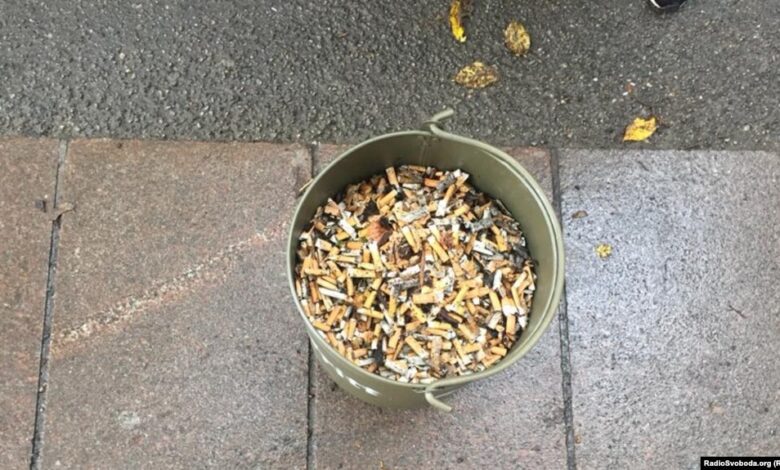
The key to the new technology has become cigarette filters, in particular the residues after smoking conventional and electronic cigarettes. This waste contains a significant amount of cellulose fibers and thermoplastic PLA. Scientists have developed a method of converting these components into building granules that can be used as an additive to asphalt.
First, the butts are cleaned of organic residues and ash, then crushed and mixed with synthetic wax of the Fischer-Tropsch type. Next, the resulting mixture is pressed, heated and cut – this is how special granules are created, which are introduced into the composition of the road surface.
These engineering granules are added to recycled asphalt in a concentration of up to 40% of the total mass. During the laying of the road surface, when the mixture is heated, the wax melts, releasing fibers that strengthen the structure of the coating. As the researchers note, this makes it possible to significantly improve the physical and mechanical properties of the road layer: in particular, it increases crack resistance, flexibility and overall durability.
In addition to strengthening the asphalt, the technology allows to reduce the temperature of laying the coating, which contributes to energy saving and reducing greenhouse gas emissions. Experimental tests have shown that such a modified asphalt mixture better withstands traffic loads and is more resistant to sudden temperature changes.
According to statistics, approximately 4.5 trillion cigarette filters are thrown away every year in the world, and this figure may increase to 9 trillion by the end of 2025. The developed technology makes it possible to reduce the negative environmental impact of such waste by combining disposal with practical use in the construction industry. It also contributes to the implementation of the principles of circular economy and sustainable development in infrastructure projects.
Thus, cigarette butts, which until recently were considered exclusively problematic waste, can become an important resource for creating more durable and environmentally friendly roads.