Since the beginning of the year, 55 thousand Ukrainians have been refused to cross the border

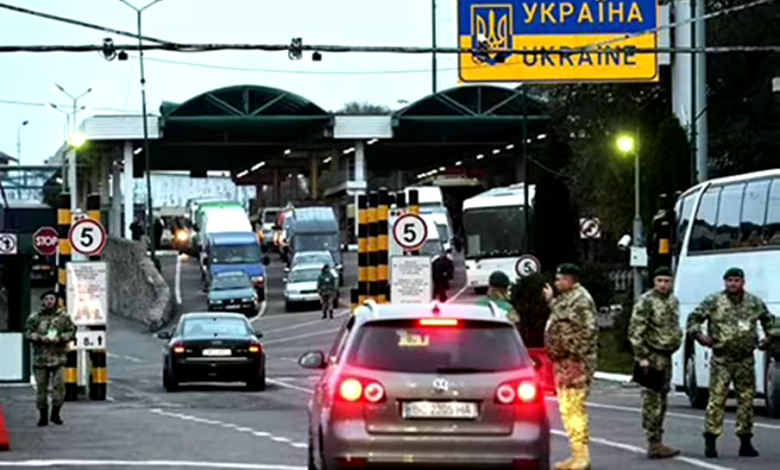
In the conditions of the war that has been going on in Ukraine since 2022, the issue of crossing the state border has become one of the key ones for both citizens and state institutions. Millions of people were forced to leave their homes in search of safety, shelter or new opportunities for life. For Ukrainians, the border is not only a geographical boundary, but also a complex barrier related to legislative, administrative and humanitarian aspects. At the same time, this issue is of strategic importance for the state, which during the war is obliged to ensure a balance between mobilization needs, security and the rights of its citizens.
How many Ukrainians were refused to cross the state border
Data of the State Border Service of Ukraine testify, that in 11 months of 2024, almost 55 thousand citizens of Ukraine were refused to cross the state border. At first glance, this figure may seem relatively small against the background of the total passenger traffic, which during this period amounted to 32.3 million people. However, these refusals point to clearly defined legal restrictions and high requirements for those trying to leave the country. These rules, although necessary in the conditions of martial law, create a significant social resonance.
Reasons for refusal to cross the state border
The main category of citizens who were refused to cross the border are men of military age. Ukrainian law prohibits them from leaving the territory of the country during martial law, unless they have appropriate reasons, such as having many children, disability, caring for incapacitated family members or other exceptions provided by law. These restrictions are aimed at ensuring the mobilization readiness of the country. However, in practice, they cause numerous problems for men who, due to personal or family circumstances, need to leave the country.
Among other reasons for refusal to cross the border, there are cases of lack of necessary documents or attempts to circumvent legal regulations. During the war, Ukraine significantly increased checks at checkpoints aimed at preventing the illegal departure of men of conscription age and ensuring control over migration flows. The absence of properly executed documents, falsification of certificates or non-compliance with the conditions of departure automatically become reasons for refusal.
An important aspect is that a significant part of border crossings takes place precisely at the border with Poland, which remains the main destination for Ukrainians. Poland not only provides shelter for millions of refugees, but also supports Ukraine at the international level, providing humanitarian, economic and military aid. At the same time, this intensity of crossings creates a significant burden on the border services of both countries, which requires coordinated actions and effective cooperation.
Against the background of these data, it is important to consider the humanitarian aspect. For many people, especially women, children, the elderly and those who have lost everything due to war, the border becomes the last hope for salvation. On the other hand, for men of military age, the situation often looks like a dilemma between legal restrictions and the needs of their families. For example, many men try to reunite with their families abroad or provide them with financial support, but are unable to do so because of the established rules.
In addition, it is important to understand that the issue of crossing the border has not only a security, but also a social dimension. On the one hand, Ukraine must ensure the protection of its territories and comply with the requirements of martial law, on the other hand, it must guarantee the rights of its citizens even in such difficult circumstances. The numerous cases of refusals to cross the border require careful analysis in order to avoid excessive bureaucratic barriers and not to create unnecessary difficulties for people who really have legal reasons to leave.
This problem highlights the need for systemic changes and improvement of the border crossing regulation process. In particular, the state should develop clearer mechanisms for solving complex humanitarian situations, as well as improve communication with citizens regarding the rules and conditions of crossing. This approach will allow not only to reduce social tension, but also to strengthen trust in state institutions.
The issue of crossing the border in wartime remains one of the most urgent and difficult. It requires a balance between the interests of the state and the needs of its citizens. In this situation, it is important to ensure the transparency and fairness of decisions, as well as to take into account the humanitarian aspect, which is especially significant in the conditions of a military conflict.