Social networks and digital culture: how messengers have become a tool for influencing mass consciousness

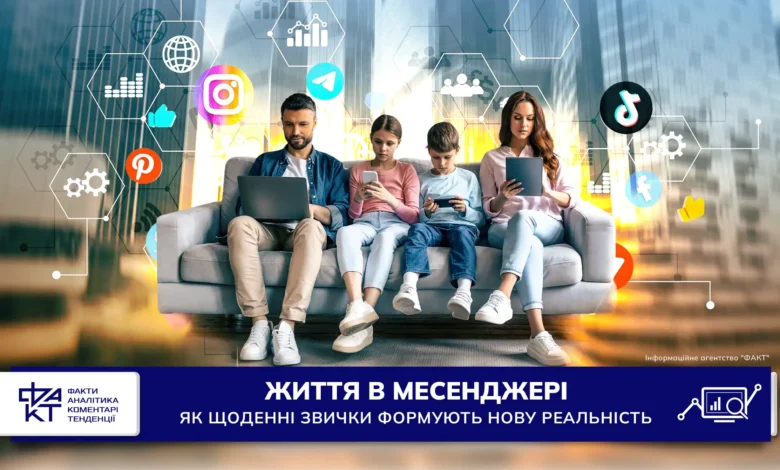
When the first users came to Facebook or Twitter, they were looking for simple, fast and barrier-free communication. Today, these same platforms decide that it is worth discussing which opinions are considered “normal” and which should be pushed to the margins. Social networks have ceased to be just a technology, rapidly turning into a new cultural infrastructure. They do not simply reflect reality, but construct it: they dictate trends, determine reactions, form ideas about morality, politics, and even about themselves. In this ecosystem, likes weigh more than arguments, and a viral post can influence the course of elections, protests, or culture wars. We live in an era where digital visibility has turned into social capital, and the algorithm is the new editor of world culture. However, this virtual “editor” has neither ethics nor responsibility, but only aims to keep attention
Life online: the new reality of the majority
The world long ago switched to the mode of constant presence in messengers, feeds, videos and notifications that accompany us every day. By data Digital 2025 Global Overview Report, by the beginning of 2025, 5.56 billion people will use the Internet, which is 67.9% of the entire population of the planet. This impressive reach has become a new reality in which daily communication, entertainment, education, politics and content consumption take place in the digital space.
In Ukraine, the figures are even higher: 31.5 million Internet users, which is 82.4% of the population. Even compared to the countries of Eastern Europe, where the penetration rate is 90.6%, Ukraine demonstrates consistently high rates of digitalization. The average Ukrainian user, like the user in the world, spends most of his day online: 6 hours 38 minutes online every day, of which 2 hours 21 minutes are spent on social networks.
However, the most popular digital “portal” is not social networks and video hosting, but messengers. They are used by 94% of all Internet users in the world. As we can see, it was messengers that became the absolute leader in terms of coverage. This shows that messaging platforms have evolved from a communication tool to a key channel for sharing news, opinions, personal and public information.
In the structure of digital preferences, social networks are immediately after messengers, because they are used by almost the same number of users. The third place is reserved for search engines (82.3%). All this shows how much the focus of digital activity has changed: from search to communication, and later to daily information and cultural consumption.
As of 2025, 21.6 million people in Ukraine use social networks, which is 56.4% of the total population, while among the adult population over the age of 18 there were 19.5 million (61.5%). That is, social networks are not just present in our life, but form its informational background. As for the platforms themselves, the global leadership is held by Facebook — 3 billion users. It is followed by YouTube (2.53 billion), Instagram and WhatsApp (2 billion each), and TikTok (1.59 billion). Such popularity is directly correlated with the time spent in applications: the undisputed leader is TikTok with almost 35 hours per month, followed by YouTube (27 hours 10 minutes), Facebook (17 hours 17 minutes), Instagram and WhatsApp (16 hours 13 minutes each).
On average, TikTok holds a user’s attention for 5 minutes and 51 seconds, while Facebook holds a little more than 3 minutes. But more important is how often people come back: 84.1% of users open WhatsApp daily, over 64% for TikTok, and 63% for YouTube and Facebook. This speaks to the deep integration of these platforms into the daily habits of users.
Social networks have long ceased to be just a place for correspondence or posts. They have become the main arena for researching brands, finding information and even forming ideas about the world. On a global scale, people most actively search for news and brands on Instagram, Facebook, TikTok and X. In Ukraine, traffic is distributed a little differently: Facebook generates 31% of the total traffic, YouTube – almost 24%, Instagram – more than 20%.
Facebook users in Ukraine most often follow acquaintances, family, public figures, entertainment accounts, television channels and musicians. Young people aged 16 to 24 are most interested in influencers (30.8% of this age group actively follow them). In 2025, YouTube in Ukraine has 21.6 million users and covers 56.4% of the population. However, it is worth considering that these figures are based on advertising coverage, which does not always reflect the real number of active users.
Facebook covers 43.8% of Ukrainian adults, Instagram — 37.1% of adults, and TikTok — 53.6%. It is interesting that TikTok in Ukraine showed the greatest growth over the last year: +521 thousand. users, or +3.2%. The main audience of this platform is young people aged 18 to 34.
At the same time, we are watching how messengers, social networks and videos have grown into a single information ecosystem that covers the vast majority of the population and determines what we read, watch, believe and even think about.
Messengers as a new infrastructure of daily life
Statistics point to the fact that we are no longer just we use messengers, and we live in them. They became an extension of the pocket, the voice, the social circle. Telegram, WhatsApp, Viber have shaped our personal space, work environment, news feed and window into a reality that is constantly and rapidly changing.
All over the world, these services have become so commonplace that their absence is perceived as a system failure. And while geography strongly influences the choice of platform, messengers are already embedded in the rhythm of life of billions of people, becoming a social choice. Yes, in Latin America more than 90% of people communicate via WhatsApp. Telegram is the leader in Ukraine, because 86% of Ukrainians use it. This platform becomes part of the identity, an indicator of the circle of communication, even professional belonging. Creative industries gravitate to Telegram, government structures use Viber, and business has focused on WhatsApp.
Messengers have long been no longer only about communication. They have evolved into trading platforms, marketing tools, and even replaced small business websites. Telegram, for example, allows entrepreneurs to run channels with products, send updates, take orders without spending on advertising or online stores. This model is especially relevant in Ukraine, where small businesses flexibly respond to challenges. At the same time, WhatsApp went in a more formalized direction. Its Business version enables companies to communicate with customers: order confirmation, meeting reminders, technical support. In 2023, more than 200 million companies in the world worked through WhatsApp Business.
Messages as security
After 2022, messengers in Ukraine have acquired another meaning — a symbol of communication and security. Telegram channels during air alarms and emergency situations have become not just informative, but psychologically soothing. They united, informed about the danger, allowed to feel control over the situation. When messengers are blocked or restricted, it is perceived as a personal blow. People lose not just an application, but access to native voices, important correspondence, agreements, memories. This happened, for example, in Iran with Telegram or in Ethiopia with WhatsApp, and even gave rise to social protest rather than technical irritation. However, this constant inclusion has a flip side. The brain does not have time to rest, and the psyche does not have time to recover. Hundreds of micro-stimuli per day in the form of notifications, calls, news and disturbing messages change our ability to concentrate, think deeply, rather than just react.
In peacetime, we talked about “digital overload” as a buzzword. Now it has become a diagnosis for a whole generation. According to Deloitte, more than 35% of young people call social networks the main source of stress. And it is not surprising, because in the conditions of a hybrid war, when information acts as another weapon, our tapes resemble the battlefield itself. Focus crumbles, fatigue accumulates, and consciousness scatters. We begin to slide along the surface, losing depth in both thoughts and emotions. More and more often you want to turn off, disappear from communication, escape into silence. But even this becomes a luxury, because in a country where alarm can sound at any moment, separation is perceived as another risk.
So we balance between the need to be informed and the desire not to burn out. And it is in this digital divide that something new is born: the need for digital detoxification not as a trend, but as a means of survival. We learn to dose news, limit notifications, consciously return attention to ourselves, because in times of war, attention becomes an element of psychological defense.
New habits and a new rhythm
Telegram, especially in Ukraine, has gradually turned into a universal platform: here people read news, listen to music, order food, learn, even take surveys. It is no longer a messenger, but an information system that adapts to daily needs.
WhatsApp, in turn, is turning into an enterprise tool. In many European companies, it is used instead of e-mail: in Germany, for example, more than 65% of companies have switched to WhatsApp as the main channel of internal communication. It saves time, speed and informality, which is increasingly appreciated in the working environment.
TikTok has evolved from a dance app into a new kind of cultural engine. It is here that trends are born that change language, body and lifestyle. A video lasting a minute or even less can influence the collective perception of the norm, fashion or morality. The TikTok algorithm does not take into account education, age or professional status, but subtly promotes what causes emotion. And this forms a new ethics of influence: being sincere is more important than being an expert. In this logic, resonance replaced arguments, and charisma became the new currency of trust.
Despite the loss of the status of the most influential social network, Instagram is also not far behind as a space for visual self-expression. They do not impose standards here, but create a mood through light, color, and spontaneous moments of everyday life. The platform is no longer about an ideal life, but about life as it is: with an imperfect body, sincere emotions and small joys. Instagram has become a tool of intuition, not information, because this is where sensitivity to culture is formed, not its theory. He does not explain, but shows, does not teach, but resonates.
Instead, YouTube itself is increasingly becoming an alternative to traditional media. Instead of formal statements or complex studio formats, people choose those who speak simply and to the point. Independent analysts become new “voices of trust” that explain politics, economics or psychology without unnecessary terminology. Competence is now measured not by status, but by the ability to speak clearly. Millions of views testify: the viewer is not looking for authority, but clarity.
The future is in chat mode
As you can see, the development of messengers is gaining momentum. Telegram launches the functions of stories, paid subscriptions, advertising, transforming into a micro-social network. WhatsApp is adding integrated payments, which will allow you to pay for purchases directly through the app, like in Brazil and India. Such innovations become a direct statement about the transition to a new era, where the messenger turns into a universal application that combines a bank, media, services and, even, a market.
And if a few years ago the question was about choosing a more convenient messenger, today everyone is interested in which digital ecosystem you live in. When choosing messengers, we no longer choose an application, but rather the context of our everyday life. The digital environment is no longer perceived as just a channel of communication, but an architect of culture, emotions and ideas about oneself. But it is impossible not to notice how we are not the only ones we use platforms, and we are forming them And as long as algorithms compete for our attention, we gradually lose control over what exactly shapes our vision of the world. In this game, the most valuable currency is attention, and it has long been out of our control.
We are used to thinking that culture is controlled by editors, critics, and authorities. But in the digital era, the algorithm itself became the editor-in-chief. You can’t see him, you can’t hear him, but he decides what we will see in the feed, what will gain millions of views, and what will remain at the bottom of the digital ocean.
This new “editor” has no education, ethics or skepticism. He doesn’t care if it’s true, or safe, or hateful. He only seeks to hold the reader’s attention. The algorithm works like an excitement detector: the more emotions a post can evoke, the better. Calmness, arguments, complex explanations in such a flow simply pass. But screams, panic, anger, sensation immediately fly up. And that is why there are so many fakes, manipulations, and radical opinions in the tapes. The algorithm has no doubts, does not check sources and does not care about consequences. He lives by reaction, not responsibility. And this is exactly what creates an ethical vacuum in the most massive source of information today.
Under such conditions, there is not just a change in the tool, but a change in the actual logic. If earlier specific editors with a name were responsible for the content, now no one is responsible. We are in an era where the emotional climate of society is shaped not by journalism, but by an impersonal code. When TikTok, YouTube or Instagram decide what to push to millions of people, they don’t think about the truth, they count clicks. And while we like, scroll, and share these posts, an algorithm silently rewrites our reality without asking for our consent.
In this new digital ecosystem, a digital divide is born: between those who know how to filter information and critically interpret it and those who simply absorb. Platforms, which were originally the promise of democratic communication, today form information bubbles in which people cannot hear each other. This creates not only informational fragmentation, but also cultural polarization, fueling mistrust and conflicts in society.
As we can see, digital platforms have ceased to be neutral tools, having turned into full-fledged information and cultural infrastructure. Algorithms that control feeds shape our emotional background, political orientations, and perceptions of reality. And they do it not from the standpoint of ethics or responsibility, but solely for the purpose of keeping attention. Now social networks no longer promise the democratization of communication, but increasingly close us in bubbles and increase the fragmentation of society. In this reality, the key resource is not technology, but attention. We live in a world where our views are shaped by code written by people we don’t know, with goals we’re not told about. And the longer we ignore it, the less we have it ourselves.