The bill on the abolition of “impunity” +20 km/h: will it change the number of road accidents and deaths on the roads?

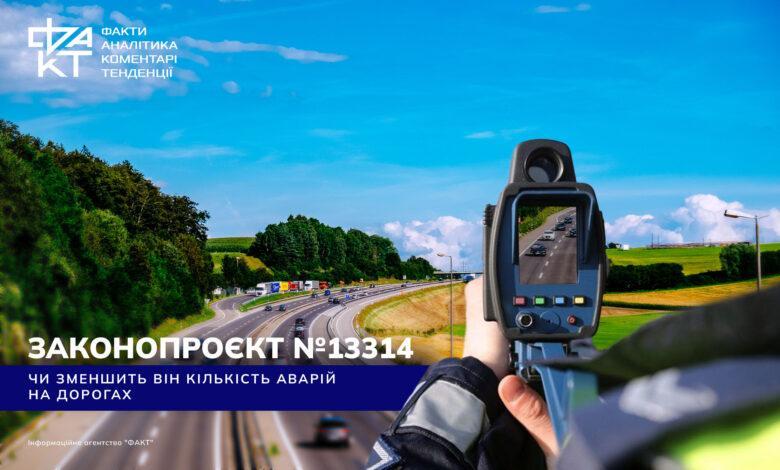
In Ukraine, the problem of road deaths and injuries remains one of the most acute for a long time. Every year, thousands of people die and tens of thousands are injured as a result of accidents that have become a regular part of everyday life in the country. Even during martial law, with reduced traffic, road closures and partial traffic restrictions, road deaths remain at pre-war levels. The causes of accidents are different, but speed is the most stable and significant among them. Special attention should be paid to the current legal practice, according to which exceeding the set speed by less than 20 km/h does not entail any legal liability. This creates a situation in which the violation becomes the norm. Draft law No. 13314 has been registered in the Verkhovna Rada, which provides for the revision of the current system of fines for traffic violations. The most prominent proposal is the abolition of the so-called “tolerance limit”, the rule under which speeding up to 20 km/h remained unpunished. Formally, such a change is designed to reduce the accident rate. However, the question of the effectiveness of this step in Ukrainian realities remains open.
Bill No. 13314: proposal to cancel “permissible excess”
Against the background of a full-scale war, the main attention of society is naturally focused on frontline events, occupied territories, international aid, and the loss of the civilian population from missile attacks. However, beyond military statistics there is another reality — less visible, but no less fatal. We are talking about the situation on the country’s roads, where new deaths and serious injuries are recorded every day, which have nothing to do with hostilities, but lead to the same consequences – loss of loved ones, paralyzed lives, psychological trauma for years.
In the period from 2022 to 2024, the number of people killed in accidents is 9,046. In 2024, more than 3,200 people died as a result of traffic accidents in Ukraine. Another 32,000 received injuries of varying degrees of severity. This means that on average, about nine deaths and almost 90 injuries were recorded in the country every day. If you compare these data with the situation in the EU countries — in particular, Poland, Germany, France — the level of relative mortality in Ukraine significantly exceeds the indicators of its neighbors. And although Ukraine has been in special conditions for a long time – with mobilization, traffic restrictions, fuel shortages and destroyed infrastructure – this does not reduce the burden on the medical system and does not change the essence of the problem: the road in Ukraine is a space of increased risk.
It should be noted that 1,770 people died precisely because of speeding, that is, it accounts for 55% of all fatalities. This means that even in the face of large-scale war, traffic accidents remain a source of mass death in civilian environments.
The situation with child mortality and injuries requires special attention. In 2024, 180 children were killed in road accidents, and more than 5,000 more were injured of various degrees of severity. On average, these are 14 injured children every day, that is, every 100 minutes a new child patient with an injury received on the road is recorded in Ukraine. These are not exceptional episodes. This is a situation that only gets more complicated from year to year. Over the past year, the death rate of children on the roads has increased by 44% compared to 2022. And this is happening in conditions when the absolute number of children in Ukraine is decreasing – due to evacuation, emigration, and a decrease in the birth rate. The indicator is increasing not due to general demographics, but due to the general insecurity of children’s presence in the road environment.
In the structure of threats to the civilian population, road accidents occupy a place that should be the object of systemic state policy. However, this does not happen, traffic accidents with fatalities rarely go beyond police reports.
The new draft law No. 13314, which was registered in the Verkhovna Rada on May 26, proposes to radically change the rules of the game: every excess is a violation, and there should be responsibility for it. We are talking about the norm, which now actually allows drivers an additional speed of up to +19 km/h over the limit — formally, with impunity. It is this “shadow zone” that is proposed to be removed. The authors of the document are convinced that such leniency only encourages the systematic disregard of traffic laws.
In the explanatory note, the parliamentarians directly state that a similar exception exists only in Russia. In turn, the European approach has a clear gradation of punishment depending on the seriousness of the violation. And it is this principle that the authors of the initiative want to approach: the higher the speed, the higher the risk price. If the law is adopted, the situation for drivers will look different: already for exceeding the speed by 10 km/h they will have to pay UAH 340. Exceeded by 20 km/h – UAH 680. Further – only more: UAH 1,360 for +30 km/h, UAH 1,700 for +40, UAH 2,720 for +60, and a maximum of UAH 3,400 for +80 km/h. If the excess leads to the creation of an emergency situation, the punishment will be much more severe: from six months to a year without a driver’s license.
These amounts, according to the initiators of the draft law, are not only punitive, but also preventive in nature — to create a system under which each excess will have consequences. The document states that speeding is not just a violation, but a direct threat to life and health. Therefore, the application of sanctions should be as targeted as possible, taking into account the scale of the deviation from the norm.
It is worth noting that it is not only an administrative response, but also an attempt to change the established pattern of driving behavior. The excess, which was previously perceived as a household phenomenon, should become the object of constant control. According to the authors of the initiative, it is this approach that will allow to reduce the level of road deaths, which has been stable at a high level for the past decades.
The initiators of the draft law also draw attention to the imbalance in the KUpAP itself. For example, the fine for parking without payment in a zone where the hour costs 20 hryvnias can be higher than for exceeding the speed limit by 30 km/h. But the consequences for security are completely different. Improper stopping is rarely the cause of accidents, but high speed is one of the main causes of road deaths. This is contrary to the principle of proportionality: the punishment must correspond to the degree of risk.
They refer to the experience of EU countries — in particular, Poland, Germany, Ireland and even Serbia. There, fines increase gradually, starting with the smallest excesses. And this logic, according to them, really works. In Poland, for example, a gradation from 50 to 2,500 zlotys was introduced depending on the excess, and a repeat violation is twice as expensive. And the result was not long in coming: from 2019 to 2022, road deaths in Poland fell by 35%. The developers of the draft law believe that Ukraine should follow the same path — not to allow “impunity zones”, but to establish a clear scale of responsibility for exceeding +1 km/h. This is especially important in populated areas, where every additional 10 km/h significantly increases the risk of a fatal collision with a pedestrian. The difference between 50 and 70 km/h may seem insignificant to the driver, but it is the difference between life and death. In such a system, there is no need for separate fines for extreme speeding — say, more than 100 km/h. At such speeds, the risk of fatal consequences is equally high, and the very fact that a person has reached this mark in the city already indicates a gross violation.
Will the bill become an effective tool for reducing traffic accidents
The idea of introducing fines even for exceeding the speed by 10 km/h seems logical from the point of view of formal security, but the question remains – how much such a regulation is able to work in Ukrainian conditions? Can the proposed system of penalties really change the behavior of drivers, or is it rather another declarative norm introduced into the law only for statistics and to satisfy donor requests?
This question is not rhetorical. The Ukrainian history of the adoption of such laws is well familiar with situations when draft laws, written under grant initiatives or as a result of the activity of non-governmental organizations, are submitted to the parliament, voted on, and then stopped. In the specific case of initiative No. 13314, we are talking about a topic that was actively developed by several Ukrainian NGOs, which received support from international programs within the “safe city”, “transport safety” and other topics. Dozens of non-governmental organizations have been working in the field of road safety in Ukraine for the past ten years, in particular with the support of international donors — Eastern Europe Foundation, USAID, GIZ, U-LEAD, PROON, Open Society Foundations etc. Programs such as Vision Zero, TrafFix, Safe Roads Ukraine directly provide for the adaptation of European standards to Ukrainian legislation. Such NGOs prepare draft laws or ready-made models, which are then submitted by people’s deputies on their behalf. This is a common practice both in Ukraine and in Poland, Lithuania and the Czech Republic.
There are no legal objections to this process: any initiative can be registered and submitted for consideration. The problem is different: the mechanisms of influence on the part of the authors end at the stage of adoption, and the implementation remains without a systematic basis and further ensuring the implementation of the law.
However, the most serious problem in this matter is the direct transfer of European standards to Ukrainian road and infrastructure reality. Speeding fines of 10 km/h really work in small towns in Germany, the Netherlands or Slovenia, where the average street is a narrow one-block thoroughfare, often with built-in cameras, lying cops and hypertrophied driver responsibility for every maneuver. In such cities, it really makes sense to fine for minor violations, because a speed of 60 km/h there can be dangerous in itself — not because of the number, but because of the space.
In Ukraine, the situation is radically different. Most of the new housing estates are multi-kilometer wide avenues where there is actually no spatial speed control. In cities, the driver often passes the road without any markings, cameras and road signs that duplicate speed limits. At the same time, the dividing line is conditional, pedestrian crossings are selective, and the markings are seasonal. There is no vertical infrastructure to enhance the sense of speed or physically limit it. In such conditions, the mechanical introduction of fines is more likely to increase mistrust of the state, rather than an effective tool for influencing driver behavior.
The second point is the problem of enforcement. Ukraine does not have the infrastructure for full speed control. Video recording cameras work selectively, mainly in the capital and several regional centers. The police practically do not use hand-held radars in cities. Creating a penalty system for exceeding 10 km/h means the need for fully automated control, with perfectly calibrated sensors, constant service support, and a clear error processing algorithm. This simply does not exist in Ukrainian realities. And therefore, violations of 12-15 km/h will be ignored or will be punished selectively. Such selectivity only devalues the legislative norm itself.
In addition, such an initiative ignores a deeper systemic problem — a complete mismatch between actual traffic and official speed limits. Often, these limits are reduced to a conditional 50 km/h in places where road conditions allow driving at 70-80 without danger. On the other hand, at really dangerous points, the limits are often not adjusted according to the risks. Limits are not set taking into account functional zoning, but are set in a template manner, or are not set at all. As a result, those who really create a danger remain unnoticed, and formal violations in conditionally safe zones can be subject to fines. This only multiplies legal injustice.
What could be introduced instead of this bill? First, the focus should not be on literally copying the European scale of responsibility, but on adapting it to Ukrainian conditions through a comprehensive audit of the road network divided into functional types (central streets, transit avenues, residential areas). Speed limits should be tied to the real risk, not the formal status of the street.
Secondly, the punishment system should be built only after the creation of a full-fledged network of video recording – dense, automated, transparent. Without it, sanctions will be either selective or not applied at all.
Thirdly, Ukraine needs a combination of infrastructural deterrence (narrowing of roadways in risk zones, platforms, physical restrictions) with legal responsibility. The law cannot be isolated, it must follow changes on the ground.
And finally: the adoption of fines for exceeding 10 km/h is not a reform if the entire logic of road planning is not changed, a physical security system is not created, and law enforcement is not established. Otherwise, it is nothing more than another new norm in the paper array of Ukrainian legislation, which exists for reporting, not for changes.
So, the proposed draft law No. 13314 only outwardly looks like a step towards systemic road traffic safety. In fact, it is an attempt at a point intervention in one of the deepest structural problems without conscious implementation infrastructure, without taking into account the real nature of urban development, without updated logic of zoning and modeling of driver behavior. The initiative arose among grant organizations that tried to reproduce the European regulatory approach, but failed to propose mechanisms for its adaptation to Ukrainian conditions. As a result, the draft law creates the appearance of a reaction to the statistics of deaths in road accidents, but does not provide any tool for real reduction of road deaths.
Fines introduced without large-scale renewal of the road network, modernization of the control system, taking into account the specifics of traffic on transit avenues and peripheral roads will only increase the selectivity in law enforcement. Where accountability arises without the guarantees of a fair and predictable control mechanism, chaos and mistrust result not in order. Ukrainian legislation needs not mindless copying of European approaches, but their understanding. Without comprehensive road reform that focuses not only on punishment but also on the physical environment that shapes behaviour, even the best-intentioned initiatives remain declarative at best. At worst, it is a convenient means of imitating actions in a field where real reform has been needed for a long time.