The Ministry of Education and Science announced the registration of subjects of educational activity abroad: what does this mean for Ukrainian children and educators

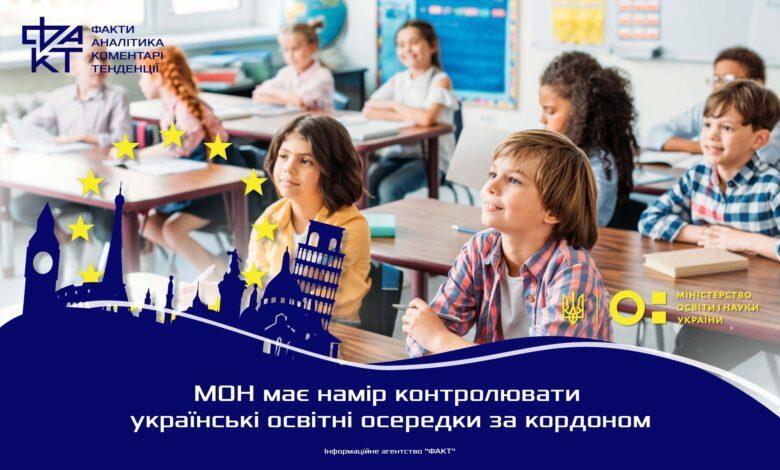
For several years now, Ukraine has been in a terrible reality, when tens of thousands of Ukrainian children abroad, scattered between language barriers, different education systems and cultural contexts, are trying not to lose touch with their own country, if only through a Ukrainian language lesson or online mathematics with a teacher from Ukraine. However, the state decided to count them – the Ministry of Education and Science of Ukraine announced the accounting of subjects of non-formal education for children abroad. At first glance, it is quite an adequate attempt to restore order in the system, but the educational community is again throwing up its hands in despair.
Procedure for recognition of non-formal education abroad: how the new mechanism works
Ministry of Education and Science of Ukraine announced on the launch of registration of subjects of educational activity abroad, which provide non-formal education for Ukrainian children. Accounting will be carried out using the AICOM automated system. Formally, this initiative looks logical and even necessary. But its practical implementation already at the start causes contradictory assessments.
After the start of a full-scale war, millions of Ukrainian children found themselves outside the country, some of them integrated into foreign education systems, others continue to study the Ukrainian language, history and other subjects in informal settings: Saturday and Sunday schools, community centers, volunteer initiatives. However, to date, the state has not had a clear mechanism for recognizing such educational results. Therefore, children who studied in such institutions had to confirm their knowledge through additional assessment in Ukraine. This created psychological stress and the risk of losing motivation to study in the Ukrainian context. Now, according to the updated procedure, the results of studies abroad can be recognized without additional procedures, provided that the relevant educational center passes verification and is registered in Ukraine.
To become an officially recognized center of Ukrainian non-formal education abroad, you need not just a desire to teach children in their native language, but a whole package of documentation. The representative of such a cell must collect and submit detailed information about the institution for consideration by a special commission of the Ministry of Education and Science and the Ministry of Foreign Affairs. This process takes place through the AICOM electronic system, which acts as a kind of digital “reception committee” that collects all the necessary data. The list of documents is quite comprehensive, because the state wants to know almost everything about such a cell:
- what is its official name and since what year has it existed;
- who founded it or who owns it;
- in which country (or countries) it operates and whether it has official registration there;
- what is its legal form, for example, a public organization or a private initiative;
- how many students are currently studying there;
- who teaches, how many teachers there are and what their qualifications are;
- what educational programs are used: are they adapted to Ukrainian standards, do they include Ukrainian studies disciplines, or do they form Ukrainian cultural identity in students;
- does the center have partnerships with Ukrainian or international educational institutions and, if so, which ones;
- in which premises the training takes place: whether they are rented or provided for use, what is their area and under what conditions are they used;
- and finally, the standard contact details: phone, e-mail, and a link to the official website, if any.
This list will not be a mere formality. The answers to all these questions will become the basis for a decision: will the institution receive state recognition or will it remain in the gray zone, where the efforts of educators and parents are not included in the Ukrainian education system.
What is wrong with the logic of the decision of the Ministry of Education and Culture
The Ministry of Education and Science is looking for a way to bring order to this spontaneous movement. It is an attempt to streamline such training, to create a mechanism that will allow recognition of results without the need to take additional exams already in Ukraine. For families who persistently nurture Ukrainian identity in exile, this could be a real relief.
It is not only about symbolic legitimation. If a school abroad can be recognized by the Ukrainian state, it will increase trust in it, facilitate the child’s transition between systems, and create a sense of stability and support. And for the state itself, it will open opportunities to better understand where and how Ukrainian education functions in the world, to support it in a targeted manner, to invest in teaching language, history, and literature.
For families abroad, the decision of the Ministry of Education and Culture could be a serious relief: no bureaucracy when returning to Ukraine, an officially recognized certificate, less stress and more content. Separately, there is another problem that is often underestimated: pseudo-Ukrainian “centers” that sometimes pretend to be schools, but in fact do not have any educational content. The introduction of verified accounting would allow screening out similar cases, protecting parents from illusions and children from wasting time. And, of course, this can be a good chance for the Ministry of Education and Culture itself, because it will get a real map of diaspora education: where are the schools, how many teachers, what programs. This could become the basis for systemic policy rather than situational gestures. So, on the one hand, such a desire of the state for accounting and the quality of education, especially in a difficult historical period for the country, is quite understandable.
However, on the other hand, one cannot fail to pay attention to the excessive detailing of the requirements, the complexity of the bureaucratic procedure, and technical barriers, especially for small or volunteer initiatives, which will probably simply repel some educational centers. The reality is that most Ukrainian schools abroad are not institutions in the usual sense. These are volunteer initiatives that work in the premises of parishes, cultural centers or simply in rented classrooms on weekends. And when they are asked to collect dozens of formal indicators – areas, documents on the qualifications of teachers, partnership agreements, training programs – it is more like an attempt to squeeze a living, flexible structure into the standard of a state institution.
It’s not just that it’s hard. For many such schools, it is simply unrealistic, because there is no full-time lawyer or administrator, as well as funding for the preparation of the necessary package of documents. Often there is not even registration as a legal entity. This initiative is more like an attempt by officials of the Ministry of Education and Culture to put another check mark on the report, rather than a desire to support education abroad. In practice, let’s assume that for a similar Ukrainian school in Berlin, which rents a classroom for two hours every Saturday and works thanks to three female teachers, all this does not look like order, but additional problems. Such a school is often not legally an “educational institution”, does not have the resources to prepare formal reports, and its teachers work for an idea, not for a salary. And in this situation, the burden of proving their “legitimacy” is transferred to them.
This is how the paradox emerges: the state declares its desire to support the initiative, but instead sets a bar in front of it that can be overcome only by someone who already has resources and stable support. Therefore, educational centers run the risk of remaining “outside the system”, even if they actually provide quality education. And as always, the Ministry of Education and Science is in a hurry with its initiatives, not paying attention to such important nuances as who and how will check the submitted information in conditions when the activities of such centers take place in dozens of countries of the world with different legal and educational systems.
Officials from the MES appeal with such serious words as “standards”, “verification” and “single base”, which sound logical and even encouraging. But it is worth looking under the cover of this initiative, and there are questions for which there are no answers. It is unclear what “taking into account” means in a practical sense. Is it just an internal registry? Will the school receive a certificate? Will its graduates have advantages? What are the legal consequences for the institutions themselves? The lack of these answers makes the initiative vulnerable to criticism as an empty formality with no commitment from the MES.
In this situation, the fate of those institutions that will not be able to pass the verification is of concern. Just yesterday they were praised for preserving the Ukrainian language abroad, but tomorrow they will formally cease to exist, and their students will remain outside the system. Such an attitude simply cannot but create the risk of marginalization of those who do not pass verification, division into “own” and “strangers”, “correct” schools and “amateur” initiatives that could not prove their ability to an official from AICOM. Instead of supporting educational centers, the work of those who cannot or will not have time to go through formal procedures will be artificially devalued. Such an approach does not motivate, but demoralizes all those who keep Ukrainian education afloat without any state support.
The approval of state registration of subjects of non-formal education for Ukrainian children abroad should be a step towards streamlining the system, recognizing the efforts of educational centers and simplifying the procedure for students. However, the Ministry of Education and Culture’s initiative is more like an additional filter than help. Formal criteria, complex verification, a technical platform that requires digital literacy and documentary support turn the attempt to legalize the efforts of volunteer and community schools abroad into another bureaucratic wall. Parents, who for years dragged “two schools” (Ukrainian and foreign) under conditions of stress, relocation, new languages and cultures, will find themselves in an even more difficult situation.
According to them, the Ukrainian diploma does not provide guarantees abroad: the diploma often needs to be confirmed, it is not always recognized automatically, and for admission to European universities, the “thirteenth” year of study is often missing. That is, a student from a German or Slovak school enters the university earlier than a child with a Ukrainian diploma, even if the latter spent twice as much time studying. That is why a new, very revealing trend is forming: more and more families are deliberately refusing the Ukrainian school curriculum. They are tired of paying tutors, adjusting schedules for two parallel systems and no longer see this as an investment in the future, because the state does not guarantee an equivalent result, but only adds requirements.
The fact that the new accounting system is launched not as support, but as filtering, is especially cynically perceived: if your educational center does not meet all the points from registration to the floor space, then the child may simply not be credited with knowledge. That is, hundreds of children may remain formally “non-existent” in the eyes of Ukrainian education, even though they conscientiously studied Ukrainian studies subjects. This creates a deep gap between the state’s intentions and the real needs of the community. And as long as the priority is not children, but tables, registers and formal procedures, trust in Ukrainian education abroad will only decrease. And with it, the presence of Ukraine itself in the educational field of the diaspora will fall.
MES took a step in the right direction, but chose the wrong shoes. A formal accounting system without real support and flexibility to the conditions in which the diaspora works risks becoming another initiative that causes parents and educators not confidence, but even more irritation. And in order for this initiative to become a real tool for strengthening the Ukrainian presence abroad, it needs to be urgently extended to the people. It’s long past time for officials from the Ministry of Education and Culture to understand that dialogue is built not through control, but through trust. And for this, you need to go beyond paper reports and your offices, plunge into reality and reach out to those who work with children in real conditions, often without any help.