
The end of the transatlantic alliance: How the EU and the US are drifting in different directions

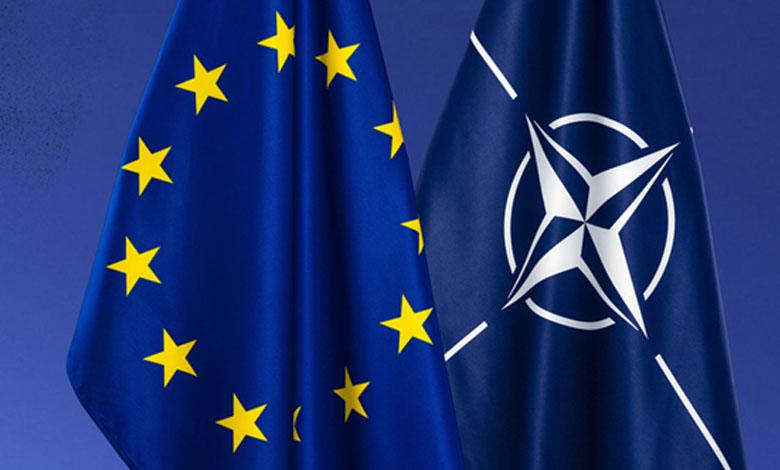
The defense policy of the European Union and the role of NATO remain key issues for the security of the continent, especially against the background of the full-scale war in Ukraine. For decades, EU countries have relied on the US as the main guarantor of security, but recently there have been growing calls for greater European strategic autonomy. This includes joint defense initiatives, increased military spending, and attempts to create an independent European military-industrial complex.
At the same time, established approaches to security are being revised by Donald Trump, who is seeking to reduce the US military presence in Europe and force allies to take on more financial commitments. His criticism of NATO and plans to redeploy American troops from Germany to Eastern European countries are threatening traditional security arrangements and forcing European leaders to rethink their own defense strategies. At the same time, there is no shortage of contradictions in the EU itself — in particular, France and Germany have different approaches to defense financing and arms procurement, which makes it difficult to agree on a common strategy.
France and Germany discuss “EU arms purchase”
As reported by the publication Financial Times, France and Germany have been at odds over the European Union’s plan to invest 150 billion euros in the defense industry. This conflict concerns whether these funds should be directed exclusively to European arms manufacturers or also to companies from outside the EU.
French President Emmanuel Macron is insisting that the funding be used only for equipment made in Europe in a bid to strengthen the continent’s autonomy. Instead, German Chancellor Olaf Scholz believes that the initiative should be open to non-European partners such as Great Britain and Norway. This disagreement could delay reaching an agreement on the program, as it did with the European Defense Industrial Program.
European officials must now work closely to agree the proposal within 10 days, with the Polish EU presidency playing a key role in facilitating the talks. The dispute highlights long-standing differences between France and Germany over EU defense policy and approaches to strengthening the continent’s defense capabilities.
The US will stop participating in NATO exercises in Europe
In turn, the United States of America reported its NATO allies about the intention to stop participating in the planning of future military exercises in Europe. This decision concerns exercises that are currently at the development stage, that is, planned for the period after 2025. American side seeks to reduce military spending in Europe and redirect resources to other regions, in particular, make the Indo-Pacific a priority, paying particular attention to China.
If these intentions are realized, it will mean that Sweden and other NATO countries will be forced to plan exercises without the participation of the United States or with only small American units. This can affect the effectiveness of joint actions if necessary.
It is worth noting that joint exercises are important to ensure the coherence and readiness of allies for joint actions in the event of threats. Refusal US participation in the planning of such exercises may reduce the effectiveness of collective defense.
The bitter signal from the other side of the Atlantic is another sign of the expected decline of the American presence in Europe. The Swedish publication writes about it The Express. Such a decision is part of a broader trend of the US reviewing its obligations to its allies, which became especially noticeable with the return of Donald Trump to the political discourse. His criticism of NATO, demands for European countries to increase defense spending and a possible reduction in the contingent of American troops in Germany demonstrate a change in approaches to transatlantic security.
For Europe, this is a signal of the need to take more responsibility for its own defense, which, however, is accompanied by internal disagreements. France is pushing for the EU to develop strategic autonomy, while Germany and other allies favor maintaining a close partnership with the US. At the same time, the financing of the EU’s defense initiatives, as well as the issue of weapons purchases, causes controversy, which only complicates the formation of a unified European security policy.
At the same time, US President Donald Trump considers the possibility of withdrawing about 35 thousand American servicemen from Germany and their redeployment to Eastern Europe, in particular to Hungary. The move could further strain relations between the US and European countries. Trump has repeatedly emphasized that European countries should invest more in their own defense and not rely on US support. He also criticized NATO members for failing to meet defense spending commitments of 2% of a member country’s GDP.
Hungary, where troops are planned to be redeployed, maintains close relations with Russia. Hungarian Prime Minister Viktor Orban has repeatedly spoken out against EU sanctions against Moscow and vetoed the EU’s initiative to increase aid to Ukraine. Currently outside the United States deployed about 160,000 American servicemen, most of whom are in Germany. Trump questions the need to keep such a large contingent in Europe and considers the possibility of redeployment of troops to NATO countries that invest more in their defense. Brian Hughes, a representative of the US National Security Council, noted that although no specific decisions have been made yet, the US military is always considering the possibility of redeploying troops around the world to best respond to current threats to US interests.
Rutte calls on Europeans to increase defense budgets
In turn, NATO Secretary General Mark Rutte insists on a significant increase in the defense budgets of European countries and the activation of the production of military equipment to ensure the security of the continent. “The right step at the right time,” he said in an interview with a German newspaper World on Sunday the alliance’s top official praised Berlin’s plans to invest significantly more money in defense in the future. He urged all members of the Alliance to increase the production of weapons and sent a clear message to the actors of the military industry. In the interview, he also said that to maintain security, more money should be spent and defense production should be rapidly increased on both sides of the Atlantic, because too little has been produced for too long. Rutte emphasized the need for ammunition, ships, tanks, planes, satellites and drones. In response to these challenges, German lawmakers plan to discuss changes to the rules of public borrowing to finance defense, as well as the creation of an infrastructure fund of 500 billion euros. These measures are aimed at the rapid adoption of relevant legislative initiatives in the parliament before the formation of a new government.
European leaders too are discussing the possibility of joint financing of defense spending, going beyond the usual budget constraints, and supporting initiatives to expand the production capabilities of the defense industry to meet growing demand. Rutte held meetings with the heads of defense companies, urging them to respond to increased demand and invest in innovation to strengthen Europe’s defense capabilities.
All these steps reflect the common desire of European countries to adapt to new security challenges and to provide effective support to Ukraine in conditions of growing geopolitical tensions.
Is Europe a rival for the US rather than an ally?
The scandal in the White House, caused by Trump’s quarrel with Zelensky in the Oval Office, after which the US stopped aid to Ukraine, was perceived as a serious break not only with Ukraine, but also with the US strategy of the “free world”, which existed from the time of Truman to Reagan. Such an opinion expressed Dan Fried, senior fellow at the Atlantic Council and former assistant secretary of state for European affairs.
John Loaf, a former NATO official, points out that the United States is beginning to see Europe more as a rival than an ally, and this gap cannot be repaired. Some analysts, including Moritz Grefrath, believe that NATO can be effective without the US, as European countries will begin to build up their self-defense capabilities when they realize they can no longer rely on the US. Polish Prime Minister Donald Tusk emphasizes that Europe is capable of defeating Russia in any confrontation if it believes in its own strength, and this process has already begun.


