The EU is preparing an important decision for Ukrainian refugees: temporary protection may be extended until 2028

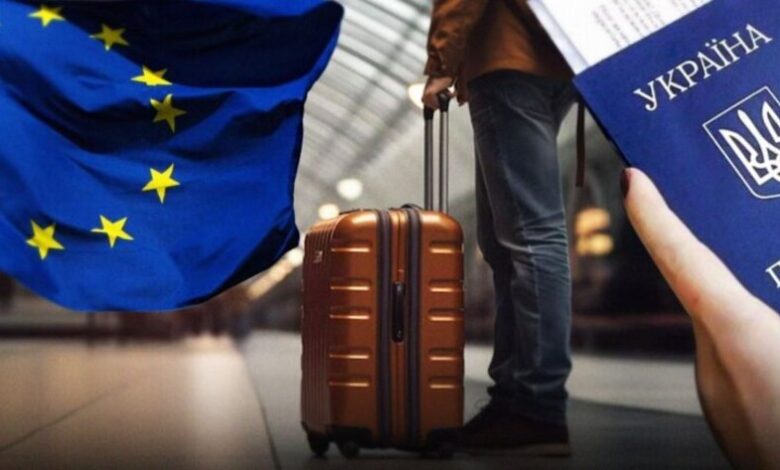
Ukrainian refugees in the European Union live in a regime of extended decisions, where each new period of protection determines for millions of people the right to housing, work, healthcare, education for children and basic confidence in the future. After several years of full-scale war, the issue of the status of Ukrainians in the EU has become part of the daily life of families who have settled in Germany, Poland, the Czech Republic and other countries, but still remain dependent on political decisions from Brussels and the governments of the member states.
What the European Union Special Envoy for Ukrainians Said
The European Union Special Envoy for Ukrainians, Ylva Johansson, stated that the European Commission may propose to extend temporary protection for Ukrainian citizens until March 2028. According to her assessment, EU countries are ready to support such a step, since the security situation does not provide grounds for quickly completing the support mechanism.
“Judging by the current situation, I think that the European Commission will make a proposal to extend temporary protection for Ukrainians until March 2028. And I think that EU member states will agree to this,” the official emphasized.
According to Johansson, discussions are already underway between member states on the future of Ukrainians with this status. She expects that the decision may provide for another extension, probably with some clarifications in the rules.
“In my opinion, it looks like we will end up with an extension of the temporary protection, perhaps with some minor adjustments, but basically for another year. I expect a proposal quite soon, as member states are ready to do so,” Johansson noted.
Why the EU is preparing for a new extension
The European Union activated the temporary protection mechanism for Ukrainians in 2022 as an emergency response to the mass exodus of people after the start of the full-scale Russian invasion. Initially, this instrument was seen as a temporary solution for a limited period, but the war is ongoing, so the EU has already extended it several times.
At the moment, the protection for Ukrainians is valid until March 2027. A potential extension until March 2028 would mean that Ukrainians would be able to continue to legally reside in EU countries, work, receive social support, send their children to school and access healthcare services in accordance with the rules of a particular state.
Johansson separately stressed that in the absence of a peace agreement between Kyiv and Moscow, people need to understand what will happen next with their status. For refugees, such certainty is of practical importance, because it affects housing rental, employment contracts, children’s education, health insurance and long-term family decisions.
How many Ukrainians are under EU protection
In 2026, 4.33 million Ukrainian citizens were under temporary protection in the European Union. Compared to February 2026, this number decreased by 68,980 people, or 1.6%, which indicates a gradual adjustment of statistics without sharp changes in the overall picture.
The largest number of Ukrainians with this status reside in Germany, Poland and the Czech Republic. These countries remain key destinations due to the size of the labor market, the presence of Ukrainian communities, geographical proximity to Ukraine and the already established support infrastructure.
The structure of Ukrainians under protection has hardly changed: 43.3% are adult women, 30.1% are children and minors, and 26.6% are adult men. This distribution shows that the protection mechanism primarily concerns families in which the issues of work, education, housing and social assistance are closely linked.
What a possible extension means for refugees
For Ukrainians in the EU, the extension of protection until 2028 would mean maintaining their legal status for another year without the need to massively switch to other migration grounds. This is important for people who already work in European countries, rent housing, raise children in local schools or undergo treatment.
At the same time, the possible “minor adjustments” mentioned by Johansson could concern the rules for payments, registration, access to social assistance or the transition of some Ukrainians to other forms of residence. EU countries are gradually moving from an emergency admission model to a longer integration system, so the requirements for documents, employment and actual residence may become more precise.
For families with children, the extension is of particular importance, because the school year, language adaptation and preparation for exams require stability. A decision by March 2028 would make it possible to plan education without fear that the status will end in the middle of the educational process.
For Ukraine, this issue has a demographic and social dimension, as millions of citizens have been abroad for several years. The longer temporary protection is in effect, the more Ukrainian families integrate into European labor markets, schools and local communities, although some people continue to consider returning after the security situation improves.
A possible extension until 2028 does not eliminate the question of future return, but it gives people time and legal certainty. For the EU, it is a way to avoid a legal vacuum for 4.33 million Ukrainians, and for the refugees themselves, it is a way to maintain legal status at a time when the war still determines their life decisions.