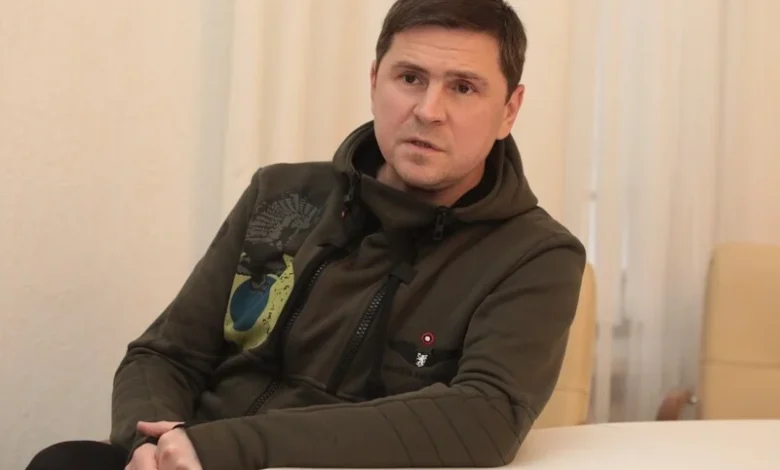
The political-military part of the negotiations to end the war in Ukraine is currently “on pause” due to the situation in the Middle East, but the humanitarian direction continues to operate. This was stated by the advisor to the President’s Office, Mykhailo Podoliak, during a telethon broadcast by the Rada TV channel.
“The President announced, and the head of the OP, Kyrylo Budanov, announced the possibility of continuing the prisoner exchanges, and, accordingly, this part of the work is ongoing. Regarding the global negotiation process, it is clear that until the events in the Middle East have finally dotted the “i”, the war in Ukraine, the negotiations on the war in Ukraine are on pause,” Podoliak said.
According to him, the United States, as the “key moderator” of the peace talks, is currently focused primarily on “reaching some decisions on Iran.” At the same time, Podoliak noted that now the parties have a different status quo, and this will affect the further negotiation process.
He also said that the results of events in the Middle East will either add “reputational components” to the United States, or, conversely, “minus them.”
Separately, the OP’s advisor emphasized that Russia’s reputational component in this region is also changing. He recalled that Saudi Arabia and the United Arab Emirates previously perceived the Russian Federation as a partner.
“They all perceived the conflict in Ukraine as incomprehensible: it is unclear who is there, what is to blame for and who, and so on. Today it is quite obvious to them that Russia is on the side of Iran,” the OPU advisor noted.
Because of this, in his opinion, the attitude towards Russia in the region is “gradually but irreversibly changing.” Also, according to Podoliak, the attitude towards Ukraine has changed, and its subjectivity has significantly strengthened. He emphasized that this will also affect Ukraine’s position in the negotiations.
In addition, the OP’s advisor stated that other states are now communicating with Ukraine as a country that is ready to make practical decisions, which are currently in short supply on the global market.