The Polish labor market is losing Ukrainians: reasons for the mass outflow of our citizens

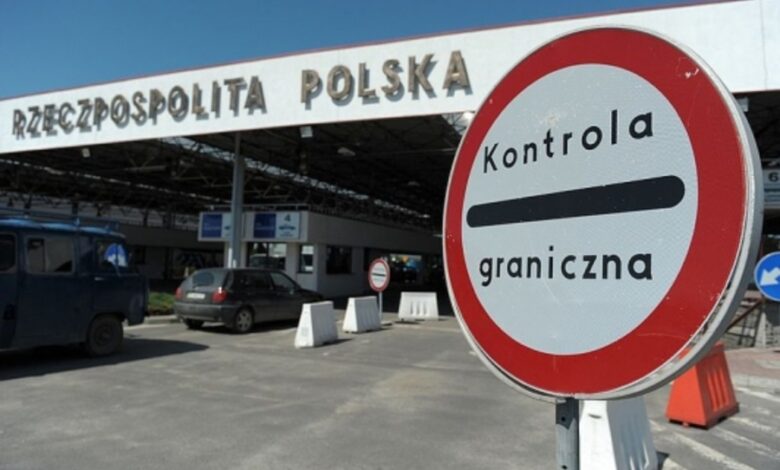
After the full-scale invasion, Poland became the nearest safe space for millions of Ukrainians, where they could quickly cross the border, obtain the necessary documents, find temporary housing, put their children in school and start earning money. However, after a few years, the situation began to change. Some Ukrainians who previously linked their future with Poland are increasingly considering moving to other European Union countries, where income levels are noticeably higher and professional development prospects are broader.
Why Ukrainians are leaving Poland en masse
The Ukrainian presence in Poland still remains one of the most visible in Europe. Hundreds of thousands of Ukrainian citizens work in the Polish economy, pay taxes, contribute to the social security system, rent housing, educate children in local schools and gradually integrate into the everyday life of Polish cities.
At the same time, this initial choice does not always turn into a long-term solution. As reported by WNP.pl., after several years of living in Poland, some people already have experience working in the EU, understand employment rules better, navigate the document system and compare conditions in different countries much more confidently than at the beginning of forced migration.
The main factor in the outflow remains the difference in income. If Ukrainian refugees in Poland receive an average of about 973 euros per month, then in Western European countries the salary for many positions can be significantly higher. For a family that pays for rent, food, transportation, children’s needs and medical services, such a difference quickly becomes decisive.
Moving to Germany, the Netherlands, Belgium or other countries is often considered by people who have already passed the first stage of adaptation. They have work experience in Europe, understand the expectations of employers, are ready for more complex bureaucracy and strive to find a job where earnings better match expenses and physical exertion.
For Ukrainian refugees with children, education, access to medicine, housing conditions and family support also play an important role. When the salary in Poland allows you to cover basic expenses, but leaves almost no room for savings, some people begin to look for a country where work provides more financial security.
How the expectations of Ukrainian workers have changed
In the first months after leaving Ukraine, many people agreed to work that gave them the opportunity to quickly receive income and not be completely dependent on assistance. Thus, Ukrainians massively went into logistics, industry, warehousing, the service sector, transport, processing and construction, where Polish employers have long needed personnel.
After a longer stay abroad, attitudes towards employment have changed. Ukrainians are more likely to pay attention to a formal contract, a stable schedule, insurance, living conditions, overtime pay, management attitude, and the opportunity for training or professional growth.
This approach is especially noticeable among those who plan to stay in Europe longer. People no longer want to perceive themselves as just a temporary workforce that fills the most difficult vacancies. They compare offers, refuse unfavorable conditions, and choose employers who provide not only a salary, but also predictability.
What is happening on the Polish labor market
Polish business is already reacting to the gradual reduction in the share of Ukrainian workers. According to representatives of the personnel market, positions that were previously actively occupied by Ukrainians are increasingly being filled by workers from Asia and South America. In Poland, the number of citizens of Colombia, the Philippines, Nepal, and India who come to work in industries with a constant shortage of personnel is increasing.
The greatest need for foreign workers remains in industry, transport, logistics, storage of goods and administrative processes. For Polish companies, these areas are of practical importance, as the shortage of people quickly affects production, delivery, warehouses and customer service.
Replacing Ukrainian workers with personnel from other regions is not without difficulties. Ukrainians had the advantage due to linguistic proximity, geographical accessibility, experience of working in Poland and quick adaptation. Workers from distant countries often need more time for registration, training, everyday adaptation and communication in the workplace.
Why Ukrainians still remain a key group
Despite the outflow of some people, Ukrainians continue to make up the largest group among foreigners employed in the Polish economy. Their share remains significant, and their contribution to the work of companies is tangible in sectors where local personnel have been lacking for years.
Ukrainians remain the largest group of foreign workers in Poland, despite the fact that their share is gradually decreasing. According to data for September 2024, about 779 thousand Ukrainian citizens were officially employed. At the same time, in November 2025, according to ZUS, the number of insured persons with Ukrainian citizenship increased by almost 7.9 thousand and reached 862,060 people. The total number of foreigners insured in the Polish social insurance system was 1.295 million people, which is about 9.5 thousand more than a month earlier.
Ukrainians make up about 67% of all foreigners employed in the Polish economy, and about 5% of all employees in the country. In total, foreigners already make up about 7% of those employed in Poland. This shows that the Polish labor market is increasingly dependent on migration, and Ukrainians, despite the outflow of some people to Western Europe or returning home, still remain its key foreign workforce.
According to estimates by the Polish Economic Institute, more than 1.5 million Ukrainians are legally residing in Poland. Almost 964 thousand of them have PESEL UKR status, which confirms temporary protection, another about 482 thousand have received a temporary residence permit, and almost 58 thousand have permanent residence permits. Almost 300 thousand Ukrainian children study in Polish schools, and more than 47 thousand Ukrainian citizens are pursuing higher education.
The economic activity of Ukrainians in Poland also remains high: about 80% of Ukrainians living in the country work or are looking for work, pay taxes and social contributions. For comparison, in Germany this figure is about 25%, and in the Czech Republic – 48%. This difference explains why the Ukrainian community in Poland is important not only in terms of numbers, but also because of its real participation in the labor market.
It is important that Ukrainian refugees in Poland are distinguished by their high economic activity. Many adults work, pay taxes, pay social contributions and are not limited to a passive stay in the country. That is why the Polish labor market cannot quickly lose Ukrainians without consequences for employers.
The Ukrainian community has also long gone beyond labor migration. Ukrainian children study in Poland, students work, families live, small businesses are opened, and some Ukrainian citizens receive temporary or permanent residence permits. Because of this, even the relocation of some workers to other countries does not change the fact that Ukrainians remain a significant part of Polish social and economic life.
What can await Ukrainians who want to return to Poland
For those who leave further to the West, returning to Poland will not always mean returning to the same jobs. Vacancies previously held by Ukrainians may already be filled by workers from other countries. The Polish labor market is quickly adapting to new conditions, as businesses cannot wait long for personnel in logistics, industry, or transport.
This process creates a new situation for Ukrainian refugees. Moving to a country with higher salaries may provide better income, but returning to Poland after an unsuccessful attempt may be more difficult than a few years ago. Competition among foreign workers is growing, and employers are increasingly actively expanding the geography of hiring.
At the same time, Ukrainians have an advantage that is difficult to quickly replace. Experience working in Polish companies, language proximity, understanding of local life, and readiness for legal employment remain strong arguments for employers who have already cooperated with Ukrainian workers.
For Ukrainian refugees, the outflow from Poland indicates a change in life stage. The first period was associated with security, quick paperwork, and the search for any stable income. The next stage is related to choosing a country where one can not only survive, but also build a foreseeable future for oneself and one’s children.
The decision to leave Poland is often not related to a sharp break with the country that accepted Ukrainians at the most difficult moment. Many people retain their connections, work experience, acquaintances and documents, but are looking for a better balance between earnings and expenses. For families who do not know when they will be able to return home, such a choice becomes a way to reduce uncertainty.
Poland remains an important center of the Ukrainian presence in Europe, but its role is gradually changing. For some, it has become a place of long-term life and work, for others, the first safe stage after leaving Ukraine. That is why the movement of Ukrainians further to the West does not seem to be a random phenomenon, but reflects people’s desire to find conditions in which work, housing, children’s education and daily stability combine into a more reliable life perspective.