
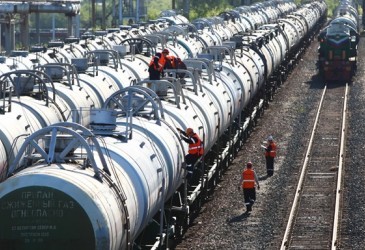
The Russian infrastructure is not adapted for large-scale fuel imports, so the possibilities of importing it from abroad in conditions of deficit on the domestic market remain limited. This was stated by Deputy Prime Minister of the Russian Federation Alexander Novak, commenting on the government’s decision to abolish import duties on gasoline and diesel.
“Our legislation provides for the possibility of import, and the government has reduced the import duty to zero – previously there was a 5% duty, which is prohibitive. Therefore, economic operators have the opportunity to supply gasoline, diesel fuel, petroleum products, ”, Novak explained.
At the same time, he admitted that the lack of infrastructure significantly complicates the import of fuel to Russia:
“Our infrastructure is basically all prepared for export, so there are not many opportunities”.
Previously, Russia planned to establish gasoline supplies from China and other Asian countries to compensate for the deficit that arose due to strikes by Ukrainian drones on large oil refineries. In September, the Russian Federation quadrupled fuel purchases from Belarus by rail, but a significant part of Belarusian gasoline continues to be exported.
At the end of September, 38% of primary oil refining capacities, capable of processing 338 thousand tons of raw material per day, were idle at Russian refineries. About 70% of these outages were caused by Ukrainian drone strikes, which effectively disabled about a quarter of Russian oil refining — about 236,000 tons daily.
As a result, gasoline production fell by 1 million tons in September, and the deficit on the domestic market reached 20% of consumption, the publication “Kommersant” wrote, citing sources. The fuel shortage is most acute in the Far East and in the occupied Crimea, where restrictions on sales have been introduced — no more than 20 liters of gasoline in one hand. In total, more than 20 regions have faced a fuel shortage.
Due to the decrease in refining, Russia has increased oil exports. In early October, it was reported that seaborne oil exports had increased to record levels in a year and a half, while refining fell to a minimum since the spring of 2022.


