“The Ukraine that used to be will no longer exist”: a candid conversation with Yuriy Lutsenko about war, mobilization, corruption, and the future of the country. Part 1.

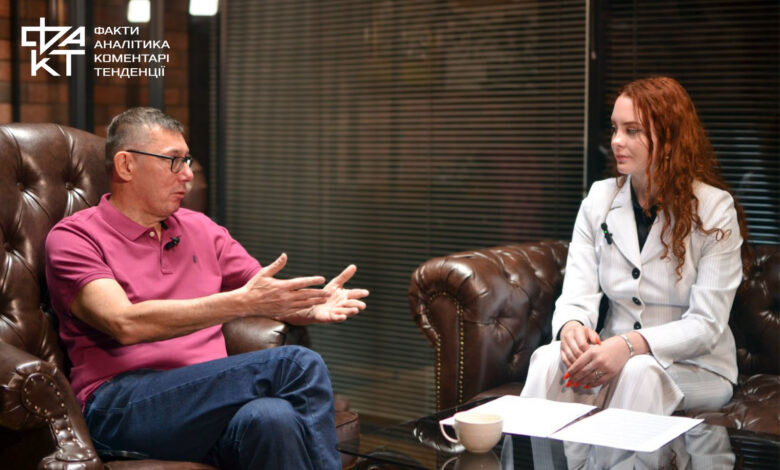
While the authorities continue to speak in the language of soothing statements, optimistic broadcasts and prefer to remain silent about the real situation of the state, tension continues to build in society. War fatigue, a crisis of public administration, problems with mobilization, total corruption, demographic and economic crises, weapons in the hands of the population and veterans who will return home completely different – these and other issues require frank discussion.
In a major interview for IA “FAKT” Yuriy Lutsenko – a well-known Ukrainian politician with front-line experience, former Minister of Internal Affairs and Prosecutor General of Ukraine – told how much longer the war could last and what factors could bring its end closer. He assessed the methods of mobilization and the participation of the police in it, and also explained how this process should have been organized. Separately, Lutsenko analyzed why Ukraine will no longer be able to return to the pre-war state. He also spoke about the mistakes of the authorities, which cost the state dearly, and about what the country should be like in order to survive and preserve a chance for the future.
Yuri Vitaliyevich, we know that you have repeatedly spoken about the need for an honest conversation with society about the war. How do you assess the real timing of its completion: is it a matter of a month, a year, or a transition to another, less intense form of confrontation?
The war will not end in the near future. I am not even sure that this year, but it could be a stop to the war without signing a peace agreement. I do not know a single Ukrainian politician who would sign a peace agreement with Putin on the terms that the Kremlin is currently offering. It is impossible to change Russia’s position, because the Russian people, who have been very much infected with fascist ideology, will simply demolish the Kremlin. And therefore we can only talk about suspending the war, waiting for the time when another generation, young people, will replace the Russian government. And then, perhaps, the de-fascization of Russia and a peaceful, second Russia will take place.
When the peace agreement will be signed, I don’t know. I hope that in my lifetime. When can the war stop? If it weren’t for Trump’s Iranian adventure, it could end this year. I don’t have an answer right now.
You have your own front-line experience and have seen the war not only from the offices. How do you assess the main factors that can actually bring the end of the war closer: weapons, diplomacy and compromises, the internal resilience of Ukrainians or the exhaustion of both sides?
The war in Ukraine has been a trench war of attrition for more than a year and a half. This is a remake of the First World War. Trenches, soldiers… then, it’s true, artillery worked, but now the state works. In fact, the front line is practically not advancing. One landing right and left, there is such a fashionable word as “infiltration”, that is, the penetration of small groups of soldiers across the front line into the territory controlled by the enemy for the purpose of reconnaissance, sabotage, adjusting artillery fire or capturing prisoners. If we have 20% of the regular strength in a battalion, then in fact 5 kilometers of the combat contact line are guarded, or rather, guarded, at best, by 10 people.
And, of course, this infiltration occurs by infiltration, it happens quite easily, but it does not decide the course of the war. No matter how many soldiers infiltrate, drones destroy them from both sides, so this war has become static. Yes, the Russians have a huge advantage in “meat” and in finances. We have the advantage in stability – because of the conviction of what we are fighting for, and, thank God, in allies from the European continent, who help both with weapons and financially.
How to stop this war? It is necessary to take away one of the factors from the enemy. However, the “meat”? we will not take it away, because there are at least 120 million of them, that is, many times more than us, and they are ready to give their lives for it – quite massively and cheaply, unfortunately. Nothing has changed since the time when Glinka wrote the anthem of Russia. By the way, this opera was not called “Ivan Susanin”, but “A Life for the Tsar”. So, this tradition of giving one’s life “for the Tsar” has remained in Russia.
I once talked to a prisoner in Bakhmut, he was from Novosibirsk, with a higher education, an employee of one of the research institutes, that is, with a rivet in his head. I ask: “Do you realize that you attacked us? Do you realize that this is barbaric, illegal aggression? Why did you decide to fight?” He replied: “Russia cannot lose. And the choice fell on me. I must give my life for the greatness of Russia.” This was answered by someone who is capable of thinking, but one can imagine what an ordinary fighter from distant villages or Buryatia thinks. Well, for the most part he is completely disconnected from reality. Therefore, we will not take the “meat”.
The second factor is money. The war costs Russia 150–170 billion dollars a year. This almost coincides with the income from the sale of Russian oil — 120–140 billion. Accordingly, in order to stop this war, it is necessary to squeeze the “throat” of oil and oil products exports from the Russian Federation.
I love history very much, so a short digression. Everyone remembers Hannibal: Carthage, elephants, the campaign against Rome. The Romans were constantly losing battles, but they were not busy winning battles, they found a source of financing for Hannibal’s army – Spanish gold. As soon as they captured the Spanish silver mines, as soon as they captured this area where the mines were, Hannibal disappeared and his army disappeared, and Carthage was destroyed, burned and sprinkled with salt.
We have a similar story. What is financing the Russian war? Oil. We need to block the oil. How? What our long-range drones are doing today is the first answer. Burning oil ports, burning oil refineries. I think there will be more pipes burning ahead. But let’s ask: how does Russia sell oil? 60% – to China. Half by sea, and half by pipe. We will not block either direction. And who buys the other 40%? India. Where is it supplied? 75% — through the Baltic, 25% — through the Black Sea.
And where are the checkpoints along the way? In the Baltic Sea — the narrow Danish Strait in the territorial waters of Denmark. Near Spain — also a narrow strait. This is the second checkpoint. In the Black Sea — the Bosphorus. The third checkpoint. The entrance and exit from the Suez Canal — these are the fourth and fifth checkpoints, that is, two separate checkpoints on the route of Russian oil.
Five points where one ship with a dozen drones is enough. The answer is clear? Cut off Carthage’s silver — Russia’s oil. If the Western community is not able to do this in a civilized way — without letting “bloody oil” through its territorial waters — Ukrainian “ecological partisans” should do it. How did Nord Stream end? Just one yacht with Ukrainian scouts “sunbathed” in that area. This is exactly how Russia’s oil war should end.
We all know that the issue of mobilization has become one of the most painful for our society during the long war. How do you assess the modern forceful and often illegal methods of its implementation? Do they meet the needs of the front or are they already creating dangerous tension between the state and citizens, who, like many politicians, say that no one wants to go to the front? How, in your opinion, should mobilization have been carried out?
I do not agree that no one wants to go to the front. I have a son, 24 years old, who returned from London after graduating from college. He was in Ukraine for three years, and there for three years. He went to the CCC, although half of the CCC came to see it. But he has been fighting for two years, and everything is fine.
However, the CCC is a really painful problem. Let’s start from the beginning. Who should regulate the issue of mobilization? The answer is given by the Constitution and legislation. It says there: the President of Ukraine establishes the forms, methods and means of mobilization. Then the question: does the president do this? The answer: no, he categorically does not want to do this, although he is obliged by law. Why? Because he is more interested in the next elections than in the course of this terrible war. The elections are important to him, so he does not want to work on a topic that takes away his rating.
How should mobilization be carried out? First, mobilization should be fair. This is a key word for Ukrainian society. There are countries with ancient statehood, the key word there is “law”. And there are countries that did not have their own state, which were historically under foreign rulers, and for them, not foreign law, but their own justice is more important. Here we are – Ukraine, in which justice is higher than the law. Well, that’s how it happened.
However, the CCC does not establish this justice, because it is under political, financial and corruption pressure from the current government. Unfortunately, the CCC has now crossed all the red lines of the law. This worries me terribly, because when a representative of the government demonstratively uses illegal methods in society, it leads to the fact that people stop believing in their state. This is exactly what is happening right now before our eyes due to the problems with the CCC.
What should be done? It is also clear: start systematizing this. If I were the president, I would go to the podium and say: “Today, we have no more than 300 thousand soldiers on the front line. People do not have a great desire for voluntary mobilization, so let’s start with ourselves. All deputies from the ruling party with all their relatives tomorrow send me a photo from the CCC, where they went as volunteers.”
At the same time, you can do this – conduct an inspection of those who have been booked, which we entrust to the opposition. It should be, if I’m not mistaken, fifty-fifty. And then we will see a completely different picture, but today it is not. But that’s not all, we still need to dispel fears. People believe that territorial defense instantly leads to death or very serious injury.
If you, for example, are a people’s deputy, why don’t you go to war? What’s the problem? If this concerns a list member, because a majority member cannot be replaced during a war, I understand that. But a list member can calmly write a statement, resign, and the next one from the list will take his place – and go fight, set an example. I understand that neither another people’s deputy, nor a former minister, nor a current minister will change the course of the war. But this will change the sense of justice, because the army cannot be only workers’ and peasants’.
Tell me: how many high-ranking officials resigned during the war? Can you name at least one who went to war? The Minister of Foreign Affairs, the Head of the Presidential Office, the Minister of Regional Policy — many, but none of them left. They would not have changed the course of the war, neither Yermak, nor Kuleba, nor anyone else. However, their presence in the war would have shown that this was a joint war, a joint cause. Unfortunately, they chose a common cause only in Italian. “Common cause” is Cosa Nostra in Italian.
If I were the president, I would have announced the number of those killed a long time ago — one that at least somewhat corresponds to reality. I know these figures, they are very heavy, but it seems to me that they should not be hidden. Because people should know the price of war, and therefore understand that it is no longer possible to retreat. But, on the other hand, this figure is not as terrible as we think. On the scale of an army of millions, believe me, this is not a very large percentage. You cannot say that it is small, but it is not as terrible as it all looks.
After all, there are a lot of professions in the army where the mortality rate is generally very low. For example, I started with a platoon in a unit under Magyar. Now in his brigade, one percent of the dead are among thousands of people. Therefore, war is not as terrible as some people think. But this needs to be explained, firstly.
Secondly, people need to be assured that they will be trained — not just passed through BZVP (basic combined arms training – ed.), but will be taught by really experienced instructors. And, unfortunately, the level of training there is weak, it needs to be raised and demonstrated to a person that they will not just be thrown into a trench, but will be trained and given protection. At the same time, each soldier should have a full set that will ensure his stay there as much as possible. Starting from a drone indicator and ending with a regular first-aid kit: a tourniquet, hemostatic, Israeli bandage, that is, everything necessary.
So, we need to demonstrate: look, in normal units where you can get into, there is everything you need to survive, so that you are not expendable. And then the nature of mobilization will change a little. Unfortunately, people do not see any of this, they are only shown the TCK.
By the way, I still cannot understand why the TCK is part of the Ground Forces. Can you explain this to me? Why does the “ground forces” call up sailors or pilots? Well, that is absurd! From my point of view, the TCK should be brought into a separate state committee on mobilization and subordinated to the Minister of Defense, which is logical, because it is he who trains, treats, provides for the military and pays their salaries. It is also logical for him to both call up and train. Or even to the Prime Minister, if someone thinks it is right.
The Minister of Defense considers himself a candidate for the presidency of Ukraine, this is his secret desire. But, at least, the leader of the future party of power. That is why he says populist things, that is why he does not want, like the current president, to deal with the rational, very unpleasant, but necessary issue of normalizing mobilization.
Moreover, we have another problem, probably also a key one. The “United Marathon” does not show the society heroes. Tell me: how many Heroes of Ukraine do we have today? Neither you nor I, no one knows, but two years ago there were about five thousand of them. Which of them do you see on the screen of state television? In our country, the war has turned into a movie of one hero and we all know him. Who built the house in “Dynasty” and who he is, no one knows, and for whom the war became a scene of a monohero, we know.
From my point of view, the fact that the president is shown every day during the war is absolutely normal. However, in addition, I would like to hear not only his opinion, but also the opinion of the heroes of Ukraine, who paid with blood for this title and have the right to speak about the questions that you are now asking me. And not only the heroes, but also those who fought alongside them. Of course, I am not talking about myself, because I do not consider myself a hero. I simply did what a politician who was trusted by a couple of million people had to do.
Yuri Vitaliyevich, You are a very modest person! As far as we know, you participated in the war as a volunteer, starting your service as an ordinary rifleman in the defense forces, and ending it with the rank of captain as the commander of an aerial reconnaissance platoon. Therefore, you have the full moral right to analyze the war and convey your thoughts to society.
Yes, I went to the terrorist defense, first there was the defense of Kyiv, then the administrative border of the Mykolaiv and Kherson regions, the valiant village of Prybuzke, the steppes, trenches, the first shelling. Then — Bakhmut, four months as part of the Magyar unit, the first drones, still small “maviks”.
Then the president got jealous of me and ordered me to go to the Kyiv “cauldron”. I suffered there for a month and then for the first and last time during the war I used my prosecutorial experience. Every day I wrote a report to the commander of the TRO: “I am at your disposal, please determine the place of service, set a task and indicate the place of its implementation”. And I just sat at home and was not allowed anywhere. I went to headquarters, and I was actually kicked out with the words: “There are no tasks for you”. However, I wrote every day. On the thirtieth day, I wrote that I had been at your disposal for 30 days, but I had not been assigned any tasks. At the same time, I consider the payment of monetary support without performing official duties to be bordering on Article 191, Part 5 of the Criminal Code of Ukraine – embezzlement of budget funds in especially large amounts.
Two days later, I was already at the front as part of the infantry TrO, and again Bakhmut. Then, in fact, two or three blocks of the city remained ours, no roads, this is the whole beauty and tragedy of war… Out of 200 people in our unit, only four left. Then we were transferred to the deep rear – Cherkasy region. Although war mobilizes the body, I started having health problems, I had been disabled for a long time, since 2022. There were concussions, back problems – all this accumulated. I realized that I would not be combat-ready, but would only be registered, and I did not want to do anything half-heartedly. So I passed the military medical board and was demobilized, and another guy came to take my place.
That’s my short story. But I believe that I was not a hero, I simply worked alongside heroes. And I think I understand what soldiers think about the state today. They increasingly feel that the enemy is not only at the front, but also in the rear. Therefore, when I call for the fight against corruption, changing the composition of the government and the system in general, it is not just opposition.
Now, the Ministry of Defense, as part of a large-scale reform of the mobilization system, is proposing norms according to which only police officers, without the participation of military personnel, should deliver men to the CCC. How do you assess the involvement of the police in mobilization activities?
Today, CCC employees who are military personnel work together with the police. It is no secret that we have already come to the point that they often work with local bandits, who are then blamed for everything that is happening now.
We have a new Minister of Defense who, in fact, duplicates Magyar’s messages and only talks about drones or robotic complexes. Although during his appointment, he himself said that the president had given him the task of dealing with the CCC. However, he did not understand and wants to simply wash his hands of it and transfer the CCC to the police. This is completely wrong! Firstly, there are not that many police. Secondly, 50% of police officers are fighting, they are also sent to the front, to the line of combat contact, and the police themselves are severely understaffed.
What is the Ministry of Internal Affairs? The State Emergency Service is part of the Ministry of Internal Affairs. It is also fighting — although not in military uniform, but it goes out on calls every day after enemy strikes. This is about 80 thousand people. Then there is the border service. They are all involved in the front through rotations and border protection. That’s another 80 thousand. Next comes the National Police — only about 100 thousand. And then the National Guard — also about 100 thousand, and they are all fighting.
In the National Police, out of 100 thousand, about 30% are women. That leaves 70 thousand personnel, of which 25 to 50% are understaffed. Thus, in the patrol police, we actually have about 15 thousand people, including women. And these people, in addition to street crime — thefts, robberies, robberies and everything else — according to the Minister of Defense, should also be engaged in mobilization. This is absolutely wrong!
The population now has a large number of illegal and unregistered weapons in their hands. After the war, people with front-line experience, psychological trauma, and some without work and social adaptation will return to civilian life. How serious do you consider the threat of a surge in crime in the post-war period? What should the state do now to prevent the criminalization of society and the loss of control over security?
The million people who went through the army will come back completely different. The guys who came to the Territorial Defense on the third day of the war and those they have become now are different people. And, I apologize, we already have over 200 thousand in the SZCh. At the same time, we must understand that the population has 5 million firearms in its hands, and they are far from always legal. The question is no longer whether to give or not to give the right to weapons, they are already in their hands. Legal weapons, as far as I remember, are about 1 million 200 thousand units. The rest – from 4 to 5 million – are illegal firearms. Therefore, the question is how to legalize and control it, because the surge in crime after the war will be extremely large, and this is very serious!
100 thousand National Police and such a large number of weapons in Ukraine, of which illegal. Is this an adequate ratio? Not really. And the salary of police officers is 20 thousand with their great risks at work! On the other hand, there are drugs, gangs, for which 2 million is not money at all. Therefore, this is a very big challenge.
Honestly, I can’t imagine how the Ministry of Internal Affairs will cope with these tasks with its current number and existing resources. Who will ensure control over the owners of these weapons? Because today the permit service is about two thousand people throughout the country. These are people who simply physically cannot cope. The last tragic shooting in Kyiv was committed by a person who had a legal firearm. But she was tried for violence against her neighbors, she was constantly in conflict with her neighbors and no one controlled her. Neither the precinct inspectors, nor the patrol police, nor the SBU, despite the pro-Russian and anti-Ukrainian views of this murderer.
That is, the question is who will deal with this. So far, there is no answer to it. I believe that the population of small towns — up to 100 thousand people — should elect a sheriff, whose powers would include control over people who have firearms. In large cities, this should be exclusively the National Police and, perhaps, the municipal police. But where do we hear this discussion?
Is the current leadership of the Ministry of Internal Affairs currently coping with its tasks?
As it became known from the court hearing, the current leadership of the Ministry of Internal Affairs was selected by Yermak by asking a Moscow fortune teller whether his birthday coincides with feng shui. It is difficult to comment on this. I have a normal attitude towards the Minister of Internal Affairs, but he comes from the personnel service of the Ministry of Internal Affairs. And until the end of the war, he will probably drag this industry.
After the war, a person should come there who will have a very high authority among those who return from the war, because the communication of the Ministry of Internal Affairs should primarily be with them. He should be respected by both the military and society.
(Continuation of the interview in the next publication)