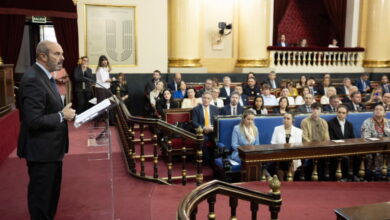
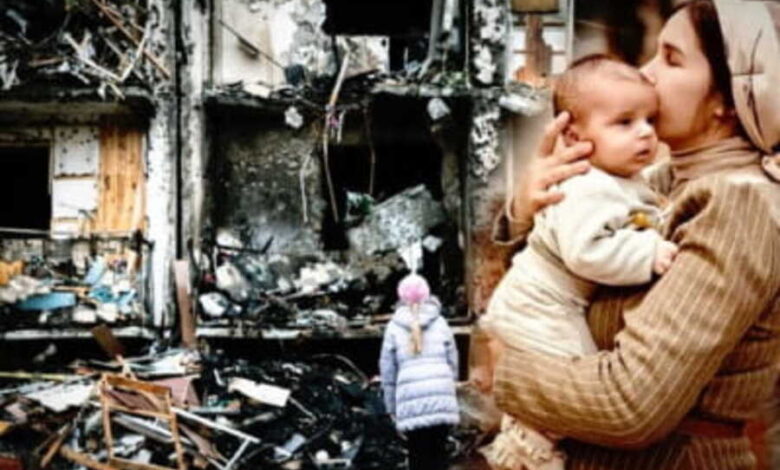
The Verkhovna Rada proposes to recognize all children under the age of 18 as victims of war

Зміст
ToggleThe legislative definition of the status of a child who suffered as a result of military actions in Ukraine may undergo significant changes that will affect the very logic of the state approach to the protection of minors during a period of full-scale aggression. The initiative, registered in the Verkhovna Rada, provides for the rejection of individual proof of the circumstances of harm and the consolidation of a universal principle according to which all children who lived in conditions of war and martial law are recognized as victims.
The essence of the legislative initiative
The parliament registered bill No. 15039 on amendments to the The Law of Ukraine “On the Protection of Childhood”, which proposes to revise the current wording and mechanisms for granting the appropriate status. The document actually changes the very approach to defining the category of children affected by war.
The draft law provides for the rewording of paragraph 12 of Article 1 of the law, according to which it is proposed to consider every child, as well as a person who has not reached the age of 18 during hostilities, as a child affected by hostilities and armed conflicts. This wording covers not only those who are children at the time of application, but also those who were minors during the active phase of the war.
In addition, the changes concern part seven of Article 30-1, where it is proposed to stipulate that the status is granted to every child, as well as a person who has not reached the age of majority during hostilities. It is assumed that the decision to grant status will be made by the guardianship and trusteeship authorities at the place of application or detection of the child, which determines a clear administrative mechanism for implementing the new norm.
From individual proof to a universal approach
The current model requires the establishment of specific circumstances that confirm that the child has suffered harm as a result of military actions, however, the proposed changes actually eliminate the requirement to prove individual facts. The legislative logic of the project is that the very reality of living in conditions of full-scale aggression and martial law is considered sufficient grounds for recognizing a child as a victim.
The explanatory notes to the initiative emphasize that since the beginning of the full-scale invasion of the Russian Federation, all children in Ukraine have been negatively affected by the war, regardless of their region of residence or the fact of internal displacement. Thus, territorial distance from the front line is not considered a criterion that exempts from the influence of war circumstances.
International research data as an argument
The authors of the bill refer to UNICEF statistics, which illustrate the scale of the psychological and social impact of war on children. According to the data provided, more than a third of children have been directly or indirectly affected by war, with 73% reporting feelings of insecurity and 54% reporting frequent feelings of sadness or helplessness, as well as high levels of anxiety, depressive symptoms and post-traumatic stress.
In this regard, war appears as a set of hostilities, as well as a constant background of everyday life, in which air raids, interruptions to the educational process and uncertainty about security form a psychotraumatic environment even in the absence of direct proximity to an active combat zone.
Expanded understanding of the consequences of war
The proposed approach involves taking into account not only physical injuries, which are obvious and measurable, but also a wider range of consequences – psychological, social and educational. This includes disruption of learning stability, loss of a sense of security, prolonged emotional stress that accumulates in conditions of prolonged martial law and affects the development of a child regardless of specific events in his biography.
Legislators proceed from the fact that modern research in the field of child development and mental health considers traumatic experiences more broadly than direct physical injury. In this sense, the proposed changes aim to align the legal definition with the content of scientific approaches to assessing the impact of war on childhood.
Social protection as a consequence of the new status
Consolidating universal status at the legislative level would mean that all children who lived in conditions of full-scale aggression and martial law would be recognized as victims, without the need to prove individual circumstances. Such a step will potentially affect social protection mechanisms, since the status of a child affected by war is the basis for receiving appropriate guarantees and support.
Therefore, draft law No. 15039 proposes a change to the very concept, according to which war is considered a national factor that determines the conditions for the growth of all children in Ukraine. The decision to adopt it will remain with the parliament, but the fact of registering the document indicates the intention to consolidate in the legislation a broader understanding of how war events affect childhood.