Ukraine has expanded the list of communities from where children are forcibly removed due to shelling

During war, adults make decisions not only for themselves, but also for their children. And the longer the war lasts, the more situations arise when these decisions become a matter of life and death. In recent weeks, hostilities have intensified again in the front-line areas of Donetsk region, and the authorities are making decisions that leave no room for hesitation. It is about the forced evacuation of children.
However, not all parents are ready to leave. Despite the threat of shelling, destruction of houses and injuries among civilians, some families continue to remain in dangerous zones. They refuse to evacuate even when their children’s lives are in direct danger. Some are afraid of losing their homes, others don’t believe in the safety of new places, others simply don’t want to leave the familiar. But this creates a situation in which children are at risk of coming under fire every day. And precisely because of this, a mechanism appears that allows the state to intervene.
Evacuation of children in Donetsk region
It was in the Donetsk region extended the list of settlements where the regime of forced evacuation of families with children operates. This was announced by the Head of the Donetsk Regional State Administration, Vadym Filashkin. These are communities that were previously considered relatively safe, but in recent weeks have become targets of regular shelling. The relevant decision was made by the regional commission on technogenic and environmental safety and emergency situations.
“Today, by the decision of the regional commission on TEB and emergency services of the Donetsk region, the beginning of the forced evacuation of children with their parents or other legal representatives from the villages of Krasnopodillia, Matyasheve and Novogryshyne of the Kryvorizka community, the city of Bilytske, the villages of Vodyane and Chernihivka, the villages of Svitle and Shevchenko of the Dobropil community, the villages of Kurtivka, Kindrativka and Osykove of the Druzhkiv community, as well as the villages Novoselivka and Shandrygolovo villages of the Lyman community.
In total, about 500 children currently live in these settlements. Enemy shelling has become more frequent, victims of which are children. That is why we have to increase our efforts at all levels in order to protect them. The enemy does not stop attacks on the entire front line and relatively rear communities, children are suffering and dying.
I urge you once again: evacuate while it is still possible! Take care of your loved ones and do not expose them to danger!”, – emphasized Filashkin.
According to the local authorities, there are about 500 children who live with their families in these centers, mostly in the private sector. In the case of a direct hit, there is almost no chance of survival in such houses. This was the reason for the announcement of forced evacuation.
How and where forced evacuation takes place
In parallel with Donetsk, forced evacuation is taking place in several other regions. In Luhansk region, in areas where fighting is taking place near the demarcation line. In the Kherson region — in coastal villages that are under fire from the left bank and are at risk of flooding. In the Zaporizhia region – in villages located near the occupied territories, and in the Kharkiv region – in border communities that are regularly subjected to artillery and rocket attacks.
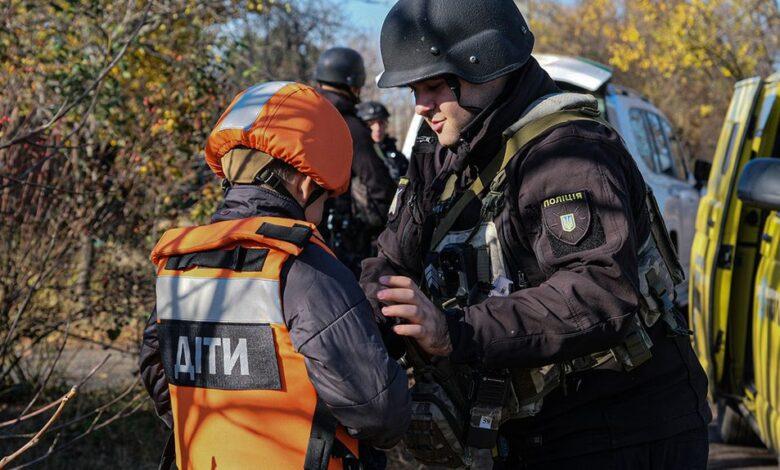
Formally, it is an organized trip with the participation of social services, the police, the State Emergency Service, volunteers and representatives of the military administration. But in fact, it is a difficult process of persuasion, explanations and psychological work with those who do not want to leave home, even with children in their arms. Evacuees are guaranteed:
- safe transport (evacuation buses),
- temporary housing in quieter regions,
- humanitarian aid (food, things, medicines),
- psychological support for both adults and children.
It is important that evacuation does not mean loss of rights to housing or property. All residents remain officially registered in their communities, and the state undertakes to return them home after the situation stabilizes.
However, as recognized by the regional military administrations, even despite the open danger and the presence of a forced evacuation mechanism, some people still do not agree to leave. In such a case, children can be removed from the family temporarily — solely for security reasons — which has repeatedly caused conflict situations.
Forced evacuation is the exception, not the rule. But in a war that has no clear front line and that leaves destroyed homes in its wake every night, delay can cost a child’s life. That is why the authorities are forced to act decisively, because this is a chance for salvation. Ukraine already has the experience of organized resettlement, but the main issue now is not only logistics or resources, but the readiness of the people themselves to admit that the war is not retreating and it is necessary to save children.