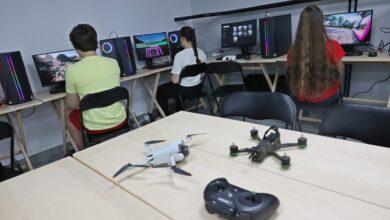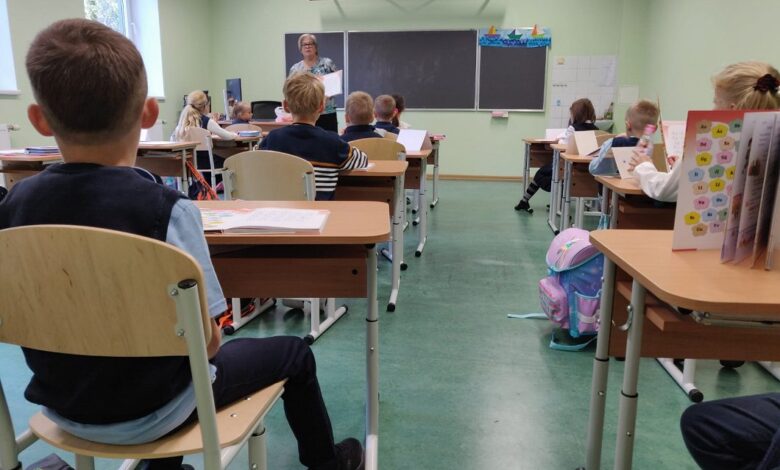
Ukrainian children who ended up in Latvia after the start of the full-scale war are increasingly actively entering the local education system. However, at the same time, for many of them, a difficult daily routine between Latvian school and Ukrainian distance learning remains. They are forced to build their daily schedule between another language, new rules and distance lessons with Ukrainian teachers. In such a reality, integration into the European education system is often accompanied by fatigue, emotional exhaustion and a feeling of living in two countries at once.
How Ukrainian children study in Latvian schools
According to a research by UNHCR, most schoolchildren already attend Latvian classes, but more than half continue to study online according to the Ukrainian curriculum, which turns a normal school day into a several-hour combination of lessons, homework, and attempts to stay connected with their future return home.
There are almost 32,000 Ukrainians with temporary protection status living in Latvia, a significant number of whom are women and children. Over the past academic year, the number of Ukrainian schoolchildren integrated into the Latvian education system has increased significantly: if in 2023/2024, 62% of school-age children attended local schools, then in 2024/2025 this figure reached 80%.
This increase indicates the gradual entry of Ukrainian families into the Latvian educational environment, because after the first years of forced relocation, some families began to make longer-term decisions regarding the education of their children. Girls are more actively involved in school education than boys: according to the study, 91% of girls and 81% of boys attend Latvian schools.
At the same time, a fifth of Ukrainian school-age children still remain outside Latvian schools. Almost half of such cases are due to the fact that families leave their children in the distance Ukrainian system, as they expect to return or want to maintain their usual educational trajectory.
Two schools in one schedule
The most difficult part of the UNHCR study was the figure on dual education: 53% of Ukrainian school-age children in Latvia combine Latvian school with Ukrainian online lessons. For such students, the morning is spent in a classroom where they have to study subjects in Latvian, and in the afternoon or on weekends, a second educational block begins according to the Ukrainian curriculum.
The burden is especially noticeable for high school students, among whom 65% study in two systems simultaneously. For high school students, such a regime means preparing for assessments, completing tasks according to different programs, adapting to a different language of instruction, and the constant need to fit into two sets of requirements.
Among primary school children, dual education is much less common – only 2% combine both systems. Parents of younger students are probably less inclined to burden their children with two programs, since even adapting to a new class, language, and rules already requires significant resources for young children.
Why families leave the Ukrainian program
Many families continue Ukrainian distance learning because they want to preserve the opportunity for their child to return to a Ukrainian school without significant gaps. For parents who do not know how long their stay in Latvia will last, the Ukrainian program becomes a way not to lose touch with their previous educational path.
Such a choice comes at a high price for children, because after a full day in a Latvian classroom, they again sit down for lessons, do homework, and try to keep up with the requirements of two systems. For teenagers, who already have a larger volume of subjects and a more complex program, this takes away time for rest, sleep, clubs, and communication with peers.
The story of twelve-year-old Sofia from Riga well conveys this tension. She goes to a Latvian school, and after classes she continues to study according to the Ukrainian program in front of her laptop. The girl wants to return to her friends in Ukraine, but her family remains in Latvia for the time being, so studying here has become a part of everyday life.
Bullying in schools and lack of support
The data on the safety of Ukrainian children in Latvian schools is particularly alarming. According to the results of the study, 26% of schoolchildren have faced bullying. Most often, the aggressors were peers, but in 3% of cases, children reported bullying by teachers.
The problem is complicated by the fact that 53% of Ukrainian children studying in Latvian schools do not receive any additional support. Where help is available, it mainly concerns the Latvian language, while subject consultations or broader academic support are less available.
For children studying in a foreign language environment and at the same time maintaining Ukrainian online learning, the lack of support increases stress. The student must not only understand the material, but also master the language, join a new team and cope with the emotional consequences of moving.
Ukrainian language and extracurricular life
Only a third of children have the opportunity to attend Ukrainian language classes in person. For families who are considering returning home or want to maintain language ties with Ukraine, such support is of particular importance, since distance learning often becomes the only stable channel of the Ukrainian educational environment.
At the same time, 69% of children participate in extracurricular activities: sports, clubs, sections and other activities. This indicator indicates that a significant part of schoolchildren gradually enters local life outside of lessons, finds communication and activities for their interests. However, participation in clubs does not eliminate problems in the classroom, especially for those children who have experienced bullying or were left without help during their studies.
Older teenagers and the risk of losing their educational path
The study separately records a difficult situation among Ukrainian youth aged 16 to 24. Only 16% of this group plan to enter Latvian universities or colleges, while 43% have no such plans.
Another 10% of young people are not studying, working or undergoing any training. In international practice, this group is classified as NEET, which is considered vulnerable due to the risk of social exclusion, loss of professional start and prolonged uncertainty.
Despite these data, 72% of respondents in general express their intention to remain in Latvia at least at the current stage. For such families, the issue of education becomes of practical importance, since the temporary protection status is valid until March 2027, and further conditions of stay remain uncertain.