
Ukrainian refugees in Europe demonstrate unique integration outcomes: what this means for future returns

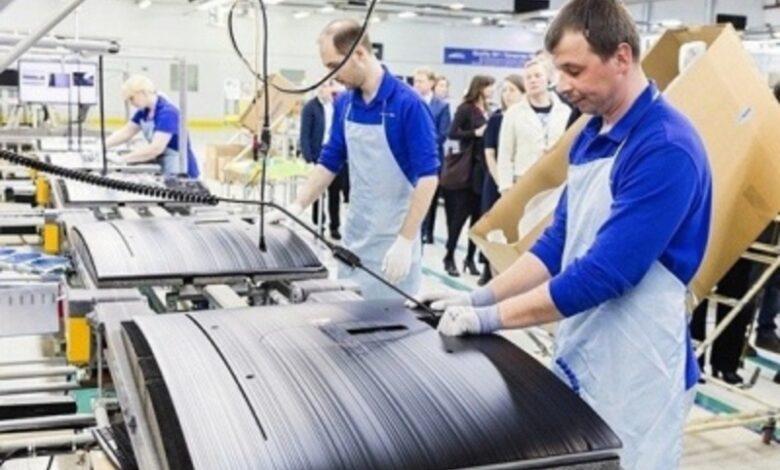
Unlike previous waves of refugees who spent decades searching for their place in European societies, the Ukrainians, forced to leave their homes by the full-scale invasion of Russia, have become an exception. Their integration into EU labor markets has been impressively fast — an order of magnitude more efficient than in previous crisis migration scenarios. He writes about this unique socio-economic phenomenon Financial Times, based on data from the Organization for Economic Cooperation and Development (OECD), as well as the results of surveys in Ukraine and European countries.
The phenomenon of high employment: what the statistics show
Jean-Christophe Dumont from the OECD notes: the level of employment among Ukrainians in some countries of Eastern and Central Europe is more than twice as high as that of other refugee groups. This is especially evident on the example of Poland and the Czech Republic — states that have a common historical past with Ukraine, linguistic proximity and already formed Ukrainian diasporas. These factors created the prerequisites for the rapid entry of Ukrainians into the workforce.
However, it was not only cultural similarities that played a role. At the time when Ukrainians were arriving en masse in the EU, the economies of many countries were experiencing an acute labor shortage. The European labor market was tight, and the demand for hired workers was high. This was one of the determining factors of quick employment.
The political gesture of the European Union also turned out to be unprecedented — for the first time, a pan-European regime of temporary protection was introduced. Ukrainians were given the opportunity to legally stay on the territory of the EU, obtain a work permit without complicated procedures, as well as access to housing, healthcare and education. This tool not only made the everyday life of the displaced people easier, but also created conditions for economic independence from the first weeks of their stay.
Despite the impressive pace of employment, there is another side of reality. The majority of Ukrainians work in low-skilled positions — in the areas of accommodation, public catering, and production. This mostly does not correspond to their level of education. According to research, more than 40% of Ukrainian refugees have a master’s degree or higher education, but are often forced to accept jobs that do not match their skills.
The main reasons for this are the language barrier, difficulties with the confirmation of diplomas, as well as the need for immediate earnings. For many Ukrainians, integration in the labor market began with a job that ensured financial stability, not with the development of a professional career.
The dynamics of changes in the financial situation of Ukrainian refugees is confirmed by the survey of the Center for Economic Strategy. In 2022, 28% of respondents had to borrow or save money even for basic needs. However, this figure has now dropped to 7%. This shows that a significant part of the refugees was able to adapt, find a stable job and get out of the financial risk zone.
The reverse path is less and less likely: the demographic and economic challenge
The most disturbing aspect of this successful integration is the prospect of return. If in November 2022, about 50% of Ukrainians who left declared their intention to return home after the end of hostilities, now only 20% remain. The better a person adapts to a new environment, the more difficult it is for him to change the already formed way of life and dare to return to the zone of instability.
As the director of the Institute of Demography and Social Research points out, there is no universal answer to the question of how to stimulate mass return. As long as danger remains in Ukraine — and not only physical, but also economic — the majority will prefer to stay.
The mass outflow of educated Ukrainians and children abroad threatens long-term consequences for the country. It is not only about “brain drain”, but also about the loss of part of the future demographic resource. If tens of thousands of specialists, doctors, engineers and teachers do not return, it will significantly weaken Ukraine’s ability to rebuild.
However, experts also point to another vector: a developed Ukrainian diaspora can become a powerful resource for Ukraine — through investments, technological transfer, and political support. Successful Ukrainians abroad are able to contribute to the international integration of the country, help in the humanitarian sphere, create business and attract funds for reconstruction.
The history of Ukrainian refugees in Europe has become an exception in the global context of migrations. A high level of education, a favorable economic situation, European protection mechanisms and Ukrainians’ own motivation — all this formed a new model of integration that can serve as an example for other countries and regions. But this same story contains complex challenges for the future of Ukraine: how not to lose its intellectual and human capital, while at the same time using the potential of the diaspora for national development.


