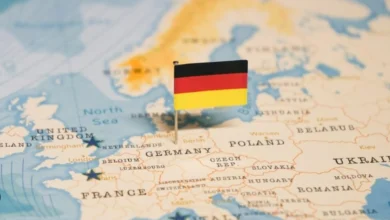
The extension of temporary protection for Ukrainians in the European Union until March 4, 2027 removed the issue of urgent re-issuance of documents, but did not eliminate the main problem that is already coming to the fore: EU countries are preparing for people to switch to other, more ordinary grounds for legal residence. For Ukrainians living in Portugal, this prospect is not theoretical, but rather of practical importance, since the choice of further route depends on income, type of employment, availability of housing and the ability to collect documents without haste, which is almost always better to avoid in migration cases.
The Portuguese system in this matter has its own complexity, since a significant part of the procedures goes through AIMA – the agency for integration, migration and asylum, whose work has been under heavy load for a long time. That is why Ukrainians who associate their lives with Portugal and do not plan to leave the country after the expiration of temporary protection should not look at the date of 2027 as a distant milestone, but at the coming months as a period of preparation, on which a smooth transition to a new status may depend.
What changes after the extension of protection
Despite the fact that the temporary protection regime has been extended until March 4, 2027, the very logic of European policy is already shifting in the other direction: it is not about further automatic extension without limits, but about preparing people for the transition to other legal grounds for residence. In practical terms, this means that Ukrainians in Portugal will not have to urgently change their status now, but postponing the decision until the last moment would be a mistake, because the transition from a temporary regime to a more permanent type of stay almost always requires time, documents and financial predictability.
For most of those who want to stay in the country after the end of protection, three main directions emerge: residence based on a stable income, registration through official employment or a path related to investments. There is no universally better option between these options, since each of them is tied to a specific life model: one person lives on a pension or income from property, another already works in Portugal under a contract, and the third earns remotely for a company from abroad and requires a completely different legal solution.
Why it is important to prepare in advance in Portugal
For many Ukrainians, Portugal has become a country where temporary shelter has gradually turned into long-term residence with work, renting housing, educating children and integration into the local environment. That is why the question of future status is not reduced to an abstract discussion about migration policy, but concerns everyday things – the ability to stay in a rented apartment, continue to work legally, use banking services, plan taxes and not fall out of the country’s administrative system.
The situation is also complicated by the fact that even ordinary procedures in Portugal can move slowly, and any mass re-registration of documents in the future, if thousands of people apply at the same time, is unlikely to be simpler than it looks on paper. Hence the main conclusion: someone who understands their own route in advance and gradually collects the necessary confirmations enters the transition period much calmer than a person who begins to understand the rules already on the threshold of the deadline.
D7 visa: a path for those who live on a stable income
For Ukrainians whose stay in Portugal does not depend on work inside the country, one of the most understandable routes remains the D7 visa. This is a residency visa for people who have a passive or regular income and can prove that these funds are enough to live on without having to look for local work as the main reason for residence.
This path is most often considered by pensioners, people with income from rental property, dividends, royalties or other stable income that can be documented. For this category, the key is not the fact of having money in the account, but the stability of the income, its clear source and the applicant’s ability to show that he can support himself in Portugal on a long-term basis.
In 2026, the basic financial guideline for this route increased along with the increase in the minimum wage in Portugal, which from January 1 is 920 euros per month. It is this amount that is usually used as a starting point when assessing the sufficiency of means of subsistence: for the second adult, half of the basic indicator is taken, and for a child – thirty percent. Although in migration practice it is always worth checking the figures before submitting, the general logic remains the same: the applicant must convincingly show that the residence in the country is provided not by random income, but by a stable financial basis.
When preparing for D7, a passport, confirmation of the source of income, evidence of housing in Portugal, health insurance and a standard package of documents for a national visa are usually required. After entering with such a visa, the applicant undergoes further registration of a residence permit in the country itself.
At the same time, it is with D7 that one of the most common mistakes is associated, when people try to adapt a situation that does not correspond to it to this route. If the source of funds is not passive income, but active remote work, in such a case it is increasingly logical to look at another tool – the D8 visa, which is intended specifically for remote professional activities.
Employment as a basis for legal residence
For those Ukrainians who have already integrated into the Portuguese labor market or have a real chance of getting a contract from a local employer, the most natural option is a resident visa for hired work. In this case, the decisive factor is not passive income or the amount of savings, but the presence of an official employment relationship with an employer in Portugal.
This route often turns out to be the most understandable for people who already live in the country in a normal daily life, work in the service sector, in manufacturing, in care, logistics, construction or other sectors where the issue of legal status is directly tied to the employment contract. The application usually requires the contract itself, or a documented job offer, or confirmation of the employer’s interest. In the case of professions for which special requirements are established, professional certificates or confirmation of qualifications may also be required.
The advantage of this method is that it is based on real employment in the country, and not on an external source of income. However, it is important to understand the downside here: a person becomes much more dependent on the stability of his job, on the employer’s willingness to support the documents and on how formal the employment relationship is.
From time to time, a job search visa is mentioned as a possible alternative, but in this matter it is not worth building a plan on a mechanism that has not yet become a reliable mass tool. If a certain type of visa has not yet been launched in the usual consular regime or is awaiting additional regulation, counting on it as the main scenario after 2027 would be too risky.
D8 visa: a solution for those who work remotely
A separate place among the possible routes is occupied by the D8 visa, which is actually created for people whose professional activity is carried out remotely and whose income comes from outside Portugal. This option is especially important for a significant part of Ukrainians who have long been not tied to one office or one city and earn money through work in IT, design, marketing, media, education, translation, consulting or through independent contractual activities.
The main difference between D7 and D8 is not in the name of the visa, but in the nature of the income. If D7 is aimed at people who have the means to live without active daily work as the main reason, then D8 is intended specifically for those who work, receive payment for their professional activities and can prove it with documents. In other words, for a person living in Portugal, but working for a company from Germany, Britain, the USA, Ukraine or any other country, D8, in its logic, is much more accurate than an attempt to fit active earnings into the framework of passive income.
This route is suitable for those who have confirmed remote work, receive money from a non-Portuguese employer, can show regular income, have housing or proof of residence in Portugal and are ready to go through the usual procedure for obtaining a national visa. For Ukrainians who are already in the country under temporary protection and are actually building their lives around online work, D8 may become one of the most important options after the end of the current regime.
The financial threshold for D8 is significantly higher than for D7. The guideline is the requirement to bring the average monthly income to the level of four minimum wages in Portugal. After increasing the minimum wage to 920 euros in 2026, this amounts to about 3,680 euros per month. In practical terms, this means that D8 is not suitable for every freelancer, but primarily for those whose income is truly stable, transparent and sufficient to be confirmed without contradictions in documents.
Typically, this route involves preparing a foreign passport, a questionnaire, evidence of remote work or independent professional activity, proof of income for the previous months, documents on tax status outside Portugal, health insurance, proof of housing, a certificate of good conduct and the rest of the standard papers for a national visa. In practice, this package often includes employment contracts with a foreign company, contracts with clients, invoices, bank statements, tax returns and other confirmations that the earnings have an external source and are not related to the Portuguese employer.
Procedurally, D8 belongs to national resident visas, which means that the start usually takes place through a consular channel or a visa provider, after which a residence permit is issued in Portugal. For Ukrainians who have been working online for a long time and do not want to build further legalization on a scheme that does not correspond to their real lifestyle, this option seems the most consistent.
Investment route: an opportunity for the few
Among the legal grounds for residence in Portugal, the so-called golden visa — ARI — remains, however, after changes in recent years, this mechanism is no longer associated with the mass interest in buying real estate as the easiest way to enter the program. The main grounds remain investments in qualified funds of 500 thousand euros or more, investments in science, job creation or contributions to culture and heritage preservation.
The advantage of this status lies in the softer requirements for physical presence in the country, which makes it convenient for wealthy applicants with an international lifestyle. However, for the majority of Ukrainian families who are in Portugal after forced departure from Ukraine, this option is unlikely to become a real tool due to the very high entry threshold, complex administrative support and significant costs of the process itself.
What to do before 2027
Although March 4, 2027 has not yet arrived, the period leading up to it is the most important for preparation. First of all, it is necessary to honestly determine your own living model: does a person live on passive income, work for a Portuguese employer, or earn remotely outside the local labor market. Without this answer, it is impossible to choose the right direction, and any mistake at the start turns into a waste of time and additional difficulties with documents.
The next step is related to the financial history, which should not just be had, but put in order. Bank statements, contracts, documents on the origin of funds, tax receipts, evidence of regular income, papers on renting housing or other confirmation of residence – all this should be collected not at the last moment, but sequentially, so that in case of submission you do not have to restore the information retrospectively.
For those planning a route through work, it is important to take care of a properly drawn up contract or written offer from the employer in advance, and not to rely on oral agreements, which have no weight in the migration procedure. For those who are oriented towards D7 or D8, it is necessary to check how much their income meets the requirements not in one random month, but in a stable perspective, because it is consistency and transparency that most often determine the persuasiveness of the case.
Special attention should be paid to the basic elements of administrative presence in Portugal, among which the NIF is especially important – a tax number, without which it is difficult to open a bank account, conclude a lease agreement and go through many official procedures. The NIF itself does not decide the issue of future status, but in real life it often becomes one of the first links, without which further movement towards legalization slows down at the start.
What does the transition period mean for Ukrainians in Portugal
For Ukrainians who have been living in Portugal for several years, the end of temporary protection will not necessarily mean a forced break with the country, where many have found work, social ties, and domestic stability. At the same time, the fact of long-term residence in itself does not guarantee an automatic extension of legal status if it is not supported by a properly chosen reason for further stay.
That is why the main question after 2027 sounds not as an abstract “will they be allowed to stay”, but much more specific: on what legal basis will a person be able to formalize their residence and how convincingly will they be able to confirm it. For some, the answer will be D7, if life is really provided with a regular income without dependence on local work; for others, an employment contract in Portugal will be the key; for those who work online for the foreign market, D8 seems the most logical. The investment option is preserved, but for most families it will remain far from reality.
So, the main line of preparation is already clear: do not wait for the moment when the temporary regime ends, but put the documents in order in advance, determine your own reason for residence, and prepare for the transition so that 2027 becomes not a point of uncertainty, but a stage of obtaining a new status on clear terms.