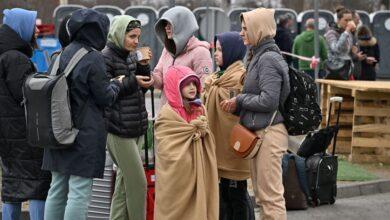
The end of temporary protection in Spain is no longer a distant date that can be remembered later. For tens of thousands of Ukrainians, the right to live, work, study and use basic administrative services without the risk of being outside the legal field depends on this milestone. For several years, this mechanism provided a quick and clear solution for people who left the war, but after March 4, 2027, the situation will change: general protection will end, and further stay in the country will have to be justified on individual grounds.
While the final transition procedure is still being finalized, migration lawyers advise looking at this date as a practical deadline, after which the fact of moving from Ukraine will not matter, but the specific life status of a person in Spain. In this case, official work, study, family ties, confirmed income or other legal grounds for residence will be decisive, while the absence of such supports can lead to the loss of legal status.
What will change after the end of temporary protection
The Protección Temporal status has been in force in Spain since 2022 and has been extended until 4 March 2027 under a European Union decision that applies to the Member States. After this date, the general mechanism will cease to apply, so the right to stay in the country will have to be confirmed through another type of residence permit.
The Spanish system is preparing for a transition without a sharp administrative break, so a short period for submitting documents for the new status is being discussed. According to lawyers, it could last from one to three months, although the final procedure has not yet been approved. Due to this uncertainty, preparing documents in advance seems to be the most sensible solution, because in migration cases, the most time-consuming part is usually not the submission of the application, but the collection of certificates, confirmation of income, translations, appointments and correction of errors in the package of documents.
Who has the best chance of staying in the country
As of March 2026, Spain is among those countries where Ukrainians have been quite actively integrated into the local labor market and education system. This circumstance is crucial, since after the end of temporary protection, the advantage will be given to people who can already confirm their place in the economic or social life of the country.
The most stable position will be for those who work officially, have a valid contract and a stable income, since for them the transition to another type of permit looks the most predictable. The best chances will also be for Ukrainians who study at accredited institutions, live married to citizens or residents of Spain, support themselves with income from abroad or work remotely for foreign companies and can document this.
What are the remaining legalization paths after 2027?
For those who are officially working in Spain, the most practical option remains a residence permit based on employment relationships, in particular through the arraigo laboral mechanism. Despite its apparent clarity, this procedure requires a confirmed employment relationship, a properly drawn up contract and income at least at the level of the minimum wage. In 2026, this figure is about 1,134 euros per month, so for those who are already officially working, this route seems the least painful.
A separate basis remains family reunification, which opens the way to residence and work for people who have a husband, wife, children or, in some cases, parents with citizenship or legal residence in Spain. In such cases, documents confirming kinship, cohabitation, income of the host party and fulfillment of other migration requirements are crucial.
For people who do not plan to work in Spain, the option of a non-lucrative visa remains, i.e. a residence permit without the right to work. This status is suitable for pensioners, property owners, recipients of passive income or those who have stable financial support from abroad. The basic requirements here are quite strict: you need to show an income of 2,400 euros per month, have health insurance and confirmed housing.
Another real route is the digital nomad visa, introduced for those who work online for foreign companies or cooperate with clients outside the EU. In this case, the regularity of income, the legality of contracts, the applicant’s professional profile and the ability to prove that the source of income is not related to illegal employment in Spain become decisive.
For younger people and those who have decided to build a longer trajectory of stay through education, a student permit remains an important tool. It gives the right to study, work part-time and, after completing the studies, switch to another type of residency, if there are sufficient grounds for this. This path takes more time, but for many it can become the most stable model of consolidation in the country.
Who is most at risk of losing status
The most vulnerable group remains Ukrainians, who, after several years of residence in Spain, have not acquired any grounds for switching to another migration regime. The most difficult situation may arise for those who do not have official work, stable income, study at an accredited institution or relatives with legal status in the country. Under such circumstances, the room for maneuver narrows sharply, and preparation for a change of status turns into a race against time.
A separate risk exists for people who work without registration, since actual employment without documentary confirmation is of little help in the migration procedure. A person can earn money in Spain for years, support themselves independently, and at the same time find themselves in a weak legal position if they do not have a contract, contributions and evidence of a legal work history.
No less vulnerable is the category of people without stable financial sources. Most residence permits require a means test, so the lack of income often becomes the main obstacle even before the stage of consideration of other documents. A similar situation exists for those who have lived in Spain for a long time, but do not work, do not study and do not have family support, since long-term residence in itself does not create an automatic right to a new status.
What are the possible consequences after losing the grounds for residence
If, after the end of temporary protection, a person does not apply for another permit and does not have a legal reason to stay, their stay may become illegal. Such a development means administrative problems in everyday life, difficulties with employment, renting housing, access to some services and the risk of being required to leave the territory of Spain.
Added to this are possible restrictions on re-entry into the Schengen area, which for many people poses a separate threat, especially if family, work or study are connected to several European countries at once. Because of this prospect, delaying the preparation of documents is often more expensive than timely legal advice and regularizing one’s own status before the end of general protection.
Certain exceptions for vulnerable categories
Despite the general end of temporary protection, special procedures remain for some people, designed for vulnerable life circumstances. These include families with children, people with serious illnesses, people who may qualify for international protection, as well as those whose return is associated with serious risks.
For such cases, the instruments of asylum, humanitarian residence permit or other forms of legal protection, which are considered individually, may be used. This approach does not guarantee a positive decision for every applicant, but it leaves legal space for those whose situation falls outside the standard migration categories.
What to do for those who see no reason to continue living
For Ukrainians who do not plan to stay in Spain or cannot find a real path to a new status, the REAVA voluntary return program is provided. It may include payment of a ticket, consulting support and some financial support, so for some people it becomes a controlled and less painful option for ending their stay.
This scenario is usually chosen by those who do not want to bring the matter to the point of losing legal status, administrative sanctions or a long life in uncertainty. In this case, the decision to return does not look like a forced step at the last minute, but as an attempt to maintain control over their own situation.
The issues of changing status in Spain are handled by the Oficina de Extranjería and Policía Nacional, where you will have to contact after the end of temporary protection or even earlier if the grounds for a new permit have already appeared. However, the key importance will not be rumors and advice from unofficial chats, but decisions published in state sources.
The most important guidelines remain the BOE – the official state bulletin of Spain, the website of the Ministry of Territorial Policy and Civil Service, as well as notifications from migration services. There will be rules for the transition period, technical requirements for documents and deadlines for submitting applications, on which the legal future of thousands of Ukrainians will depend.
The key difference between a safe transition and loss of status most often occurs not in March 2027, but much earlier, at the preparation stage, when a person either builds a legal basis for further residence, or postpones the decision until the moment when there is almost no time left.