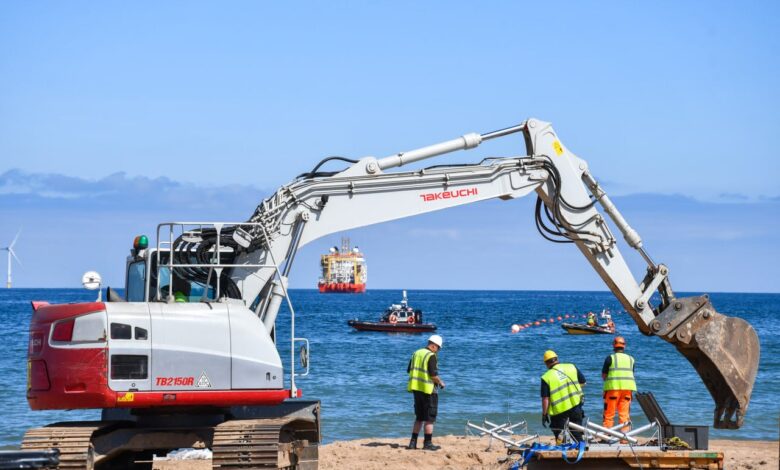
In 2027, Vodafone Group and Vodafone Ukraine will begin construction of the Kardesa submarine cable system. It will connect Ukraine, Bulgaria, Turkey, Georgia and Asian countries to strengthen the security and stability of communications in the Black Sea region and provide an alternative route that will bypass the territory of Russia. This was announced by the Minister of Digital Transformation Mikhail Fedorov.
According to him, the main goal of the project is to increase the reliability and security of telecommunications in the Black Sea region and create a route that will avoid dependence on Russian infrastructure.
Construction will start in Bulgaria in 2027, and the project budget exceeds 100 million euros. Thanks to the Kardesa system, the Black Sea region will receive an additional Internet bandwidth of 500 terabits/s. Since submarine cables transmit 97–98% of all international Internet traffic, this project is of key importance for the development of the region’s digital ecosystem.
The general contractor for the project will be Xtera, which specializes in high-performance submarine telecommunications solutions on a turnkey basis, and is engaged in the construction and commissioning of modern submarine cable systems in more than 60 countries around the world.
As a reminder, in the first half of 2025, Vodafone Ukraine reduced its net profit by 13% compared to the same period last year – to UAH 1.705 billion. At the same time, the company’s revenue increased by 15% and amounted to UAH 13.518 billion.
In the first half of the year, the company increased its investment volume by 66% compared to the first half of 2024, investing more than UAH 3.5 billion in critical infrastructure. In total, over 3.5 years of full-scale war, the volume of investment in Ukraine reached almost UAH 19 billion.
In the structure of investments in the first half of this year, 51% fell on the construction and restoration of the network, as well as preparing it for operation in blackout conditions, 31% on network maintenance, 11% on the development of fixed-line communications, and 4% on the billing exchange program.