War creates new threat to education: Liliya Hrynevych warns of risk of marginalization of youth

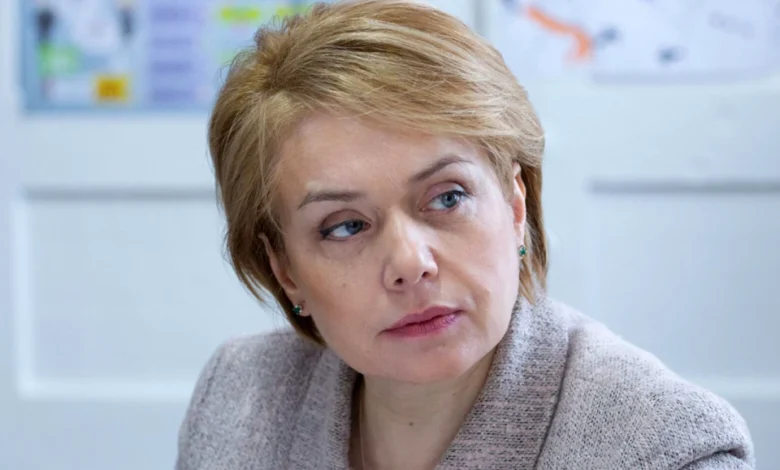
After the end of hostilities, Ukraine will face not only the physical restoration of infrastructure, but also the less visible but deeper consequences of a long war. One of these problems will be the situation in education. It is not only about destroyed schools, a shortage of teachers or deterioration of the material and technical base, but a significant number of children and teenagers who studied for a long time in conditions of distance, migration, stress, interruption of communication with teachers and staff, and in many cases – did not actually study at all. As a result, a whole stratum of young people is formed, which may appear not only with educational gaps, but also with a broken connection with the very idea of education. This poses a risk both to the education system and to social stability in the post-war period. Exactly for this pays attention former Minister of Education and Science Lilia Hrynevych
Hrynevych believes that after the end of the war, Ukraine will face a deep and long-term problem — the formation of groups of young people who, as a result of educational losses, an unstable environment and a remote format, especially in front-line zones, actually dropped out of the educational process. She emphasizes that these teenagers often had very limited opportunities for normal education – with power outages, lack of stable Internet, psychological fatigue, bomb shelters instead of classrooms. Therefore, they may not develop a basic internal discipline for work, self-development, and participation in social life. This threatens the emergence of new marginalized groups – disoriented, easily manipulated youth, who will remain on the sidelines of post-war recovery. As a result, many of them developed a persistent withdrawal from the educational process, a habit of passivity and alienation from learning.
According to the ex-minister, such youth will grow up without the skills of regular work, without the habit of systematic study, and therefore without formed mechanisms of self-realization. She compares this situation with similar processes in other countries that experienced wars: every time there was a part of young people who did not adapt to social life after the end of the conflict and easily fell under the influence of dangerous groups or criminal structures.
Hrynevych emphasizes that today the traditional levers of influence on young people – family, school, society – are increasingly losing their power. In the digital age, information networks and algorithms that select content and operate at the level of the unconscious have become a key factor in the formation of worldviews. According to her, these virtual networks, in which children immerse themselves, gradually form an alternative reality – detached from real life, devoid of critical thinking and often filled with destructive ideas.
She emphasizes that a modern child who goes to plant explosives under the car of a Ukrainian soldier is not just an example of criminal behavior. This is evidence that this child has already fallen into the trap of someone else’s virtual ideology, has lost his bearings and has become a tool in the information war.
The ex-minister notes that Ukraine will have to look for new educational and social tools in order to return these children to the community, to form in them an internal motivation to study, to restore the ability to plan, to work systematically, to participate in the post-war life of the state. Only technological solutions or digitization of education will not solve this problem. A holistic approach is needed: with attention to the social environment, psychological traumatization, the need for real live communication between the teacher and the student. Without it, there is a risk of losing an entire generation that will never return to active social life.
According to Lilia Hrynevych, overcoming this crisis should become a priority of national policy immediately after the end of the active phase of hostilities. Otherwise, Ukraine risks ending up with a deeply stratified society: part of the youth is active, integrated, development-oriented, while others are passive, disoriented and vulnerable to any form of manipulation. And this second part can become not only a burden, but also a source of both social and security threats.