How the bodies of fallen soldiers are identified in Ukraine and what a DNA match means: Igor Kuzin tells

In Ukraine, the bodies of fallen soldiers continue to be returned, but not all of the dead can be immediately handed over to their families for burial. Often, the body still needs to be identified — a complex forensic examination needs to be conducted to establish who exactly the remains belong to. This process often lasts for months, since the bodies are received in different conditions, and in some cases it is not possible to establish the identity of the deceased at all.
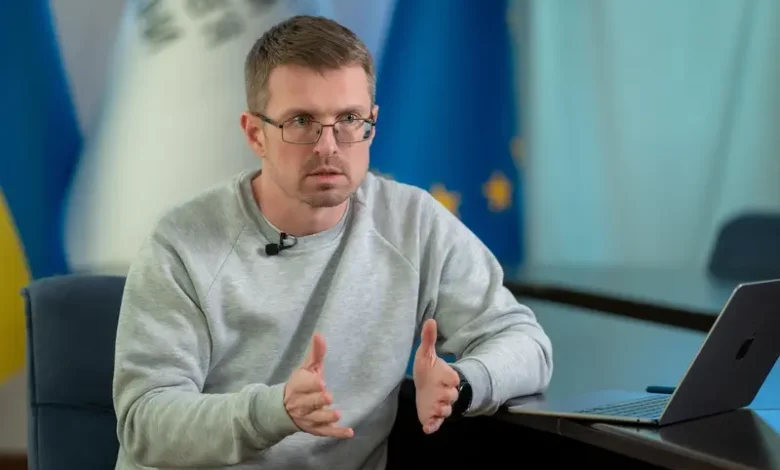
About how the bodies of the dead are identified in Ukraine, why the process is often complicated and what the result of a DNA examination means for relatives, told Chief State Sanitary Doctor of Ukraine, Deputy Minister of Health Ihor Kuzin.
He said that the forensic medical examination is one of the key methods of gathering evidence, which allows to establish both the identity of the deceased, as well as the cause of death or culpability in the case of crimes. Especially during the war, this work becomes critical, because it is the forensic medical examination that makes it possible to record evidence of war crimes in detail. According to Kuzin, until 2023, regional forensic medical examination bureaus were under the management of regional state administrations, although funding was mainly provided through the Ministry of Health. However, due to the attachment to local funding, the bureaus did not have the opportunity to quickly transfer groups of experts to regions where there was a need for additional expertise, which deprived the system of the necessary flexibility.
Kuzin explained that it was for this reason that the decision was made to centralize the work of the bureau and transfer it to the Ministry of Health. As of today, 16 regional bureaus have already been transferred to the Ministry, and soon the entire system of forensic medical examination will fully work in the system of the Ministry of Health.
He described in detail that the examination process itself is complex and multi-component. It uses not only DNA research, but also modern high-tech methods — forensic archeology, toxicology, and forensic dentistry. Especially difficult are the cases when the remains are in a difficult condition, which makes it difficult to establish the identity, in some cases identification becomes impossible. Ihor Kuzin explained that forensic toxicology makes it possible to detect traces of chemical damage to the dead or the fact of the use of narcotic drugs or alcohol poisoning. Forensic archeology is used in cases of mass burials, where it is necessary to find out the circumstances under which they took place. Such approaches are still relatively new for Ukraine, but are being actively implemented. To ensure a high level of evidence, they need to be standardized.
Kuzin noted that most of the standards have already been approved, but some protocols — in the field of forensic dentistry, archeology, and toxicology — are still being developed. He emphasized that the implementation of these protocols will allow the standardization of the entire network in accordance with the rules of the European Union. That is why the Ministry of Health decided to launch the reform of the system.
The first stage of the reform was the transfer of the bureau to the management sphere of the ministry. The second important change was the renewal of the forensic medical examination internship. Previously, this specialization was possible only after completing an internship in pathological anatomy. The doctor first graduated from the university, then completed an internship in pathological anatomy, and then additionally studied forensic medicine.
He explained that starting in 2024, doctors can immediately enter an internship in forensic medicine after university. They will be immediately assigned to regional offices, where they will undergo both full-time and part-time training. The Ministry of Health plans that at least 44 interns-forensic experts will be admitted to the internship this year.
At the same time, Kuzin noted that these 44 specialists will not cover the shortage of personnel. He gave specific figures: in 2021, Ukraine lacked 250 forensic medical experts, and in 2023, this number increased to 450 vacant positions.
Speaking about the DNA database, Kuzin noted that a centralized database is currently being formed in Ukraine, which is being created in accordance with the adopted law “On State Registration of Human Genomic Information”. The basis for the identification of the dead is the DNA examination. This method makes it possible to identify a person with high accuracy, both in cases of disappearance and to confirm family ties. The database is gradually being filled with DNA profiles of relatives of the deceased. However, according to Kuzin, replenishment of this base is a long process. Some families are abroad, and others are not yet aware of the need to submit samples.
Kuzin also spoke about Ukraine’s cooperation with the International Commission on Missing Persons, a large non-governmental organization created at the initiative of the United States. It works in many countries of the world and has a number of divisions throughout the EU. DNA collection points have been organized specifically for Ukrainians so that people can submit a sample outside of Ukraine without returning home. In addition, the commission helps equip Ukrainian laboratories and organizes additional training programs for Ukrainian specialists. Their work also includes improving the quality of the material and technical base of morgues and refrigerating chambers for storing bodies.
Cousin emphasized: every remains submitted for examination are fallen soldiers, and experts are obliged to carry out examinations until full confirmation of the identity of the deceased is received. Explaining the mechanism of DNA identification in detail, Kuzin noted that DNA is a unique feature of each person — a molecule that is not repeated in the world. The level of DNA similarity depends on the degree of kinship: the closer the family ties, the easier it is to establish a match.
The deceased’s DNA is extracted from the bone tissue, while the relative’s sample is taken through a swab from the oral mucosa. After that, the laboratories carry out the superimposition of profiles. If there is a match of more than 99%, the identification is considered confirmed. Partial matches are not reported to relatives – they are of no practical importance. It is this coincidence that gives the final reason for transferring the body to the family.
Kuzin emphasized that in complex cases, when a DNA examination is impossible due to the condition of the body, additional methods are used, for example, forensic dentistry. With the help of a dental formula, you can establish unique features of a person. In a number of cases, it was the forensic dental examination that became the only method of identification. Therefore, Cousin urged relatives to provide investigators with medical records, dental images and other dental information.
He emphasized that a laboratory error in the DNA examination is practically excluded. Problems can arise in cases where Ukraine receives bodies after exchanges with Russia in the form of dismembered or mixed remains. Then the experts have to collect the remains into complete sets, linking them to a specific person.
Kuzin spoke in detail about the very procedure of transferring the bodies from Russia. The Ukrainian side receives only a notification about the agreement and the number of bodies to be transferred. After receiving the bodies, the forensic medical service quickly accepts the remains, describes them and begins investigative actions. The remains arrive in different states: some bodies are suitable for identification by external features, others require a complex examination.
He noted that in Ukraine there is a network of forensic medical examination bureaus throughout the country, and there is also a large number of mobile and railway refrigerators. Some identification processes take more than a year. If the body is not identified after a year, it can be temporarily buried in specially designated places with mandatory marking, in order to later release the body for reburial after identification.
Cousin added that currently approximately 2-3% of bodies remain unidentified due to the inability to extract DNA or the absence of samples from relatives. He emphasized that after identifying the person, the main decision on further actions is made by the investigator. It is the investigator who coordinates cooperation with families.
Separately, Ihor Kuzin noted that there are cases when even after confirmation of a match, relatives refuse to take the body. In such cases, the body is recognized as identified, and a burial decision is made according to the established procedure.