What happens behind bars and how Ukrainian prisoners are tortured: a human rights activist spoke about Russian prisons

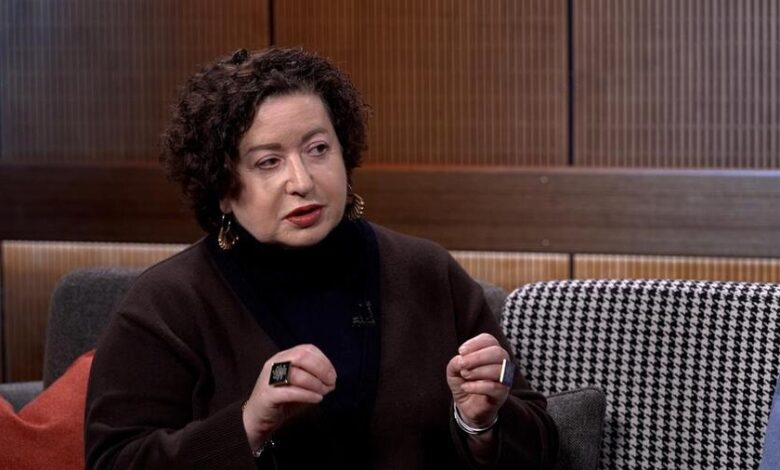
Human rights activist Olga Romanova, director of the “Rus Sidyashaya” foundation, spoke about the mechanism that Russia has built around prisons, pre-trial detention centers, and mobilization practices, where they try to compensate for the human deficit at the front with those whom the state keeps in the penal system or is able to quickly drag into it. At the center of her comments were three interrelated topics, which Romanova explains with examples and figures: how Russian criminal policy is changing in the run-up to war, why the prison “reserve” for the front, in her opinion, no longer seems endless, and how the Russian penitentiary system treats Ukrainian prisoners of war and kidnapped civilians, using torture as a tool of subjugation.
Romanova associates the question of whether Putin will have enough soldiers to continue the war primarily with “her diocese,” that is, with the segment that she monitors as human rights activist: these are the Storm-Z assault units of the Russian Ministry of Defense, where recruited prisoners fight.
Speaking about the “end” of the prison reserve, Romanova relies on the picture that is visible through statistical and organizational changes within the FSVP: according to her, the zones are emptying and since the beginning of the war in Russia, more than 100 colonies have been closed, and the number of prisoners, which exceeded a million in the early 2000s, was 466 thousand at the beginning of the full-scale invasion, after which she does not give exact figures, emphasizing that the current statistics have become closed.
How the “criminal fashion” has changed: from pedophilia to “spies” and “treason”
A separate layer of conversation that Romanova presents as an important marker of wartime concerns what she calls the change in criminal policy, explaining it with simple logic: it is not about how the codes are rewritten, but about “who is being arrested and for what.” In her example, since the time of Medvedev, pedophilia has been a “fashionable article,” while in the realities of war, “treason,” “espionage,” and cases of “fake news” about the army come to the fore, and she emphasizes that it is “treason” and “espionage” that become the leaders.
Romanova details how a passport and territory work in this logic: a person without a Russian passport, she says, is more likely to be labeled a “spy,” while if they have a passport, they are more likely to be classified as a “traitor,” and in the occupied territories, according to her, there are much more such cases than in Russia itself. At this point, she adds another important remark, comparing the mass of such cases with “inflated” figures. She refers to the monitoring of the judicial base and at the same time claims that the official statistics of the Supreme Court may underestimate the real scale, at least by half, that is, the numbers themselves become a field for manipulation.
“Treason-light” as a tool for persecution
To explain how criminal structures are expanding, Romanova mentions another category, which she calls “treason-light” and connects it with “confidential cooperation” with a foreign state or structures for money. As an example, she cites the case of journalist Nika Novak from Irkutsk, who worked for Radio Liberty and received four years in prison, as well as the case of Kaliningrad lawyer Maria Bonzler, who is connected with the fact that information about the condition of her client Igor Baryshnikov, who is suffering from oncology, was included in the report of the UN Special Rapporteur on human rights in Russia, Mariana Katsarova, after which, according to Romanova, Baryshnikov was operated on and Bonzler was held accountable for transmitting confidential data.
In this part of the conversation, Romanova draws a broader conclusion that such cases are beneficial to investigators as a tool for career growth, and in occupied territories, where there is both real resistance and a large amount of “invented”, criminal labels often replace the complex reality of war, under which it is convenient to encourage any assistance to the Ukrainian military or even human solidarity.
Twenty years for a basement and food: how “help” is punished in the occupied territories
The most emotionally acute topic for Romanova, although presented in a restrained manner, was the case against women in the occupied territories who, according to her, hid Ukrainian soldiers during the retreat of the Armed Forces of Ukraine, hid them in basements and gave them food, after which they were charged with “high treason” with a twenty-year sentence.
In this plot, “domestic assistance” and “state crime” collide like a flashlight and a searchlight: a small human act falls under the article that provides for maximum severity.
From “Wagner” without papers to official recruitment by the Ministry of Defense
In a separate line, Romanova compares two stages of the recruitment of prisoners of war, clearly distinguishing the period when the PMC “Wagner” “took everyone in a row” and the period when the Russian Ministry of Defense, in her words, “got into a fuss” and built the documentary part so that the recruitment became legitimized within the framework of the Russian legal order.
She emphasizes that there is no single document regarding the “Wagner” wave that would legalize that “six-month story,” and gives an illustrative image: the head of the colony could theoretically be asked where the “600 prisoners” went if they were given to a structure that, in the legal sense, had no reason to take people.
At the current stage, according to her description, the Ministry of Defense is recruiting officially and under many articles, making exceptions for those convicted of “treason”, “espionage”, “fakes” about the army and other political articles, as well as for certain categories such as cases related to nuclear materials, pedophilia or “terrorism”, although she adds at the same time that even those who should not be taken are sometimes taken anyway, and this contradiction, in her presentation, is part of military practice, where the need for people outweighs the neatness of the rules.
SZCH, deserters and a figure that is only partially visible
Explaining how the state works with those who flee from the front, Romanova distinguishes two concepts that are often conflated in the mass consciousness: SZCH, that is, someone who voluntarily left the unit, and a “deserter” who disappears for a long time and after detention receives a term that she refers to in conversation as “her 6 years”.
She emphasizes the key problem – the secrecy of statistics, due to which it is impossible to name the real number of convicted deserters, but she refers to data according to which 50 thousand cases of SZCH were officially recorded in just eight months, adding that these figures do not include those cases that “are not are recorded”.
Pre-trial detention centers as the next reserve and “recruitment upon arrest”
Speaking about where people are taken from, Romanova emphasizes the difference between pre-trial detention centers, where people are under investigation and trial, and colonies, where they end up after a sentence, and describes that initially people from pre-trial detention centers were taken to the front also without proper documentation, choosing “especially outstanding personnel”, among whom she names former employees, officers and killers.
She calls March 2024 a turning point, when on the same day as the terrorist attack in Crocus City, a decree was signed that allowed people from pre-trial detention centers to be taken officially, and also provided a mechanism for recruitment “upon arrest.” To explain the absurdity and speed of such a scenario, she uses a literary analogy with Raskolnikov, whom a policeman can supposedly lead in handcuffs, but in return he “signs a contract” and goes to war.
She calls a separate element of motivation a financial incentive: according to her, each policeman receives 100 thousand rubles for each recruit upon arrest, which for regional salaries, which she illustrates with the example of a “police officer in Mordovia” with a salary of about 40 thousand rubles per month, creates a powerful distortion, where the temptation to “close the plan” becomes part of the mechanism.
The economy of losses as a bonus system
The human rights activist’s commentary appears Another important plot for understanding is when Romanova describes how payments can turn into “fund savings” if the date of salary transfer is shifted so that fewer people are paid after the battles.
She gives this fragment as an example of how the system stimulates commanders and accounting, when bonuses depend on the “ability to save”, and war, superimposed on paper logic, begins to produce motivation in which people’s lives turn into an expense item.
Ukrainian prisoners in Russian prisons: “rules do not apply”
The topic of Ukrainian prisoners of war and kidnapped civilians in Russian prisons sounds like a separate, darkest part of the conversation, where Romanova relies on the publication she mentioned in The Wall Street Journal. In 2025, she came out based on the testimonies of four FSVP employees who escaped, are under the witness protection program, and gave testimony in The Hague at the International Criminal Court.
The key element of this testimony, according to Romanova, is that Ukrainian prisoners of war who end up in FSVP-controlled detention facilities are not subject to internal orders and regulations. This means that even the minimal rights that Russian prisoners have do not work for them.
“The heads of the FSVP (Federal Service for the Execution of Sentences) gathered everyone and said that the orders of the FSVP and the rules of internal regulations do not apply to Ukrainian prisoners of war. This means that they do not have even the small rights that Russian prisoners have. That is, there is a strict instruction separately for Ukrainians”, – Romanova claims.
Romanova builds a chain of responsibility, naming the director of the FSVP Arkady Gostev and emphasizing that the power circuit of subordination in Russia is reduced to a very short vertical, in which the order regarding the treatment of Ukrainian prisoners can only come from “above”, and in a dialogue with Eggert she directly links this vertical with Putin as the only figure standing above the head of the FSVP.
“Who can give such an order to the heads of the main departments of the FSVP? The director of the FSVP. And only Putin stands above the director of the FSVP. That’s all. A short chain”, the human rights activist explained.
When the conversation turns to Ukrainian civilians, Romanova emphasizes that this is a “separate story” and gives names that, in her presentation, become markers of systemic disappearance. She mentions Viktoria Andrusha, a mathematics teacher kidnapped from Chernihiv, who was later exchanged, as well as Ukrainian journalist Viktoria Roshchina, who, according to her, was held in Taganrog SIZO No. 2. After that, she died in Kyzel, where SIZO No. 3 is located, and where, according to her, Ukrainians are held in incommunicado mode, that is, without communication and access to the outside world.
In addition, she mentions the death of the mayor of Dniprorudny and suggests that people who cannot be found due to the lack of information, in particular prisoners associated with the Kursk direction, may be held in Kyzel, emphasizing that it is precisely the “impossibility of finding” that becomes a characteristic feature of such places of detention.
Prison doctors as participants in torture
One of the most shocking parts of the conversation concerns the role of prison doctors, whom Romanova speaks of as participants in violence. She mentions the case of an exchanged Ukrainian prisoner of war, who had “Glory to Russia!” carved on his stomach, and claims that this was done by a doctor, a surgeon, seconded from Moscow to Donetsk.
She separately names a colony in Mordovia and refers to a report by the Kharkiv Human Rights Group, after which she describes the scale of sexualized violence and torture, which, according to her, were recorded there in the testimonies of the released, and she attributes the leading role in these practices to the head of the medical unit, Ilya Sorokin, calling his age, marital status, and position part of the eerie “normality” behind which, in her account, the organization of the concentration camp regime is hidden.
Notes after the Shift: An Episode That Exposes Duplicity systems
The end of the prison block in Romanova’s conversation leads to another paradox, which she shows through her personal experience of searching for the kidnapped civilian husband of a Ukrainian woman from near Kharkiv. He stayed at home “because of the dogs” and disappeared, and then, according to her, was found in a detention center near Tula together with prisoners of war. During the search, a note appeared, which the woman received and recognized by the handwriting and home address. Romanova, trying to find out who helped transmit this piece of communication, came across a prison employee.
The way Romanova recounts this conversation becomes a concentrate of the moral dichotomy of the system. The employee, according to her, explained that from 8 to 16 she “still tortures”, and after 16 she “collects notes”, and when she was asked about the meaning of such a combination, she answered with the logic of substitution of responsibility – they say, if not her, then someone else will do it, and she at least passes on the notes.
The gap between crime and punishment as a long-term consequence
Romanova also spoke about the fact that in Russia the connection between crime and punishment is breaking down, and this gap becomes a social trauma when people who have committed serious crimes return from the front with “heroic” statuses, while the families of the victims are left without justice and compensation.
She emphasizes that a society that gets used to such an exchange suffers consequences that do not disappear with war, because they are built into everyday morality, a sense of impunity, and the habit of not noticing other people’s pain unless it directly affects one’s own home.