What’s wrong with the implementation of the National University of Science and Technology: the view of former Minister of Education and Science Stanislav Nikolaenko and the Union of Rectors

The discussion around changes in secondary and higher education, which has been ongoing in Ukraine for several years, has intensified due to a combination of two circumstances – the course of updating the system and the war, which has dramatically changed the capabilities of the state, communities, and educational institutions themselves. In such a situation, the assessment of the high school reform goes beyond a purely methodological conversation, as it touches on children’s access to education, school staffing, the ability of communities to maintain lyceums, and the readiness of universities to work in new conditions.
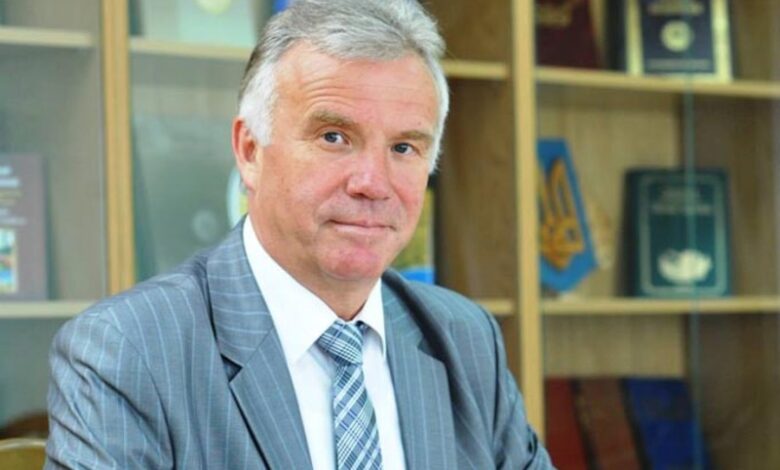
Against this background, the Minister of Education and Science in 2005–2007, President of the National University of Education and Science of Ukraine and First Deputy Chairman of the Union of Rectors of Higher Education Institutions of Ukraine, Doctor of Pedagogical Sciences, Professor Stanislav Nikolayenko set out his own vision of how the implementation is taking place “New Ukrainian School” and what consequences it may have for secondary and higher education. He combined an assessment of the general direction of educational changes, comments on the method of implementing the NUS and the position of the Union of Rectors on the senior specialized school, bachelor’s degree and the role of communities in these processes.
Educational Renewal and War
Recognizing that the renewal of Ukrainian education and its convergence with European standards are objective in nature, Nikolayenko emphasizes that Ukrainian universities have long been working in a common space with European partners, developing double degree programs and joining interdisciplinary projects within the framework of HORIZON EUROPE. In this regard, in his assessment, the movement towards modernization looks natural and understandable.
At the same time, describing the current situation, he links it to harsh wartime conditions, in which the country must simultaneously defend itself, support the Armed Forces, maintain the economy and prepare for reconstruction. According to him, any changes conceived in peacetime are faced with circumstances of a completely different scale, so some of the pre-war reforms and projects prepared for international grants no longer meet state and social needs as previously imagined.
To explain his position, Nikolayenko also gives a general picture of the destruction: according to his data, almost four thousand educational institutions were affected by bombing, 3428 were severely damaged, about two dozen universities were destroyed. Because of this situation, in his opinion, educational reforms should be evaluated through the prism of preserving the state, the education system and children’s access to education.
Assessment of the Implementation of the New Ukrainian School
Describing the “New Ukrainian School,” Nikolayenko admits that at first glance it looks like a progressive reform, but at the same time its implementation is taking place in the country “from scratch,” without proper scientific and methodological support and without experimental testing of new approaches and methods. He sees this as one of the reasons why the reform causes criticism and misunderstanding on the part of parents, teachers, scientists, and the wider public.
Separately, Nikolayenko rejects the approach in which criticism of the New Ukrainian School or other educational changes is attempted to be presented as a statement against the state course or Ukraine’s European commitments. He considers this way of conducting the discussion unacceptable, since he sees it as an attempt to take a meaningful professional conversation from the sphere of arguments to the sphere of political accusations.
Developing this idea, he argues that such a practice poses a threat to the basic foundation of education — secondary school. He is particularly harsh in his assessment of the situation in which, according to him, the public and local councils are moving away from discussing the quality of the reform, its progress, and weaknesses.
What decisions are problematic
Among the decisions that Nikolayenko considers the most problematic, he names the government’s creation of the Office for the Implementation of the National Secondary School. According to the author, its activities do not seem to be sufficiently clear, and its composition raises many questions, since, in his opinion, there are no professional educators capable of making appropriate decisions there.
He is even more harsh in his approach to organizing high schools in communities. According to him, government officials have announced that those territorial communities that do not create separate legal entities — professional lyceums with two or more classes in the tenth grade — will lose state subsidies. Nikolayenko calls this requirement illegal and unconstitutional, since, in his opinion, every child has the right to receive a full secondary education where his family lives, and the funds for education should be allocated for the student, for his education.
In this part, he links the reform with the risk of closing schools, especially in villages and small communities, where specialized lyceums are often not planned to be created at all. As confirmation of his fears, Nikolayenko mentions that over the past ten years, hundreds of schools have already been closed in Ukraine, and the total number of institutions has decreased to less than twelve thousand, which, according to him, is almost half that in Poland. He calls the share of school-age children who do not study and do not work a separate alarm signal: this figure, according to his data, has reached 16 percent, while the average European level is 11 percent.
Turning to the practical side of the reform, Nikolayenko claims that the majority of school teaching staff are not ready for full-fledged specialized training due to the lack of trained personnel and proper material and technical base. He sees this as one of the key contradictions of the reform, since the requirements for high school are increasing, while the basic conditions for their implementation, in his opinion, are absent.
He links this problem to the state of pedagogical universities and colleges, which, in his opinion, do not receive sufficient state assistance. Due to the lack of financial and material and technical support, Nikolayenko notes, many of them were forced to suspend the training of teachers of physics, chemistry, biology and mathematics. In this state of affairs, as follows from his argument, the school receives increasingly complex tasks, while the teacher training system is weakening.
Describing the situation in even more detail, he adds that the teaching staff of many schools do not know how to work with twelfth-grade students, since the content of the programs goes beyond the curriculum that trained teachers. At the same time, pedagogical universities, according to him, have not even begun such in-depth training.
What remains unclear in a specialized school
The specialist pays considerable attention in his considerations to the content of education in a specialized school. In his opinion, this content is still not clearly defined, and the introduction of integrated courses in natural and mathematical disciplines can lead to a sharp decline in the quality of education.
Arguing this position, Nikolayenko refers to the results of the PISA program, which, in his opinion, show a significant lag of Ukrainian schoolchildren from their European peers. Against this background, he raises the question of the readiness of teachers to simultaneously teach physics and mathematics or chemistry and biology, hinting that such a combination of subjects in school practice may be too difficult to implement in reality.
Three-year bachelor’s degree and possible consequences for universities
A separate block in Nikolaenko’s presentation is the topic of reducing the bachelor’s degree to three years. He reports that the Union of Rectors is seriously concerned about the statements of certain government representatives who propose to transfer all bachelor’s training in higher education institutions to a three-year term.
He considers such a scenario risky, because, according to his logic, the country may find itself in a situation where lyceums are not yet ready to provide in-depth specialized training, while universities, which have the appropriate personnel and material base, will be forced to lay off qualified teachers of general education disciplines. He sees this as a threat of a serious crisis for higher education.
At the same time, Nikolayenko does not deny the possibility of a partial reduction in the term of study, but insists that this issue should be considered separately for each specialty. As an example, he cites engineers, biotechnologists, builders and other areas for which, in his opinion, a general decision on a three-year bachelor’s degree would look unconvincing.
The future of colleges and lyceums in 2027
Another uncertainty Nikolayenko calls the future of colleges and vocational lyceums in the system of obtaining complete secondary education. According to him, these institutions are trying to be transferred to local budgets, and this prospect also causes concern.
In addition, he draws attention to another problem – the lack of enrollment in higher education institutions in 2027. In his opinion, such a step could have unpredictable consequences, therefore, in his opinion, the authorities should think over compensation mechanisms in advance.
In addition, Nikolayenko reports that on March 23, the Union of Rectors at its meeting appealed to the President, the government, the parliament and the Ministry of Education and Science with an appeal to urgently analyze the situation related to the implementation of reforms in secondary schools. According to him, this appeal focuses on the threat of restricting young people’s access to complete secondary education, the risks of school closures, the further decline of villages and towns and the departure of young people abroad.
Separately, the Union of Rectors considers it necessary to include specialists from universities, representatives of local councils and public organizations in the conversation. Nikolayenko emphasizes that decisions of such a scale as the reform of high schools and universities should be made with the participation of educators, scientists and the professional community, taking into account international and Ukrainian experience.
Nikolayenko notes that every citizen has the constitutional right to receive a full secondary education in his village or city, if there is a full-fledged tenth grade there, and specialized training, in his opinion, should be organized only where there are several senior classes and appropriate conditions have been created for this. He assesses the idea of artificially consolidating schools and transporting children from the entire district as unpromising.
The former minister reports that the Union of Rectors supports the actions of the President, the government and the parliament aimed at ensuring national security, economic and social development, but at the same time considers it necessary to openly talk about the risks that have arisen for Ukrainian education in the course of current reforms.