What should businesses prepare for after the abolition of the simplified taxation system: explains Vyacheslav Cherkashin

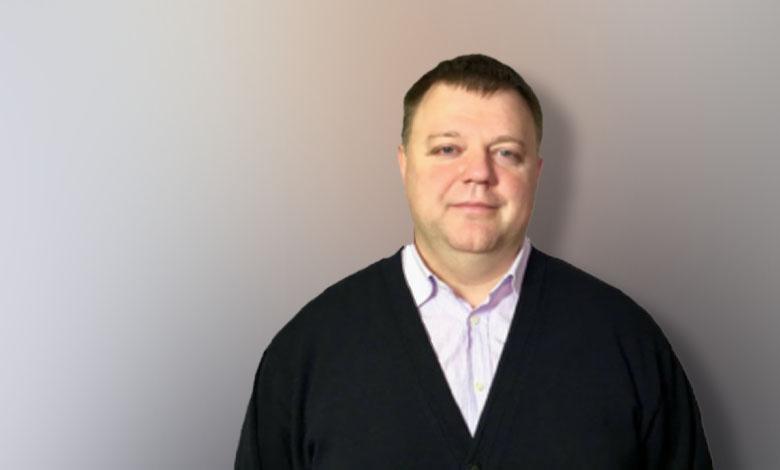
The topic of the future of the simplified taxation system causes serious concern among entrepreneurs in Ukraine, in particular those who have worked for years on a single tax as individual entrepreneurs or small companies. The middle class, which was largely formed on the basis of this system, today faces the prospect of large-scale changes. Economist and tax policy expert Vyacheslav Cherkashin explained, what the business should prepare for, what signals are already available, and what the logic of the step-by-step roll-out of the simplification looks like.
According to Vyacheslav Cherkashin, the government’s intentions to reform the simplified system of taxation, accounting and reporting are no longer an assumption, this is directly evidenced by the National Revenue Strategy, as well as numerous memoranda signed with international creditors. He notes that within the next year or two it is planned to implement a systemic change in the operating conditions of the SSO.
Cherkashin draws special attention to the fact that in the statements of representatives of the authorities, in particular, “officials from Hrushevsky Street”, an established idea can be traced: in fact, the ideal model of the SSO in their understanding is its gradual and almost complete disappearance. It is not just about reform, but about the phased elimination of the model, which at one time enabled the growth of a whole category of small businesses.
As the expert notes, such a strategy can be characterized as “anti-reform”, because instead of improving the tool that worked, it is proposed to dismantle it consistently. He proposes to consider these changes in stages, based on what has already been announced or fixed in state policy projects. And that is why, Cherkashin believes, the analysis of future decisions should be conducted not on a theoretical level, but as a consistent implementation of an already launched course.
The economist draws attention to the fact that the first step in the reform process has actually already been taken — it is about including the payers of the simplified system in the field of paying the military levy. This demonstrates the government’s intention to consistently raise tax rates for FOPs. As a result, the tax burden on single tax payers will approach or equal the burden on the general system. It is this that is voiced as a means of combating abuses, especially in the area of labor tax avoidance.
“For single tax payers, the rate will be raised (this has already started with the inclusion of the SSP in the field of paying the military levy). The final station – the tax rates are similar/compared to the general taxation system (the tax burden of the simplified and general systems is equalized, which will allegedly allow defeating the hydra of abuse of the USN for the purpose of avoiding taxation, especially taxes on labor)”. – notes the expert.
The next step, according to Cherkashin, will be the forced introduction of full accounting and commodity accounting, which will actually destroy the very idea of a simplified system as a model with minimal administrative burden. Despite the state’s desire to obtain as much information as possible about the activities of each taxpayer, the technical and analytical capabilities of tax authorities do not allow effective processing of even existing data sets.
“Total fiscalization and mandatory full accounting/commodity accounting will eventually become the “sad” companions of a simplified system. The state wants to control everything, although the functional bandwidth of the controlling authorities cannot digest even the existing amount of tax information (for example, the low rate of use of the unified register of tax invoices or the CRS procedure for international information exchange)”, – the analyst believes.
The expert predicts that the next step will be a significant reduction of the list of activities allowed within the simplified system. This will clear the SSO from legal entities that currently still retain the right to work under the simplified procedure. Such a move may be presented under the guise of “modernization”, but de facto it will mean the gradual displacement of whole sectors of small business from this tax model.
“The lists of permitted types of activities will be cleaned (thinned out) again. All companies (legal entities) will be expelled from USN under the veil of modernization. The likely result. The nominally simplified system will be preserved, but the conditions of doing business, the administrative and tax burden will be multiplied, and the vast majority of current single tax payers will most likely be forced to leave it. USN will cease to be a driver (point) of economic growth and the basis of the Ukrainian middle class, turning into a marginal layer of taxpayers. Oh, government, your name is treachery!” – Cherkashin emphasized.
He cites the example of Costa Rica, where the reform of the simplified system was carried out using a fundamentally different approach. They did not curtail or complicate the model there, but on the contrary — adapted it to the conditions of small business by simplifying administration. In particular, a number of types of economic activity are exempted from the obligation to keep invoices. The tax liability is determined not on the basis of detailed accounting of each transaction, but through the use of ratios to quarterly income volumes.
In the income tax system, a range of coefficients is used from 0.01 to 0.05 at a base rate of 10%. Regarding VAT, the coefficients vary from 0.00125 to 0.058, subject to a base rate of 13%. Thus, in retail trade, a rate of 1% is set for both income tax and VAT. And, for example, bars and restaurants will pay 2% profit tax and 4% VAT.
This example demonstrates an alternative approach to reform — not because of complications and fiscal pressure, but because of the logic of simplification, adaptation, and reduction of administrative barriers without loss of budget revenues.
As the expert emphasizes, small business must be ready for a drastic change in the rules of the game. It is not only about the tax sphere, but also about the administrative environment, which will become more complex and costly. Under such conditions, entrepreneurs will be faced with a choice: either adapt to new realities, or curtail activities, or go into the shadows. According to Cherkashin, all three options will have long-term consequences for both the business climate and the structure of the economy in general.