Why children are drawn to dangerous games: the answer of scientists and advice to parents

In wartime, children face many threats that affect their physical and psychological safety. Constant sounds of explosions, forced evacuations and lack of stability – all these are becoming daily realities of life. However, in addition to external dangers, there are less obvious risks that can sneak up on every family. It is about the fascination of children with dangerous games that, at first glance, may seem innocent. But why do children like to play with risks so much? New research provides an answer to this question.
Scientists from Dartmouth College in the USA decided to understand the reasons for children’s desire for danger. In his research, published in the magazine Evolution, Medicine and Public Health, they analyzed the behavior of baby primates and ancient humans. Both were found to be prone to “extreme” play, such as climbing trees or other activities that could lead to injuries. Australopithecus bones, which lived about 3.2 million years ago, show signs of healed fractures, indicating frequent falls from heights. This allowed scientists to hypothesize that this behavior is evolutionarily determined and helps the cubs to learn their capabilities and develop skills to avoid danger.
Researchers explain that through risky play, children learn their limits, acquire important physical skills and understand safety strategies. In ancient times, it could be vital for survival. Now, in our modern world, this desire can manifest itself in the form of extreme hobbies that sometimes scare parents.
“Past and current evidence suggests that children develop physical skills and social experiences by exploring their limits through play. We understand the concerns of parents, teachers and policy-makers who seek to keep children safe. However, it is important to consider the long-term benefits of engaging in play-related with risk. Such games are a natural part of development, just like our ancestors.” scientists emphasized.
Dangerous games of modern children
Although scientists point to the possible benefits of risky games for development, some modern hobbies for children can be extremely dangerous. Here are some examples of particular concern:
- Flash mob “Lying on the roadway”. Teenagers shoot videos lying on the road in front of cars. They consider it a manifestation of courage, but such a “game” carries a real threat to life and can end tragically.
- “Challenge with a feeling of suffocation” (Choking Challenge). Participants compete to see who can last longer without breathing, which often leads to loss of consciousness, head injuries and even death.
- “Playing with fire”. Teenagers set fire to parts of their clothing or skin to record it on video. This practice is extremely dangerous and can result in serious burns or fire.
- “Bleeding Circle” (Bleeding Circle). Players try to injure themselves or someone else in order to get a video for social media. Such actions can lead to serious injuries and psychological trauma.
- “Blue Whale”. A game that became infamous for a series of teenage suicides. The tasks of the game involve performing dangerous actions, often involving self-harm, and the final stage is a call to suicide.
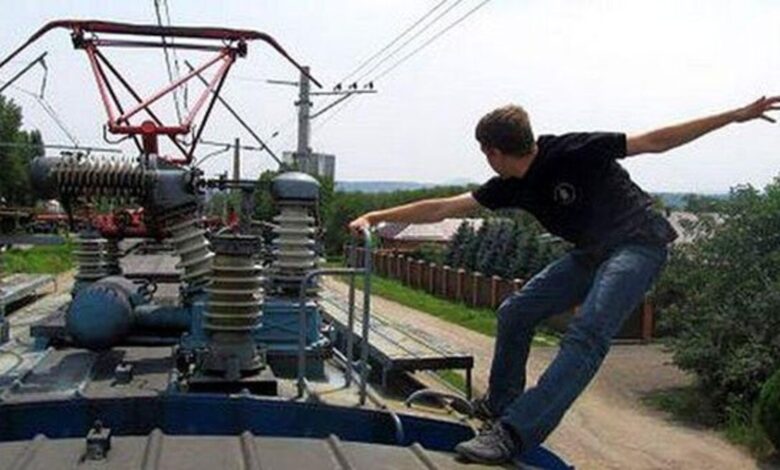
- “Roofing” (climbing onto the roofs of buildings). Teenagers try to climb to the highest points of buildings to take spectacular photos. This dangerous hobby often results in falls and fatal injuries.
- “Disappearance for 24 hours”. Children try to hide from their parents and friends for a day, avoiding any contact. This can cause serious stress for the family and danger for the child.
How to protect children from dangerous games: tips for parents
Despite the findings of scientists, parents should be especially careful to prevent serious injuries. Here are some practical tips to help keep your child safe:
- Explain the consequences. Children often do not realize that their actions can have serious consequences. Talk to them about the fact that some types of games can lead to injuries and explain why it is important to follow certain safety rules.
- Create safe conditions. Provide opportunities for your child to participate in physical activities in a safe environment. Encourage them to play outdoors or play sports, but do so under adult supervision.
- Engage in sports. Offer your child to play sports that develop coordination, endurance and the ability to control their movements. This will not only reduce the risk of injury, but also promote overall physical development.
- Set clear boundaries. Explain what types of games are not allowed. Set clear rules, such as no playing near construction sites, rooftops, or other dangerous locations.
- Maintain dialogue. Regularly discuss with children their hobbies and interests. If you notice that the child has become interested in dangerous games, try to understand why these activities attract him and find safe alternatives.
Remember that children often want to test their strength and learn about the world around them. Our task as parents is to help them do this safely, teaching them to respect their own health and life.