40% of Ukrainians are ready to make territorial concessions for the sake of peace: how citizens’ moods are transforming

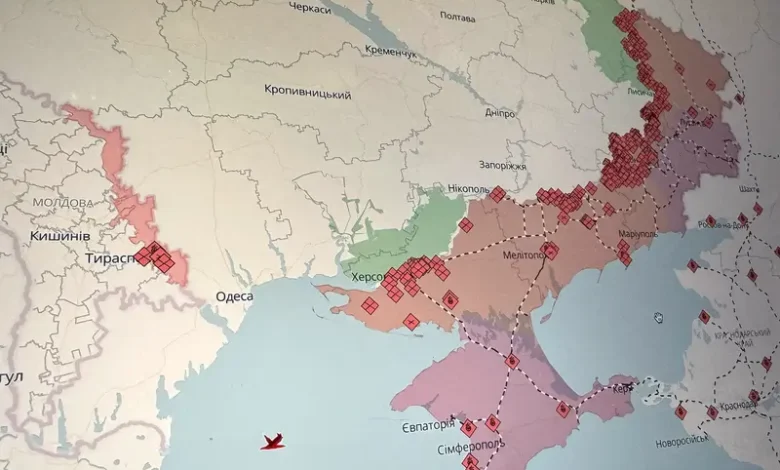
The prolonged full-scale war has significantly changed the mood of Ukrainian society, which is assessing possible scenarios for its conclusion. Positions that seemed unshakable at the beginning of the invasion are gradually being rethought under the influence of the duration of hostilities, casualties, economic strain, and changing expectations about the future. At the center of public debate are the issues of the limits of compromise, security guarantees, and an acceptable model for ending the war, which is reflected in the results of sociological research that captures the dynamics of public opinion and allows us to trace how “red lines” are transformed in the context of a protracted conflict.
Public opinion research conducted by the Kyiv International Institute of Sociology captures gradual changes in the attitude of Ukrainians towards possible compromises in the war, and also demonstrates how social “red lines” are transformed over time. These trends were said by the institute’s general director Volodymyr Paniotto, outlining both the dynamics of willingness to make concessions and the factors influencing people’s expectations regarding the duration of the war.
The initial period of the full-scale invasion was characterized by a tough position of the majority of the population regarding any territorial compromises, although at the same time a significant part of citizens supported the very idea of negotiations as a tool for ending the war. According to Paniotto, in 2022, only 10% of Ukrainians were ready to make territorial concessions for the sake of peace, while now 40%. This refers to the willingness to agree to the withdrawal of Ukrainian troops from the controlled territory of Donbas, provided that the United States and European countries provide Ukraine with security guarantees that will be perceived as a real safeguard against repeated aggression.
The change in the share of those who allow compromise solutions is taking place gradually and is accompanied by growing support for the idea of stopping hostilities along the contact line. As the sociologist notes, about 70% of respondents already agree with this version of events, which indicates not so much a rejection of principled positions as a search for models for ending the war that combine the desire for security with an understanding of real circumstances.
A separate dimension of these sentiments is associated with the transformation of expectations regarding the duration of the war. If at the beginning of the full-scale invasion there was a widespread assumption that the active phase could end in a few months, then later these ideas were replaced by much more restrained forecasts. According to Paniotto, hopes for an end to the war in three to four months have given way to current expectations that it will not happen before 2027, reflecting society’s adaptation to the protracted nature of the conflict.
In early and late January, the institute also studied the impact of the harsh winter and severe blackouts on the population’s willingness to continue enduring the war. The results showed that the proportion of those who declare their willingness to endure the war as long as necessary has not changed, despite the difficult living conditions. Additionally, sociologists asked questions to those respondents who are not ready to endure for a long time, finding out which factors are the most difficult for them.
Most often, people mentioned the threat to the lives of loved ones and the death of people, economic difficulties, constant air raids and shelling, and only in fourth place was the lack of heat and electricity. According to Paniotto, about 15% of those who are not ready to endure noted that energy problems are critical for them, and if we take into account the entire population, this figure is about 5%. Thus, energy pressure, which is often seen as a tool for influencing the civilian population, has not yet become a determining factor in changing the general willingness to continue resistance.
Taken together, these data outline a complex picture of public sentiment, which combines endurance, gradual adjustment of expectations, and cautious willingness to compromise in the presence of security guarantees. The study demonstrates that the change in positions occurs through a rethinking of the experience of the war, its duration, and risks for the future, which forms new parameters of the public discussion about the end of hostilities.