After the attack on the Dniester Hydroelectric Power Plant, Moldova handed the Russian ambassador a note of protest and a bottle of water from the Dniester

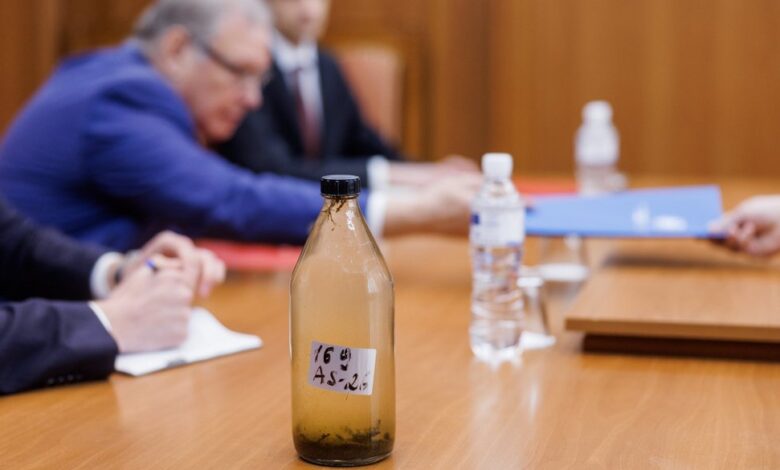
The Ministry of Foreign Affairs of Moldova summoned Russian Ambassador Oleg Ozerov and handed him a note of protest over the Russian shelling, which resulted in oil products entering the Dniester River. This was reported by the press service of the Ministry of Foreign Affairs of Moldova.
“The Republic of Moldova strongly condemns this attack, which caused oil spills in the Dniester River, which created great risks for the environment and the safety of water supply. The Dniester River provides water to about 80% of the country’s population and 98% of Chisinau residents,” the ministry said.
The agency also stressed that such actions with large-scale transboundary impact pose a threat to the environment, water supply security and health of Moldovan citizens. During the meeting, Ozerov was also handed a bottle of contaminated water from the Dniester.
On the night of March 7, Russia carried out its first massive attack on the Chernivtsi region. The head of the Chernivtsi OVA Ruslan Osipenko reported that Russian troops struck the region with 11 drones and four Caliber missiles. The main target of the attack was energy infrastructure facilities in the Dniester district.
The pollution of the Dniester became known on March 10 after a video shot near the village of Naslavcha appeared on social networks. The recording shows oily spots on the water surface. It has been previously determined that the pollution is related to a leak of rocket fuel near the Dniester hydroelectric power station in Ukraine after the Russian strike on March 7.
On March 12, the Ministry of Economy, Environment and Agriculture of Ukraine reported that technical lubricants had entered the Dniester River as a result of a Russian attack on infrastructure facilities near the Dniester hydroelectric power station in Chernivtsi region. The pollution then spread down the river to Moldova.
On March 13, Munteanu said that Moldova had appealed to the EU for help due to the pollution of the Dniester River. On the same day, Moldova declared an environmental alert after the Russian strike on the Dniester hydroelectric power station.