
April 21st is celebrated as Radonitsa, World Day of Creativity and Innovation, and International Hemp Day. On this day in history, great conquests, political decisions, scientific events, and military clashes that influenced the fate of entire states were combined.
Radonitsa
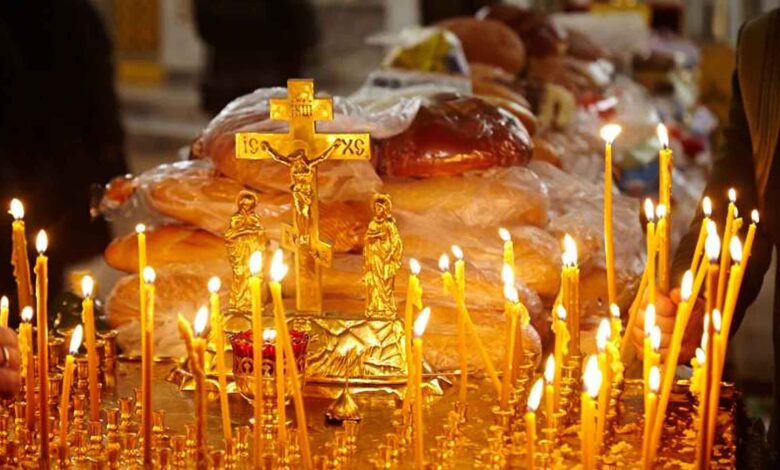
Today is the day of commemoration of the dead in the Orthodox tradition, which falls on Tuesday of the second week after Easter. Its content is associated with faith in the resurrection and hope for life after death, so the commemoration has a calm and restrained character. On this day, believers visit cemeteries, tidy up graves, bring Easter dishes, and pray for the repose of the souls of loved ones. In church practice, memorial services are served, and Easter motifs appear in services, which emphasizes the connection between grief and the joy of the resurrection.
The name of the holiday comes from the word “joy”, which reflects a special attitude towards the memory of the dead – without despair, with quiet acceptance and faith. The traditions of Radonitsa in Ukraine combine church rites and folk customs: Easter eggs are left on graves, and sometimes modest memorial meals are arranged. Different regions have preserved their own peculiarities, but the common denominator is the desire to preserve the memory of the family and maintain a spiritual connection between generations.
Interesting facts
In some regions of Ukraine, back in the 19th century, there was a tradition of “calling souls”, when people loudly addressed deceased relatives at the cemetery, believing that on this day the border between the worlds is thinner.
During the full-scale war in Ukraine in 2022–2024, many communities refused to mass visits to cemeteries on Radonitsa due to the mine danger, especially in the deoccupied areas of Kharkiv and Kyiv regions, where cemeteries remained mined.
In 2023, priests in some cities of Ukraine held online memorial services on Radonitsa for people who could not visit graves due to hostilities or occupation, which became a new phenomenon for this tradition.
In Polissya, the custom of leaving not only food on graves, but also small towels or pieces of cloth as a symbol of memory and care for the deceased has been preserved.
In Kyivan Rus, memorial days after Easter existed even before the official establishment of Radonitsa, and they combined elements of pagan feasts with Christian prayers.
During the war, some Ukrainian military units honored their fallen comrades on Radonitsa, organizing improvised memorial sites even on the front lines.
During the Soviet period, the tradition of visiting cemeteries on Radonitsa was preserved despite anti-religious policies, and for many people this day remained more important than official holidays.
In Belarus and parts of northern Ukraine, there was a custom of rolling Easter eggs on graves, believing that this brings blessings and “shares” Easter joy with the dead.
In 2024, in front-line communities of Donetsk and Kharkiv regions, local authorities organized centralized days of visiting cemeteries with the accompaniment of sappers so that people could more safely honor the memory of their relatives.
World Day of Creativity and Innovation
This day is dedicated to the role of creative thinking in the development of society, economy, and science. It was launched in 2002 as an initiative to promote new ideas in various areas of life, from art to technology. In 2017, the United Nations gave this day official international status, emphasizing the importance of innovation for achieving sustainable development and solving global problems.
This day reminds us of the importance of an unconventional approach to the challenges of our time and supporting creative initiatives. Educational events, workshops and projects aimed at developing creativity, entrepreneurship and scientific ideas are held in different countries. Attention is focused on how innovations help to improve the quality of life, create new opportunities and adapt to changes in the world.
Interesting facts
The date of April 21 was chosen because it is located between Leonardo da Vinci’s birthday on April 15 and World Intellectual Property Day on April 26, which symbolically connects creativity and the protection of ideas.
The holiday was initiated by Canadian researcher Marcy Segal, who promoted the idea of developing creativity as a practical skill for business and education.
After being granted UN status in 2017, this day began to be actively used to promote startup cultures and technological innovations in developing countries.
In Ukraine, during a full-scale war, innovation became a key factor in the military and civilian spheres, in particular in the creation of drones, communication systems and volunteer digital platforms.
Ukrainian IT specialists in 2022–2024 developed dozens of solutions for monitoring air alerts, coordinating aid and documenting war crimes.
In the world, creative industries provide millions of jobs and grow rapidly even in times of crisis, making them an important part of the economy.
In some countries, this day is used to support children’s education through creative programs that help develop critical thinking and imagination.
During the COVID-19 pandemic, it was innovations in digital technologies that allowed many areas to switch to remote work, which became one of the largest experiments in modern history.
International Hemp Day
This day is dedicated to discussing the use of hemp in various fields – from industry to medicine. Its emergence is associated with global discussions on changing approaches to regulating this plant, in particular, the distinction between technical hemp and psychoactive products. On this day, activists, scientists and entrepreneurs draw attention to the potential of hemp as a renewable resource that can be used in the production of fabrics, paper, building materials and biofuels.
The holiday is also associated with movements for reviewing legislation in various countries, where issues of decriminalization and medical use are discussed. In many countries, the approach to hemp is gradually changing: research into its properties is expanding, new regulations are emerging to control circulation and use. The discussion often focuses on the balance between economic opportunities, medical needs, and safety concerns.
Interesting facts
The date April 21 is often associated with the informal culture of “420”, which emerged in the United States in the 1970s among young people and later became an international symbol of the legalization movement.
Hemp is one of the oldest cultivated plants in the world: archaeological finds indicate its use more than 10,000 years ago for making cloth and rope.
In the 20th century, many countries banned the cultivation of hemp, although it was previously an important agricultural crop, in particular for the production of paper and rope.
In some countries, cannabis-based medicinal products are used to treat chronic pain, epilepsy, and other conditions, although the regulation of such drugs varies significantly.
Hemp can quickly restore soil and is even used for phytoremediation – cleaning land of toxins and heavy metals.
In Ukraine, industrial hemp is legally grown for industrial purposes, and the country is among the European producers of raw materials for textiles and construction materials.
During the full-scale war in Ukraine, interest in hemp raw materials increased due to its use in the production of durable fabrics and potentially environmentally friendly building materials for the restoration of destroyed buildings.
The Law on the Legalization of Medical Cannabis in Ukraine entered into force on August 16, 2024. It allows the use of cannabis for medical, industrial and scientific purposes, which causes a wide public debate about the balance between access to treatment and control.
Ukrainian legislation strictly distinguishes between industrial hemp and psychoactive cannabis, establishing different licensing requirements and control over circulation.
After the start of the full-scale war in Ukraine, the topic of medical cannabis became particularly relevant due to the need to treat the wounded, people with chronic pain and post-traumatic stress disorder.
Uruguay became the first country in the world to fully legalize cannabis at the state level in 2013, taking control of its production, distribution and sale through a licensed system.
Canada legalized both medical and recreational use of cannabis in 2018, while the state introduced strict rules on age, advertising and product quality.
In the United States, cannabis is still prohibited at the federal level, but most states have allowed its use in various forms, which has created a contradictory legal situation within the country.
The Netherlands has a model of partial legalization: the sale of small quantities in coffee shops is allowed, but large-scale cultivation has long remained illegal.
In Germany, limited possession and cultivation of cannabis for personal use will be allowed in 2024, introducing clear regulations on quantities and conditions.
In Thailand, cannabis was decriminalized in 2022, but after a short time, the authorities began to tighten regulation due to the uncontrolled growth of its use.
In many countries around the world, there is a gradual transition from complete prohibition to a regulated market, where the state controls circulation and at the same time allows medical use.
Historical events on this day
1519 – The Spanish conquistador Hernán Cortés landed on the coast of Mexico, starting a campaign aimed at conquering the Aztec state. This expedition marked the beginning of a large-scale Spanish conquest of America and opened one of the most tragic periods in the history of the indigenous peoples of the continent.
1818 – An imperial decree determined that the children of the faithful of the UGCC in Galicia and Bukovina must study religion in their native language. This decision was important for preserving linguistic identity and supporting local spiritual traditions in the conditions of a multinational empire.
1910 – Halley’s Comet came as close as possible to the Earth, causing great interest in the scientific world and among the general public. For many people, this event became a real sensation, because the comet could be observed as an exceptional astronomical phenomenon.
1913 – The liner “Aquitania” was launched, which later went down in history as the only passenger ship to take part in both world wars. This ship became a symbol of the era of large ocean transportation and at the same time a witness to the dramatic events of the 20th century.
1920 – In Warsaw, a general and trade and economic convention was signed between Poland and the UNR, according to which Poland recognized the independence of the Ukrainian People’s Republic and promised it military assistance. These agreements were part of Ukraine’s complex struggle for international recognition and preservation of its own statehood.
1921 – By decree of the Council of People’s Commissars, a tax in kind was introduced on bread, potatoes, and oilseeds instead of the food distribution. This decision became an element of the transition to a new economic policy, which was to partially ease the pressure on the peasantry after the exhausting period of war communism.
1938 – The RNK of the Ukrainian SSR and the Central Committee of the Communist Party of the Soviet Union adopted a resolution on the mandatory study of the Russian language in all schools in Ukraine. This step became an important instrument of the language policy of the Soviet government and one of the mechanisms for gradually strengthening Russification.
1944 – The battle of Gurba began, which is considered the largest battle between the UPA troops and units of the NKVD of the USSR. This clash became one of the largest and most intense pages of the Ukrainian liberation movement during the Second World War.
1944 – Women in France gained the right to vote in elections, which was an important step in the development of democracy and civil equality. Since then, French women have been able to fully participate in the political life of the country on an equal footing with men.
1960 – The new capital of Brazil officially became the specially built city of Brasilia. The transfer of the capital symbolized the state’s desire to develop the interior regions and became one of the most famous urban projects of the 20th century.
1996 – As a result of a missile strike, the first president of the Chechen Republic of Ichkeria, Dzhokhar Dudayev, was killed. His death was one of the key events of the First Chechen War and had a significant impact on the further development of the conflict.
2000 – In Brovary, Kyiv region, a residential building was hit by a tactical surface-to-surface missile launched by the military during training exercises from a training ground. The tragedy claimed human lives and became a painful reminder of the dangers of official negligence and mistakes during military operations.
2010 – In Kharkiv, Ukrainian President Viktor Yanukovych and Dmitry Medvedev signed the Kharkiv Agreements. These agreements concerned, in particular, the continued presence of the Russian Black Sea Fleet in Crimea and subsequently became the subject of sharp political disputes and criticism in Ukrainian society.
2019 – The second round of presidential elections was held in Ukraine, as a result of which Volodymyr Zelensky was elected head of state.


