“Augian Stables” of Mobilization: Igor Lutsenko spoke about the problems of the army system

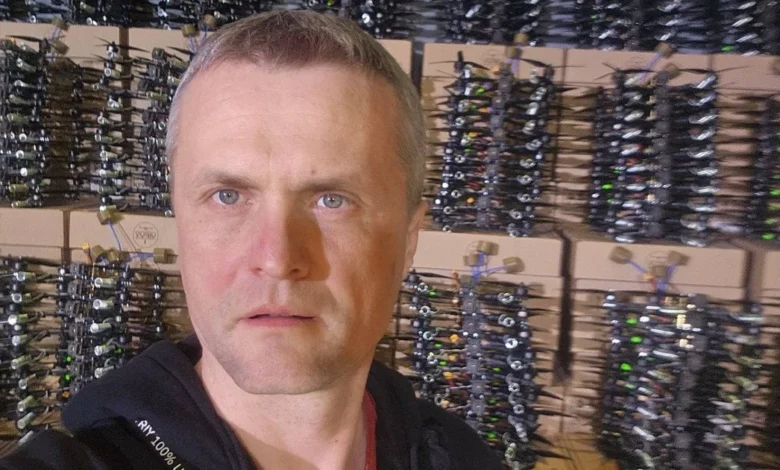
The state’s mobilization policy remains one of the most complex issues of wartime, because it is precisely on the army’s fullness of trained people that its ability to maintain defense and plan further actions depends. Military serviceman and former People’s Deputy Ihor Lutsenko drew attention to systemic problems, including insufficiently effective search for those who evade the draft, difficulties during basic military training, and service conditions that do not always contribute to the motivation of recruits.
Lutsenko is convinced that strategic decisions in this area should be made at the highest level of state administration. Mobilization policy should be managed not by separate military management structures, but by the entire system of state power under the coordination of the country’s leadership. For this, there are appropriate institutions, in particular the National Security and Defense Council, which is able to form a coordinated policy and ensure its implementation by various state bodies. In such a model, the Cabinet of Ministers, the army, financial institutions, law enforcement agencies and other state structures should act within the framework of a common strategy, and not separate decisions.
Lutsenko pays special attention to the problem of searching for citizens who evade mobilization. According to him, as of the beginning of 2026, approximately two million people are wanted by territorial recruitment centers. If there is political will, the state could create certain restrictions for such persons and at least demonstrate that violation of mobilization legislation has consequences.
In his opinion, even elementary search mechanisms are not used properly. The criminal procedural search produces practically no results, and the interaction between the police and the structures responsible for mobilization remains insufficient.
The military expert gives examples of situations when the patrol police stop vehicles on the roads, but almost do not record cases of detention of people who are wanted beyond the line of territorial recruitment centers. This indicates that the system is not working properly.
“Imagine that patrol officers are standing on the highways, stopping cars, and there is not a single person detained beyond the CCC line,” he notes, suggesting that in some cases the reason may be corruption.
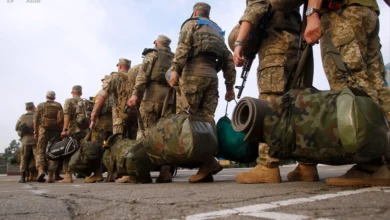
At the same time, Lutsenko emphasizes that mobilization policy cannot rely solely on coercion. In his opinion, along with control mechanisms, the state must create conditions that reduce stress for people called up to the army. When recruits find themselves in difficult living conditions already at the training stage, this negatively affects their condition. During one of the drafts, about six thousand people fell ill during basic military training.
“When the summons came, this person should not immediately find himself in terrible conditions: in flooded tents, only to get sick later,” — emphasizes Lutsenko.
He also criticizes the organization of basic military training. Lutsenko notes that the very idea of training recruits is necessary, but its current form needs changes. He explains that sometimes the training does not meet the real needs of the units and does not take into account people’s previous experience. In this context, he recalls his own experience of service, during which he performed combat missions for three years without undergoing such training, which, in his opinion, indicates the need for a more flexible approach.
Another problem Lutsenko calls the opacity of the system for distributing mobilized people between units. He draws attention to the fact that the rules for such distribution must be clear and predictable, because trust in the entire mobilization system depends on this. According to him, even if the state leadership declares the need for transparent procedures, in practice their implementation is not always monitored.
The expert also mentions the legislative changes adopted in 2024, which were supposed to simplify personnel policy in the army. Among them, he notes the possibility of faster transfer of military personnel between units, as well as the mechanism for appointing people with managerial or combat experience to officer positions even without a previous officer rank. In his opinion, these innovations were useful, but their implementation is facing resistance from the system.
Describing the situation within the army structures, Lutsenko speaks of the existence of a tradition of ignoring decisions coming from the leadership. Sometimes such behavior can be justified when orders turn out to be erroneous, but in most cases it is a matter of ordinary sabotage. That is why the key task of public administration is to control the implementation of decisions made. Any regulatory act or decree must be accompanied by a verification of its implementation, otherwise even the right decisions remain only on paper.
In addition, Igor Lutsenko believes that the reason why new ideas regarding contracts, transparent terms of service and deferrals do not work is the lack of responsibility and real control over the implementation of adopted decisions. It is practically impossible to hold accountable those who sabotage or do not implement these initiatives, although there are officials in the state who have the appropriate powers. There is political responsibility in the country, in particular at the presidential level, but due to the large number of other tasks, these complex and conflicting issues often remain without due attention.
Exnardep emphasizes that mobilization is a complex process in which many problems and mutual claims between citizens have accumulated. This area must be systematically addressed at the highest level. The head of state may not have enough time to work on such issues in detail, and there is also a lack of executives with the authority to quickly make decisions and implement changes.
“This is not there yet. But we must realize: sooner or later we will have to roll up our sleeves and clean out these Augean stables,” he says.
Speaking of the problem of unauthorized abandonment of units, Lutsenko notes that it is part of the general problem of mobilization. Some people try to avoid service at different stages, and escapes from units or training centers are one of such manifestations. This problem also arises because the system does not have a clearly defined person responsible for solving it.
Lutsenko emphasizes that among those who leave the service, there are different categories of people. In particular, he believes that a particularly strict response should be made to cases where servicemen flee from basic general military training.
“Why are you fleeing if you don’t even know where you will be sent? The state has already invested time in you, spent uniforms and resources, and you are fleeing,” he notes.
At the same time, Lutsenko acknowledges that there are other situations when people complain about problems during training, in particular, about medical care. However, in many cases, these are those who are trying to avoid service, citing permanent illnesses or other reasons. He emphasizes that there are also cases when completely healthy people leave training centers.
According to Lutsenko, the legislation provides for strict liability for such actions, but in practice the mechanism for its application almost does not work. He draws attention to the role of the State Bureau of Investigation, which should be engaged in bringing to justice for such violations. At the same time, due to limited resources, this structure is not able to work effectively with such a large number of cases. Several hundred investigators should take care of hundreds of thousands of people who are in voluntary abandonment of the unit, and this is practically impossible to implement.
Lutsenko emphasizes that the state today has neither sufficient desire nor the ability to systematically bring such people to justice. However, the problem should not be reduced only to punishment. It is important to analyze the experience of those units where there are significantly fewer cases of voluntary abandonment of the unit, especially among newly mobilized personnel. Attention should also be paid to brigade and corps commanders who demonstrate better results in working with recruits. It is to such commanders that new mobilization flows should be entrusted. Effective leadership of the unit largely determines whether people remain in service and whether they can be useful.
Speaking of the structure of the army, Lutsenko supports an approach in which more effective units receive more opportunities for development. Commanders who know how to work with personnel themselves ask for more people, because they know how to train them and where they can be useful. In other units, mobilized personnel may lose motivation and gradually leave the service.
Commenting on the possibility of changes after the appointment of a new Minister of Defense, Lutsenko expresses hope that the new leadership will be able to implement the necessary reforms. At the same time, he emphasizes that this requires not only the personal will of the minister, but much broader support and serious personnel changes. Reforming the system requires a large team of people who share common ideas and are ready to work on their implementation. The state system can only be changed by creating a new management structure that is capable of implementing the proposed reforms. One minister without sufficient resources and authority will not be able to change state policy, even if he has the full support of the state leadership.
According to Igor Lutsenko, during the war, many people in the system got used to working in the usual mode and do not seek changes, since the current situation is comfortable for them. With such an approach to management, it is impossible to achieve success, because war requires much greater efficiency and responsibility from state institutions.