Beyond the Earth’s Coordinate: Prospects and Problems of Creating the Space Force as part of the Armed Forces of Ukraine

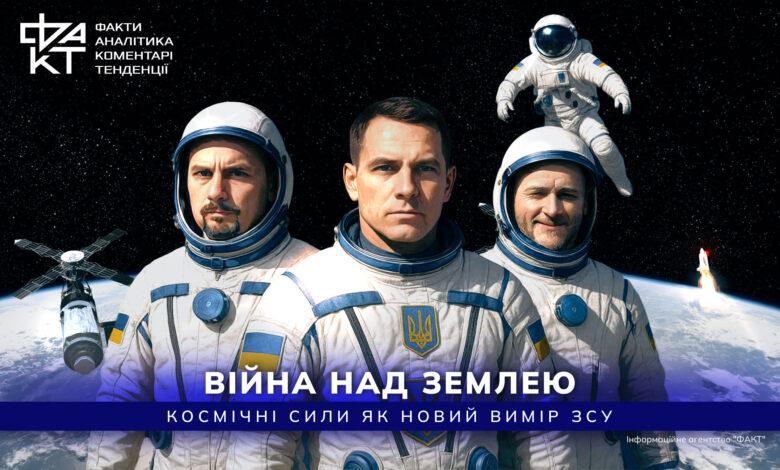
In the structure of the Ukrainian army, a new separate component is being prepared – Space Forces. It is a parliamentary initiative regarding an institutional response to the changing nature of modern warfare. Aerospace space has long ceased to be a secondary theater of operations — satellite reconnaissance, navigation, communications, fire adjustment have become critically important for both strategic planning and daily tactics. Therefore, the draft law on the creation of a separate type of army is an attempt to systematize the various initiatives that arose in the conditions of emergency adaptation to the war, and turn them into a full-fledged tool for conducting modern armed struggle. However, important questions lie behind the new legislative initiative: is Ukraine ready for this step in the conditions of war, when the state budget is loaded to the limit, and the industrial base is reduced to a critical level? Is it realistic to eliminate the gap between the real needs of the front and the inertia of public administration? And does the initiative run the risk of turning into another ambitious declaration, not supported by real possibilities?
The law and the orbit: how Ukraine forms a new reality
The war changed the spatial geography of threats. If earlier the front lines passed over land, today decisive signals are increasingly coming from orbit. It is in this logic that Ukraine can get a new military structure — Space Forces as part of the Armed Forces. Their creation is already enshrined in the draft law submitted by People’s Deputy Fedor Venislavskyi and supported by the Ministry of Defense. It is about a real attempt to institutionalize that component of war, which until recently remained out of political and legal focus. The Russian missile attack on the territory of Ukraine using the Oreshnyk missile, which passed through international space, became an important marker. Such attacks are no longer limited to the geographical concept of “airspace” — they affect a new dimension of hostilities. Venislavskyi’s draft law directly indicates the need to have institutional and technical means to respond to such threats not situationally, but systematically.
The formation of the Space Forces, according to the idea of the author of the initiative, should give Ukraine a full-fledged legal and organizational framework for participation in the war, which has long been fought not only in the trenches, but also through satellites, intelligence, coordinates from space and strike warning systems. According to Venislavskyi, the introduction of a new type of troops will allow Ukraine to develop a national system of secure satellite communication for the needs of the defense sector, as well as to strengthen its own intelligence capabilities through the gradual deployment of a network of domestic intelligence satellites.
The idea of creating a new type of military did not appear out of nowhere, because the space policy department is already functioning within the structure of the Ministry of Defense. It is responsible for auditing the existing infrastructure, launching national satellites and training specialists. In addition, the first steps have already been taken to create a full-fledged space segment in the defense system: it is about launching pilot projects, developing a legal framework, integrating space platforms into intelligence, communication, and navigation. Also, Ukraine already has certain production and engineering capabilities in this area. The country has enterprises capable of creating satellites and ground infrastructure that allows them to be operated autonomously. These are technically real processes that have not yet been formalized as part of military doctrine.
It should be noted that Ukraine joined the Artemis program, an international space initiative under the auspices of NASA, which aims to return a man to the moon. It concluded partnerships with Poland, Luxembourg, Sweden, and the Czech Republic in the defense and space sector. It is already partially integrated into the global space infrastructure, but without its own military component, it remains dependent on partners.
Venislavskyi’s draft law, which has not yet undergone public consultation, is only the beginning of the process. Without detailing the functions, reporting, budget and limits of authority, the Space Force can remain a fiction on paper. However, to ignore the very logic of this step is to ignore how every day the war moves upwards, towards orbit.
Space as military infrastructure: space forces in the world
Even ten years ago, the very idea of the existence of space troops could seem like an element of a futuristic forecast and footage from fantasy films. However, today it is already part of the armed forces of a number of countries of the world — sometimes in the form of a separate branch, sometimes as a structural component of the air force or strategic forces. Space forces are not engaged in interplanetary missions and are not “soldiers with laser weapons” as civilians imagine. They have well-defined functions that have long been performed and have a systemic form – countering attacks on satellites, coordinating launches, conducting reconnaissance, providing communications and early warning of threats. They are also responsible for controlling what happens in Earth orbit. Therefore, they do everything that allows the modern army to function. For example, the US Space Force is responsible for support of launches, control of ballistic launches on a global scale, technical support for operations of air, sea and ground forces, satellite communication, GPS, meteorological intelligence. In addition, these forces analyze space traffic and watch for debris that could pose a threat to satellites or the International Space Station.
The first rudiments of space forces appeared in the middle of the 20th century as a response to the growing role of satellites in the Cold War. By launching Sputnik-1 in 1957, the USSR launched not only a scientific era, but also military competition in space. The United States created the Space Operations Command as part of the Air Force back in 1982 — at that time it was not yet a separate branch, but its functions already went beyond the classical aviation unit.
A separate branch of the US military — the United States Space Force (USSF) — appeared only on December 20, 2019. It was the first since 1947 to add a new type of armed forces to the structure of the Pentagon. This decision was a response to increased space activity by Russia and China. The creation of the USSF allowed for the centralization of space operations, reconnaissance, satellite launches, and coordination with NASA, civilian operators, and allies.
China created its own space military structure in 2015 within the People’s Liberation Army – Strategic Support Force. According to publicly available data, in 2022 Beijing launched 45 defense satellites into orbit, more than any other country. China invests large resources in the creation of active countermeasures systems: laser installations, jamming devices, means of shooting down satellites, and optical monitoring systems.
Russia also has Space Troops as part of the Air and Space Forces (VKS). Their formation as a separate component began back in the 1980s, and they have been operating in their current form since 2015. In particular, the Russian Federation is armed with the Nudol anti-satellite system, as well as separate radar and navigation projects aimed at independence from Western infrastructure.
India, in turn, tested its own anti-satellite weapon in 2019, successfully destroying one of its devices. This demonstrated not only technical readiness, but also a political desire to be part of a global security space in space. France also created its own Space Command in 2019, which in 2020 became part of the new structure of the Air and Space Forces. Its main function is to protect satellites, monitor objects in orbit, analyze outer space and develop projects within NATO. In 2021, Germany established the Space Command in the city of Ulm. Its tasks include monitoring the orbit, countering threats and coordinating with EU and NATO allies. The German system pays special attention to the protection of civil infrastructure. The UK established the UK Space Command in 2021, with coordination functions between the Ministry of Defence, private operators and research institutions. The military space program is integrated with the cyber sphere.
Space units also operate in Italy, Poland, the Czech Republic, Spain, Japan, South Korea, Israel, Turkey, Kazakhstan, Azerbaijan, and Taiwan — mostly as integrated structures within military departments.
Until recently, discussions of space in a security context were often limited to rhetoric about surveillance, science, or symbolic displays of technological power. But the structure of modern warfare increasingly demonstrates that space is no longer a peripheral zone. This is a full-fledged operational space, control over which directly affects what happens on the ground, in the air, and even in cyberspace. That is why there is a demand for the creation of specialized military units capable not only of reacting, but also of ensuring a stable presence in near-Earth space. Space forces become a logical response to this change.
It should be noted that the modern army is almost completely dependent on the space infrastructure. This fact is confirmed by the example of every armed operation of the last decades. Without satellite communication, there is no coordination between units, and high-precision weapons do not work. Without space intelligence, prompt response to threats is impossible. Even the weather forecast used for strike planning comes from satellites.
During the US operations in Iraq and Afghanistan, it was the orbital systems that provided the advantage: in observation, communication, and logistics. But now such technologies are available not only in Western countries. China, Russia, India, Iran and even some European countries are creating their own elements of space defense presence. Therefore, this is no longer the prerogative of superpowers, but a strategic necessity.
Today, there are already technical means of defeating satellites: anti-satellite missiles, lasers, electronic warfare, means of jamming and signal interception. There are also less visible risks: cyberattacks on the control station, malicious software interference with communication protocols, attempts to bring “doppelgänger” satellites closer to spy on or disable other people’s systems. In 2021, Russia conducted a demonstration launch of a rocket that destroyed its own satellite in orbit. China demonstrated similar capabilities back in 2007. The United States has long had a SBIRS warning system that detects the launch of any ballistic missiles from the Earth’s surface, but now this is not enough. Conditionally invisible and silent threats can come not from the base, but from orbit, not from the ship, but from the satellite. Among the latest threats are satellites with the ability to conduct reconnaissance on radio frequencies, weapons with directed energy damage, as well as developments related to robotic impact on adversary space objects.
At the same time, it is extremely important that space forces provide states with autonomy and independence. A country that does not have its own satellite segment is forced to focus on the platforms of allies or commercial operators. In a conflict situation, it becomes a weak point. Even access to strategically important information — the location of troops, the movement of aircraft, the condition of infrastructure facilities — becomes dependent on the decisions of other states or companies. Therefore, the formation of space troops is a way to take control of technologies that have already become the basis of the national security of states. It also provides a mechanism for the institutional integration of civilian developments into military objectives, which cannot be achieved without a clear governance structure.
It should be noted that one of the biggest threats is not the weapon itself, but the lack of clear international rules. Space law, formed in the 1960s, has long since failed to meet the challenges of the 21st century. The Outer Space Treaty of 1967 prohibits the placement of nuclear weapons in space, but does not regulate most modern scenarios – jamming signals, destroying satellites, aggressive approaches, cyber attacks. At the same time, one of the most serious threats in the short term is miscalculation — a situation where the actions of one side can be interpreted as an act of aggression, although it was not. The lack of transparency, the dual purpose of many technologies, the absence of mandatory communication mechanisms between states — all this creates a dangerous dynamic.
As Vice Chairman of the Joint Chiefs of Staff Admiral Christopher Grady said, “space has become the most important area of warfare.” The satellites, he said, will determine who will find the target and destroy it first. The competition between the US and China, which invest tens of billions of dollars in space programs, is only intensifying. And while many details remain classified, the general vector is clear: space is no longer seen as an area of scientific cooperation, it is an arena of strategic rivalry.
In the future, space forces will provide not only support operations, but also direct damage to targets, real-time monitoring, unmanned intervention from orbit, cyber defense of infrastructure and control over artificial intelligence systems. Add to this the prospects of hypersonic weapons, autonomous satellites and orbital air defense, and you can get a front that requires a separate strategy, people, institutions and equipment.
Problems and prospects of creating Space Forces in Ukraine
The creation of the Space Forces as part of the Armed Forces of Ukraine looks at first glance as a technologically ambitious, but unrealistic initiative in the conditions of a full-scale war, growing costs for the army and a critical deficit of the state budget. However, the very fact of the legislative implementation of this idea testifies not only to political desire, but also to the desire to record a structural change in the perception of war. Because the war for Ukraine has long gone beyond the trenches, and a significant part of it is being waged in the digital, informational, and orbital dimensions.
One of the main problems is the lack of funds. More than 2.2 trillion hryvnias have been earmarked for defense needs in 2025 in the state budget, which is approximately 26% of GDP and 46 billion hryvnias more than what was allocated last year. At the same time, the total amount of state expenditures is planned at the level of more than 3.6 trillion hryvnias, which is 535 billion more than the volume of this year’s budget. At the same time, the deficit of the state budget is 1.6 trillion hryvnias, which corresponds to 19.4% of the gross domestic product. In such conditions, the creation of a separate type of military with a high-tech component will require long-term and stable funding, and not only for equipment, but also for training, infrastructure construction, maintenance of specialists, and software development. Today, such resources do not exist — or, more precisely, there is no way to allocate them without a political decision on redistribution.
An equally important problem of the creation of the Space Forces is imperfect regulatory regulation. The legislation of Ukraine in the area of space security is outdated, it does not provide for a separate military component in the space sphere, does not regulate the status of military satellites, does not determine the scope of the military’s authority to use civilian data. In times of war, these problems are partially solved by political decisions, but in the long run they will be an obstacle to development.
Personnel issue is also an extremely difficult problem. Ukraine has highly qualified engineers and analysts, but the war has caused a mass exodus of personnel to safer sectors or abroad. It is extremely difficult to retain a specialist in the defense segment, especially in high-precision areas. There are university programs for training specialists in the field of satellite technologies, but their graduation will not cover the current needs. The creation of a separate command will require a system of vertical management, training centers, new regulations and interagency coordination, which today works inefficiently.
Another problem is technical capabilities. In this sense, Ukraine is not starting from scratch. Even before 2022, the state had its own orbital presence, primarily in the form of the Sich-1M satellite and subsequent projects, which were implemented with the participation of the Pivdenne and Pivdenmash design bureaus. After 2014, the emphasis shifted: programs for the creation of remote sensing of the earth appeared, international projects were carried out with Sweden, Italy, and Luxembourg. In 2022, the Sich-2-30 satellite was launched with the support of SpaceX, and already in 2023, operational groups began to be formed that worked with satellite images in the interests of defense.
In addition, Ukraine actively uses data from commercial satellites and partner platforms: Maxar, ICEYE, Capella Space, BlackSky. However, such use is limited by access conditions, technical delays, cost and political dependence. One of the main non-public barriers to the creation of a full-fledged military space component in Ukraine is the degradation of the industrial base, which should become its technical basis. Formally, the country still retains the status of a space state: it has a history of launches, designing satellites, cooperation with international agencies. But the actual state of production, logistics, cooperation and the machine-building chain is in a critical state.
The most striking example is the “Pivdenne” KB and the “Pivdenmash” plant. This is the core of Ukrainian rocket and space engineering, which has been developing launch vehicles, modules, elements of satellite platforms and ground infrastructure for decades. After 2014, and especially after the start of full-scale Russian aggression, these enterprises lost a significant part of contracts, suppliers, skilled personnel and access to key markets. At the same time, domestic demand from the state is either frozen or fragmented. It does not systematically order space equipment, and the ability of enterprises to support production on their own is limited.
Against this background, the private sector, which could compensate for part of the losses, has not yet been integrated into the military-space vertical. Startups are appearing in Ukraine, there are technical initiatives, but they work mostly in the civilian segment, with the expectation of a Western customer. Without a state order, guaranteed coordination and a legislative framework, these projects cannot be scaled up for defense use.
The legislative initiative in question highlights the difficult question of how to reconcile a robust civilian and commercial space sector with military needs. Many critical decisions, such as the integration of satellite platforms into combat systems, require interagency coordination. The war showed that the state can adapt in the face of threats, but to institutionalize these adaptations is another task. Another node of the problem is the lack of cooperative chains. Even if one structure (for example, a university or KB) can develop a satellite component or software, it needs cooperation with the manufacturer of the body, module, element base. Today, such complete chains almost do not exist in the country. Most electronics are purchased overseas, and logistics channels are complicated by both war and bureaucracy.
So bureaucracy is another significant problem. Even within existing defense structures, there are numerous examples of inconsistency: from parallel projects of various departments to conflicts between ministries and private contractors. The space segment without a centralized management model will turn into a chaotic set of initiatives that will not be able to provide a coherent defense presence in space. Even the very idea of military coordination of ICEYE satellites, which is being implemented in cooperation with the “Return Alive” charitable foundation, remains a unique exception – not a normal practice.
It is also worth considering that space production is not only about technology, but also about accuracy, sustainability and compliance with international standards. Ruined energy infrastructure, shelling, missed deadlines and lack of reliable funding from the state make even successful projects temporary, not systemic.
But despite these problems, the idea of creating Space Forces does not look fantastic and has certain prospects. Everything that Ukraine is doing in space today — from gathering intelligence to providing secure communications — are elements of the future Space Forces. The formalization of the structure will allow attracting donor funding, concluding systemic agreements with international partners, involving engineering schools in defense development, and stimulating the private sector. In the perspective of the next five years, the Space Force may become not a combat tool in the classical sense, but a strategic shell for the integration of digital, engineering, intelligence and communications components.
However, all this is possible only if the creation of a new branch of the army is supported by a real political will for truly effective reforms, and not by point solutions in those areas that prevent the deployment of this structure already. In addition, there should be a revival of industry, which will require not only money, but a purposeful industrial policy, which is still lacking in Ukraine. Also, it is long past time for the state to stop spending under foreign promises, but to build its own powerful economy, able to earn money independently without endless waiting for tranches and partner assistance. Without all this, the creation of the Cosmic Forces will remain another ambitious but empty declaration.
Oksana Ishchenko