
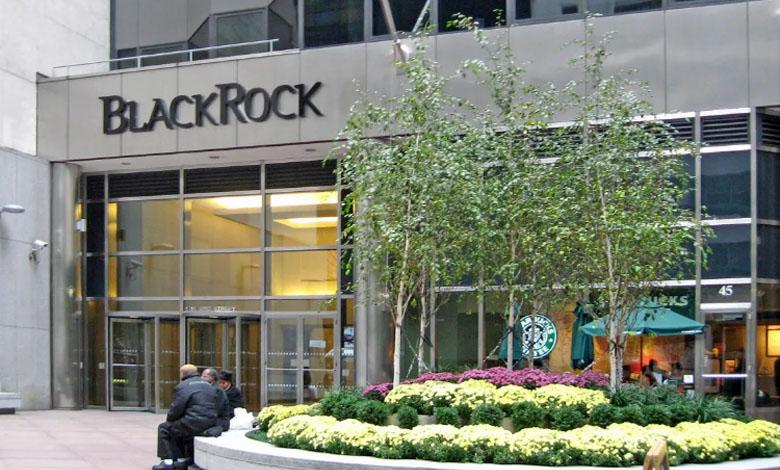
Tell me who your investor is and I’ll tell you if you have a future. BlackRock, the world’s largest investment fund with more than $10 trillion in assets under management, confirmed his participation in the reconstruction of Ukraine. When the gray cardinal of global finance comes in in a country that is hit by rockets every day, it inspires a lot of optimism.
Together with JPMorgan fund supports creation of the Ukraine Development Fund (UDF) — a specialized mechanism registered in Luxembourg, which has already accumulated about $500 million in public funds with a stated goal of $15 billion. For Ukraine, this is not just money, but recognition that the country is no longer perceived as a theater of instability. It moves into the plane of strategic reconstruction, in which a place has already been laid for the return of capital.
BlackRock’s participation in such projects is never accidental. It is not an investor that plays on emotions or expectations, but its influence is felt by governments, stock exchanges and tech giants. Through its own Aladdin system — one of the most powerful algorithmic risk management tools — the company sees crisis zones even before the market is aware of them. If this algorithm gave a signal to enter Ukraine, it means that the risks have become predictable, and the reconstruction is manageable.
The Aladdin platform today controls the risks for a large part of the US financial market, and BlackRock itself has voice in the boards of directors of Microsoft, Apple, Amazon, Google, JPMorgan. His investments are in real estate, pension funds, bitcoin (the fund controls more than 3.25% of all BTC) and even the defense industry. But BlackRock does not invest at random: it chooses sectors where stable trends are already visible, where ESG factors, demographics and regulatory policy have converged. And if he enters the sector, it means the presence of institutional trust.
The UDF fund, in which BlackRock is involved, built according to the principle of blended finance — an architecture that provides private capital with insurance at the expense of state and donor guarantees. This model is capable of turning Ukraine into an acceptable market for OECD-level funds. A mathematically calculated logic applies here: when concessional capital takes the first losses, then institutional investors are ready to enter the energy sector, the agricultural sector, critical infrastructure or high technologies.
BlackRock and JPMorgan are acting as pro bono advisors in this process. Their money is yet to come, even their participation is a resource for now. Because these players are not included in regions that have not passed the point of no return. And if today they are helping Ukraine to create an investment framework, then it is no longer about aid, but about capital and orderly transformation. About the economic platform, on which will stand not only recovery, but also strategic independence.
Therefore, BlackRock’s participation in the Ukrainian reconstruction is not another news, but the moment when the word “investment” for the first time during the war years begins to sound not as a dream for the future, but as a plan that is already being implemented. Ukraine becomes a field of great transformation not after the victory, but as part of the very process of its achievement.
Who owns BlackRock
BlackRock is a publicly traded company on the New York Stock Exchange (ticker: BLK) and is not fully controlled by any individual or government. More than 80% of shares belong to institutional investors: Vanguard (~9%), State Street (~5%), BankofAmerica (~4%) and Temasek (~4%). Founder and CEO Larry Fink only holds about 0.27%, but his influence goes far beyond the formal stake.
metaphorically speaking BlackRock — a huge node of investment power, made up of dozens of funds and millions of small shareholders, with centralized management in the hands of the CEO and top team.
The board of directors and management led by Larry Fink are responsible for the strategy. But the real power is in Aladdin: an anti-risk system that analyzes trillions of data, evaluates portfolios, market models, predicts risks and shapes decisions even before it becomes news.
So, Aladdin is used hundreds of financial institutions, it is not just a tool, but an invisible “investor after investors”. This allows BlackRock to formulate strategies based on continuous monitoring of market trends.
The company also has political influence due to scale and institutional trust. BlackRock is a key shareholder in more than half of US public companies (owns more than 5% in hundreds of corporations). This provides significant influence through votes at meetings (especially ESG resolutions).
During covid, BlackRock acted as an advisor to the Federal Reserve, participated in the recovery of Spain, Greece, Cyprus, and also advised the ECB on “green” banking.
The company is active lobbying — up to €1.5 million was spent in the EU alone in 2019; in the USA – also significant attachment in the forehead
The following example is illustrative: after the large-scale acquisition of ports in Panama ($22.8 billion), Larry Fink had meetings in the White House against the background of discussions about Chinese influence. Republicans revised the policy… and had to “to switch”.
Aladdin: the invisible brain that thinks for Wall Street
In today’s world of big money, people don’t decide where trillions of dollars go. It does code named Aladdin. It does not fly on the carpet like a character from a fairy tale, but it can change geopolitics and shake the stock market faster than any parliament or corporation.
The Aladdin platform (abbreviated from Asset, Liability, Debt and Derivative Investment Network) is a digital add-on that unites huge databases, algorithms, forecasts, market analysis, risks and ESG factors in a single “control panel” of assets. It is used by more than 200 of the biggest players in the financial market, including Deutsche Bank, JPMorgan, Apple, Alphabet, Vanguard, State Street, Allianz — and, of course, BlackRock itself.
As of 2023, Aladdin controlled more than $21.6 trillion in assets — nearly a quarter of the entire global stock and debt market. This is more than the GDP of the United States and China combined.
Imagine the “all-seeing eye” of Wall Street. Aladdin receives in real time, information from stock markets, from news, from macro data, from corporate reports, cross-compares thousands of scenarios, builds risk models and derives ready-made solutions for investment portfolios. Every day, it performs 250,000 risk calculations, analyzes 55,000 instruments, and controls tens of millions of trading positions.
It is not just analytics, but the operational brain for managing the portfolios of pension funds, banks, corporations, even central banks. If Aladdin says: “this asset is toxic”, everyone starts selling it.
At first glance, the technology is convenient: a single digital environment, a minimum of human errors. But critics talk about the threat of systemic vulnerability. If dozens of leading investors use the same type of analytics, they can act in the same way at the same time. This creates a domino effect: a small crisis instantly becomes global. “We are dealing with a danger – where technology is not driving individual assets, but the entire market reaction,” warns the UK’s Financial Stability Board in a 2020 FT report.
The same logic worked, for example, in March 2020: at the beginning of the COVID-19 pandemic, the US stock market collapsed by 30% in three weeks. Aladdin automatically triggered protection algorithms when selling risky assets. And at the moment when investors needed panic, the machines simply put it into action.
The irony is that “Big Tech” manages finances through a platform you can’t see. But when your pension fund suddenly loses 15%, it might not be because of geopolitics or the economy. Maybe Aladdin just pushed the button.
BlackRock asserts, that Aladdin does not dictate, but only “helps to make decisions”. However, every year the number of its users grows — and there is less and less room left for “different opinions”. In 2023-2024, new participants from Asia and Latin America joined the platform, and now even those who criticize BlackRock are dependent on its technological infrastructure.
So, Aladdin is not just a program. This is the code that controls $20+ trillion. This is not a conspiracy theory, but a reality in which one system determines what is a risk, what is worth investing in, and what is not. And if today the market wanted to “live without Aladdin”, it would not be able to: everything is too deeply integrated.
BlackRock and ESG: When a fund dictates the rules to big business
In the 21st century, influence is measured not only by money, but also by the ability to change the rules of the game. BlackRock is exactly the kind of player that transformed global business through three ESG (Environmental, Social, Governance). For some, this is the way to sustainable development. For others, it is a dangerous fusion of finance and ideology.
It all started with Larry Fink’s annual letters. When the CEO of the world’s largest fund (with more than $10 trillion in assets) writes that the company have to be accountable not only to shareholders but also to society is not advice, but rather an imperative. “Each company must demonstrate how it contributes to sustainable long-term development. Otherwise, it will lose the support of our investments,” Fink wrote in 2020.
To turn these words into action, BlackRock has created a separate Investment Stewardship Team — a team that votes on behalf of the fund at shareholder meetings of thousands of companies around the world. In 2020, they voted for the achievement of climate goals in 640 companies, and in more than 240 cases they threatened to “withdraw from the investment”.
Is BlackRock really dictates policy to companies? Yes. Here are some eloquent examples. For example, Amazon, Apple, Facebook, under pressure from BlackRock, began to publish reports on gender diversity, wage gaps and emission reduction targets.
ExxonMobil lost three directors in 2021 after BlackRock backed a “green coup” by Engine No.1 activists. It became the first time when a traditional energy giant capitulated to the climate demands of investors.
When Tesla refused to comply with ESG standards, the company was excluded from the S&P500 ESG index, despite its contribution to the “green” economy. And BlackRock abstained from voting for Musk’s management, which caused a new wave of discussions.
In 2023-2024, several US states, led by Florida, Texas and West Virginia, announced a boycott of BlackRock. Like, “you are destroying our industries — oil, gas, coal, by imposing ESG.” As a result, the states withdrew billions of deposits from the fund, and the source spoke about an antitrust investigation in Congress. “It’s not an investor, it’s an ideological force pushing private companies,” Louisiana’s attorney general said in a lawsuit against BlackRock, Vanguard and State Street.
However, BlackRock denies manipulation and emphasizes that ESG is not a political program, but an assessment of long-term risks. Like, if a company ignores climate change, the labor market, or new regulations, it won’t survive. And that is why the investor has the right to influence its course.
But critics see something else: the centralization of power, when one corporation determines what is good and what is not through votes, algorithms and the “Fink letter”.
…Next time we will look at the participation of the big financial players in the formation of pension policy and their role as advisers to the ministries of finance in different countries. We will focus on examples of cooperation with the governments of the USA, the EU, Ukraine and Argentina, find out how potential conflicts of interest arise when a private structure advises a state regulator, and what role such companies play in the post-war reconstruction of Ukraine, in particular within the framework of the platform from the Ministry of Economy.
We will also analyze the conditions under which an investment fund is ready to invest in Ukraine, what signals it gives to foreign players, how it affects the value of assets through ETFs and passive investing, and what is the “BlackRock effect”, when the appearance or exit of a fund significantly changes the markets. Let’s also talk about criticism: whether passive investing distorts demand, how much one structure can control too many areas, what public accountability it has, and whether there have been accusations of conflicts of interest.
Tetyana Viktorova


