Cancellation of social assistance in Poland: Ukrainian refugees find themselves in a difficult situation

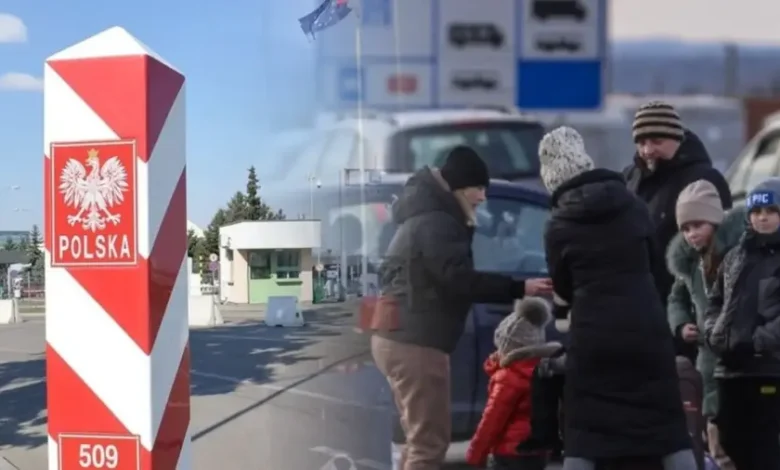
From March 5, 2026, changes began to take effect in Poland, due to which some Ukrainian refugees with temporary protection lost access to permanent social support. This hit people who, due to illness, age, disability or childcare, cannot quickly go to work and pay for housing, treatment or care on their own. This decision affected cancer patients, people with mental disorders, elderly refugees, single mothers, families with children with disabilities and those who were in collective accommodation centers.
Abolition of assistance and the first consequences
After changes in Polish legislation, Ukrainians with UKR PESEL status lost the right to part of the permanent payments that previously allowed them to cover basic needs. The President of the Polish Migration Forum, Agnieszka Kosowicz described the appeals that began to arrive at public organizations, hospitals and social services after March 5.
According to her, it is not only Ukrainians who are asking for help. Polish citizens, employees of social security institutions, hospitals and officials who themselves do not always understand how to apply the new rules to people in difficult life circumstances are also calling.
The consequences have become especially noticeable where social benefits were the only source of survival. In such situations, the loss of support means housing debts, interrupted treatment, the inability to arrange care or the risk of ending up on the street.
Among the cases described is the story of a 74-year-old man who is taking care of his granddaughter alone. Her mother died before the war, but it is impossible to obtain a death certificate from a combat zone in Ukraine. After his wife’s death, the husband was left without the right to unemployment benefits, since he does not live in a collective center, does not have a Polish pension, and can no longer work.
At the same time, he lost the right to pay 800+ for his granddaughter. Without these funds, the family risks losing the room they rent in Poland. For such people, the legislative change has turned into a sharp restriction on access to basic stability, since a lone elderly caregiver has no quick way to compensate for the loss of support.
Treatment that is stopped by the system
A separate group of victims are Ukrainians with cancer. According to Kosovich, cancer patients apply almost every day because they face obstacles in accessing treatment due to the loss of insurance. She cites the case of a person undergoing chemotherapy but losing the opportunity to receive radiation therapy. The doctor is ready to continue treatment, but the patient’s electronic system blocks access to the service due to lack of insurance.
For a person struggling with a serious illness, losing access to therapy is not a bureaucratic detail. She cannot find a job, the employment center will not register her as unemployed, insurance disappears, and with it the path to medical care is closed.
The most difficult situation has arisen for refugees with disabilities who need housing, care or medical support. State housing assistance is available only with a Polish disability certificate, although people arriving from Ukraine often have only Ukrainian medical documents.
To obtain a Polish disability certificate, a person must translate documents, contact a Polish doctor, get a referral to a commission and go through the registration procedure. Before completing all stages, the main question remains: where should a person in a wheelchair who has lost their home or loved ones in Ukraine live.
A similar problem applies to bedridden patients in nursing homes. After the cessation of state funding, some institutions began to look for places to transfer such people, although accommodation centers are often not ready to accept patients who need constant care.
Collective centers and the lack of alternatives
The Polish government has been reducing the number of collective living centers for a long time and encouraging refugees to leave them. Support programs have yielded results for those who could become independent, but some residents of such centers do not have such an opportunity due to health, age or family circumstances.
According to estimates, there may be about 15-17 thousand such people. Some centers are closing, and residents are forced to look for new housing throughout Poland, turning to public organizations that do not have the resources to fully replace state support.
For people who paid for their accommodation with social benefits, the cancellation of assistance means the loss of a place where they could stay safer than on the street. This was felt especially acutely by those who are unable to work due to disability or long-term illness.
Mothers with children and legal uncertainty
The complex consequences also affected women who take care of their children themselves. The column describes the case of a mother of three children with disabilities who, by law, must work, but in fact cannot leave their children unattended for a whole day.
Another situation concerns a mother with disabilities who is raising healthy children. The social insurance institution does not have a clear answer as to whether she retains the right to pay 800+. Without clear rules, families find themselves between refusals, waiting for explanations, and the daily need to pay for housing, food, and treatment.
After the changes, the issue of family assistants for mothers in crisis situations also arose. The court can appoint such assistance, but the system after the change in the law does not provide for its financing for some Ukrainian families, which is why social services receive decisions without a real enforcement mechanism.
Insurance, certificates and chaos in the rules
A separate problem has been the confusion with health insurance for residents of collective centers. According to the new rules, they are entitled to insurance, but a certificate is required for this. In practice, it is unclear who exactly should issue such a document and which institution should recognize it.
Kosowicz cites a case from Warsaw, where a medical center did not accept a certificate issued by the placement center. The municipality also did not issue the necessary document. As a result, people who are legally entitled to medical care are left without access to it due to an unregulated procedure.
Similar collisions show that the changes to the law affected about 40 other acts, but public organizations were given very little time to analyze the consequences. According to the columnist, the caveats regarding the elderly and other vulnerable groups were not properly taken into account.
Thus, the reduction in social assistance has hit Ukrainian refugees hardest, who cannot adapt quickly to the new rules due to their health, age, disability or childcare. For an able-bodied person, the loss of benefits may be a financial problem, but for a bedridden patient, cancer patient, single mother or elderly caregiver, it can destroy access to housing, treatment and minimal care.
Polish social institutions, hospitals and public organizations are now facing the consequences of decisions that in practice left some people without a clear path to assistance. In this situation, the problem was most acutely manifested in the fact that an effective mechanism for the transition to new conditions was not prepared for the Ukrainians most dependent on support.