Children were injured by unknown objects in Kharkiv and Chernihiv regions: how adults can protect children

In the fourth year of full-scale war, children living in frontline communities continue to live in conditions of daily risk. Even in the absence of active hostilities, their environment remains dangerous due to remnants of ammunition, mines, and explosive devices left over from shelling. Everyday household chores, walks near the house or in the garden can turn into a tragedy – often children come across deadly objects left after the attacks. In such conditions, one careless movement is enough to turn an ordinary day into an emergency situation with serious consequences. This is exactly what happened recently in Kharkiv Oblast and Chernihiv Oblast.
Kharkiv region: explosion of a smoke grenade in the hands of children
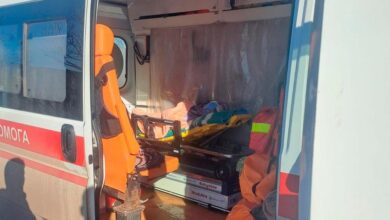
On June 28, two children were injured in the village of Stavishche of the Shevchenkiv community of the Kharkiv region as a result of an explosion of an unknown object. By information Oleg Sinegubov, the head of the Kharkiv Regional Military Administration, the explosion occurred near the yard. A 12-year-old boy received an open craniocerebral injury, and a 15-year-old boy received burns on his hand. Both children were hospitalized.
Later it became known that the object that exploded was an M-18 type smoke grenade. According to the police of the Kharkiv region, at the time of the incident, the children were at home and engaged in household chores. However, in the process of interaction with an object similar to a dangerous one, it was detonated. One of the teenagers was helped on the spot, the other had to be transported to a medical institution with a serious head injury.
Chernihiv region: an explosion in the hands of an 11-year-old boy
On the same day, June 28, another boy was injured by an explosion in Chernihiv region — an 11-year-old child from the village of Oleksandrivka, Koryukiv district. By information Head Office of the State Emergency Service in Chernihiv Oblast, around 4:00 p.m., a boy found an unknown object and picked it up. It exploded right in his hands.
The rescuers emphasize that the child was immediately hospitalized with injuries. It has not been officially specified which object caused the explosion, but the circumstances of the event once again indicate an extremely dangerous situation with the remains of explosive materials in the territory, which is not considered an active combat zone.
Causes of accidents
Today, Ukraine is one of the most mined countries in the world. Only according to official estimates, about a third of the entire territory needs survey and demining. And while the main efforts are focused on the de-occupied territories or regions near the front, even in the more rear areas there remains a large amount of munitions that fall into civilian space.
In addition, due to household carelessness, indifference or ignorance, in many settlements after shelling or military rotation, items that are parts of military equipment remain: cartridges, mine fragments, flares, smoke grenades. It is easy to confuse them with toys or interesting “finds”, especially when it comes to children who grow up in conditions of lack of a safe environment for leisure.
Community and state responsibility
The described cases raise uncomfortable but important questions: who should be responsible for cleaning the territory near private estates and yards? Why is it not mandatory to inspect schools, playgrounds, and yards after air raids or attacks?
Today, parents, teachers and local communities remain the first line of protection for children. But without a systemic policy on the part of the state, without speeding up the pace of demining, without mandatory inspections and strict regulations regarding the handling of military objects, the risks are growing.
Especially dangerous are situations when children are left unattended in areas where regular examinations are not conducted. In the conditions of a long war, this requires changes not only in the priorities of the Ministry of Education and Culture and local authorities, but also in the minds of adults: risks must be perceived as a daily reality.
How parents can reduce the risk: recommendations
- Explain to the children that war leaves behind dangerous things. It is not necessary to hide the essence of the threat from the child – instead, it is necessary to clearly explain that any unfamiliar object can pose a danger. This should become a habit: do not touch, do not take in hands, do not approach.
- Show examples. Use real news, adapted for the child’s age, to show what contact with explosive objects can lead to.
- Teach the child the algorithm of actions. If she saw a suspicious object, it is necessary:
- do not approach;
- leave immediately;
- notify an adult;
- do not allow other children to approach.
- Take control of your leisure time. Places where the child spends time should be checked by adults. Even a familiar yard or field behind a school is a risk zone if there have been soldiers or shelling there before.
- Contact the rescuers. If you notice anything suspicious, it is better not to guess on your own, but to call emergency services specialists or notify the local authorities.
- Monitor the child’s mood and reaction. After loud events or alarms, pay attention to the child’s behavior – whether he shows withdrawal, fear or, conversely, excessive interest in military topics.
The longer the war goes on, the more areas turn into hidden traps for children. Even at a distance from the front line, explosive objects can cause serious injury or loss. Therefore, systematic prevention, clarification, control and dialogue in the family are not just recommendations, but elementary steps to save life.