For the first time, a child was forcibly evacuated without the mother’s consent in the Kupyan region: details of this story

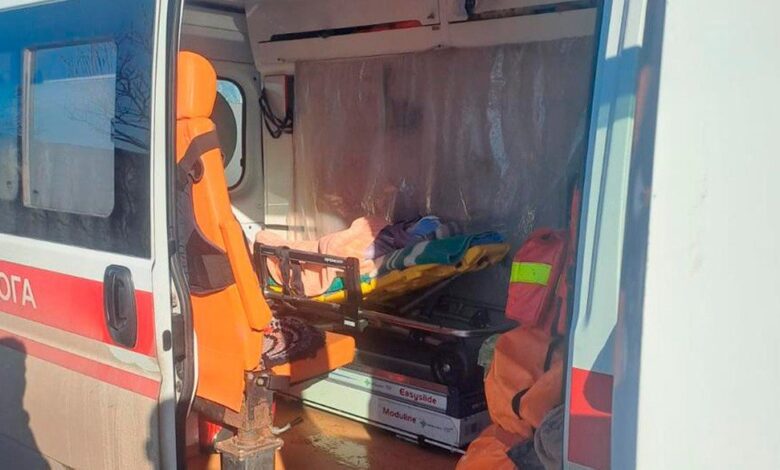
The story of the repeated evacuation of a six-year-old boy with severe disabilities from Prykolotne in the Vilhuvatsk community of the Kharkiv region was the first case when a child was taken away without the consent of his parents within the framework of decisions on mandatory evacuation. This was preceded by a whole sequence of actions, which began with conversations, warnings and offers of help, and ended with the immediate removal of the child, his delivery to Kharkiv and the preparation of a lawsuit.
From the Vilhuvatsk community, which is in the Kharkiv region, local authorities and law enforcement officers forcibly evacuated a child for the first time without the consent of his parents. We are talking about a six-year-old boy with a disability of the first group, who was taken out for the second time from Prikolotne, located 15 kilometers from the border with Russia.
The head of the Vilhuvatsk rural military administration, Yevhen Shapoval told how the decision was made, what preceded the evacuation, and what condition the boy is in after the removal. Separately, this story raises the question of the responsibility of parents who refuse to leave the danger zone with their children, since the police have already publicly explained what consequences such a refusal could have.
According to him, immediately before the removal, a decision was made to immediately take the child away, after which the mother was offered to go to Kharkiv with her son herself, in order to explain the specifics of care to the doctors at the medical facility.
“When on Tuesday (March 10 — ed.) we had already made the decision to immediately take her away and our employees said: “Get in the car, drive to Kharkiv with the child. We have already made a decision, they will take her away from you. “Just tell the doctors in a humane way about the specifics of care at the hospital.” She refused, gave the child back and signed the documents. She didn’t interfere,” Shapoval said.
According to him, on the eve of the forced evacuation, he personally visited the boy’s mother and spent an hour trying to convince her to leave on her own. During this conversation, she was offered not only to leave the dangerous territory until a tougher decision was made, but also specific assistance after moving to Kharkiv, in particular, payment of housing rent, humanitarian support and assistance in solving household issues.
“On Monday, on the eve of this evacuation, I myself came to her and we talked for an hour. I offered her: “We are ready to pay for your apartment rent in Kharkiv, provide humanitarian assistance and solve household issues, but leave here on your own until we make this decision.” She told me in the morning that she was not going to leave. When we did everything, psychologists called her, and she told them: “I don’t trust anyone,” I understood that this included me. After all this, I understand that this was a planned scheme so that the state would take the child away from her,” — said Yevhen Shapoval.
What is important in this part of the story is that, according to Shapoval, at first it was an attempt to achieve voluntary departure, and after the refusal, the mechanism of immediate removal was applied. This is how, according to his description, the events developed over two days, from preliminary negotiations to the actual removal of the boy.
After being removed from Prykolotne, the child was taken to a hospital in Kharkiv, where the boy is under the supervision of doctors. According to the head of the community, the child’s condition is satisfactory, and doctors are conducting the necessary examinations.
As of March 16, the issue of transferring the boy to a hospice and placing him in a foster family is being considered. At the same time, a lawsuit is being prepared to take the child away from the mother without depriving her of parental rights.
From the above circumstances, it follows that after the evacuation, the case moved from the plane of immediate response to the danger to the plane of further placement of the child, medical supervision and judicial review, which should determine the legal status of this removal and further decisions regarding custody.
Yevgen Shapoval noted that this case is the first and only one in the community. That is why the story from Prykolotne has acquired special significance, because it does not concern the usual evacuation of a family from the frontline territory, but the use of an exceptional mechanism under which the child is taken out without the mother’s consent.
For the community itself, this decision was unprecedented, and for local authorities and law enforcement officers, it was an example of a situation in which attempts to convince parents to leave did not yield results, after which a different course of action was used.
A separate explanation regarding the legal consequences of parents’ refusal to evacuate their children was published by the Kharkiv region police. A message on the page of the children’s service of the regional military administration quoted the words of the head of the juvenile prevention department in the relevant regional police department Artemiy Konovalov:
“If parents do not leave with their children during mandatory evacuation, the police may draw up a report under the article on failure to fulfill parental duties. In cases where local authorities cannot reach an agreement with the family, law enforcement officers are involved in the process, and the parents themselves are explained that the consequences may include not only administrative, but also criminal liability if something happens to the child.
When local authorities realize that they cannot agree with the parents, they turn to the police. The parents are explained the possible legal consequences – from administrative to criminal liability, if “Something will happen to the child,” says the law enforcement officer.
The story from Prikolotne showed that in conditions of mandatory evacuation, the decision to remove a child can move from the stage of persuasion and offers of help to forced removal if the parents refuse to leave the dangerous territory. In this case, after a personal conversation with the mother, an offer of housing and support, and her refusal to leave, local authorities and law enforcement officers applied a mechanism that had not been used in the community before.
The further development of this case will depend on the decisions of doctors, children’s services, and the court, since the child is in the hospital, the possibility of transferring him to a hospice and placing him in a foster family is being considered, and a lawsuit is being prepared against the mother to take away her son without deprivation of parental rights. That is why this case goes beyond a separate evacuation and becomes an example of how child protection mechanisms are applied in practice in a frontline community, where the risks to life remain extremely high.