Closed deportation routes: how Ukraine returns children abducted by Russia through unofficial channels

The war has turned the return of Ukrainian children from Russia, Belarus and the occupied territories into one of the most difficult humanitarian cases, in which ordinary diplomatic and legal procedures often prove too slow or even ineffective. Behind the dry formulations of deportation, displacement and evacuation lie situations in which a child is torn from his family, transferred to a foreign environment, his documents changed, immersed in the Russian education system and gradually cut off from everything that connected him with Ukraine. Therefore, the return of children through closed unofficial channels is a forced practice that has developed where the normal path of return is either blocked or turns into a tiring circle.
Return of Ukrainian children through unofficial channels
As CNN reports, Ukraine is carrying out a significant part of the return of children through undeclared routes that require silence, coordination and great caution. These are children and adolescents whom the Russian side has taken away or is holding under its control in Russia, Belarus and in temporarily occupied territories, and for many of them, leaving is only possible secretly, because it is almost impossible to obtain official permission to leave such territories.
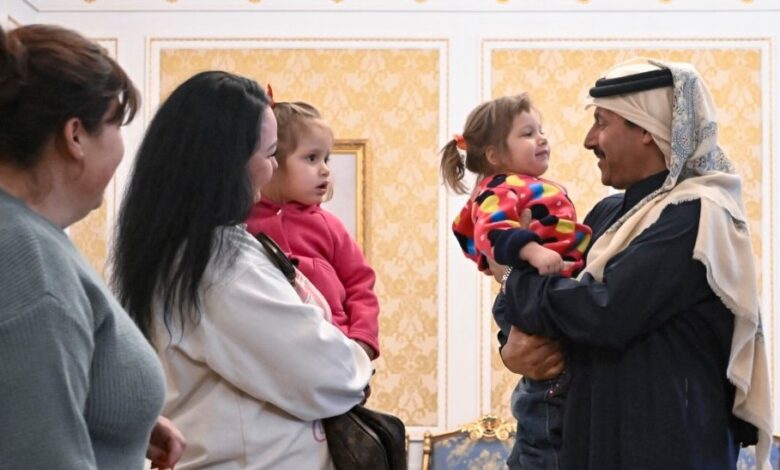
According to available data, approximately two thousand children and adolescents have already returned home, but less than a quarter of them have been returned through official channels. The CNN article specifically mentions that 83 children were returned through Qatar’s mediation, and another 19 as part of an initiative involving US First Lady Melania Trump. The rest is a complex, often silent operation in which volunteers, human rights activists, relatives, and intermediaries, whose names are often not mentioned precisely because publicity could disrupt the route, play a crucial role.
Why the official path turned out to be too problematic
The problem is not only that there is no efficient and rapid mechanism for the return of each individual child between Ukraine and the Russian Federation. The complexity is much deeper, because the Russian side controls the territories, documents, educational environment, access to information, and the very space in which the child is after being taken away. Under such conditions, any official procedure very quickly runs into artificially created obstacles: somewhere information about the child’s whereabouts disappears, somewhere the check is delayed, somewhere new requirements are put forward, somewhere pressure begins on relatives or on the child himself.
Because of this, the expectation of a full-fledged interstate format looks too slow and often fruitless. While diplomats are looking for a framework for agreements, time is working against Ukraine: the child has time to adapt to the forcibly imposed environment, get used to the new school, fall under constant ideological influence, and sometimes even obtain new documents, which makes return even more difficult. In such circumstances, the unofficial path becomes not a choice due to convenience, but a response to a system that was originally built to complicate or thwart return.
What a closed return route looks like
The return of children through unofficial channels has nothing to do with the romanticized image of a “secret operation,” which easily looks impressive in a newspaper headline but does not explain the real essence of the process. In fact, it is a long, multi-layered and nervous work, in which each step depends on the tacit coordination of several people or structures, and any premature publicity can instantly make the child unreachable. That is why the founder of Save Ukraine Mykola Kuleba calls each case a separate special operation: not because of the effective wording, but because there is simply no standard and safe corridor for return.
In such a route, everything that would remain in the background in the usual legal process is important: who accompanies the child, who contacts relatives, how not to arouse suspicion, how to pass intermediate points, how to prevent the Russian authorities from blocking the exit after they become aware of the return attempt. This is where informality takes on practical meaning: it is needed not for a game of circumvention around the law, but so that the right to return has a chance to be realized at all.
Stories that show the details of the closed route for the return of children
The individual cases cited in the CNN material make it clear that behind the generalized theme lie very different, but equally traumatic destinies. Rostislav Lavrov, for example, was taken to a naval school in occupied Crimea, where they tried to issue him a Russian birth certificate. In October 2023, he left the educational institution himself and, with the help of volunteers, reached the territory controlled by Ukraine. In this story, it is not only important that the boy managed to escape, but also the very nature of the environment into which he was drawn: the child was not simply moved geographically, but they tried to embed him in a different state and symbolic order.
No less telling is the story of Yulia Dvornichenko, who was separated from her two sons after her detention. The return of the children became possible only through unofficial means, including the use of forged documents, and this in itself indicates the degree of deformation of the situation: in order for the mother to take her children, she has to follow not the usual legal path, but through routes that exist because the usual order has stopped working. The most terrible thing in such stories is that the illegality of the aggressor’s actions forces the victim to look for a way out in a space of constant risk.
What happens to children after removal
It is difficult to return a child not only because they are physically far from home or under the supervision of Russian structures, but also because the time spent under this control is used for systemic influence. According to representatives of Ukrainian NGOs, some children go through ideological indoctrination, gradual integration into the Russian environment and the imposition of a new loyalty, and the longer the child remains in this environment, the more difficult the return process becomes — both legally and psychologically.
This is confirmed by the story of 19-year-old Taras from a Ukrainian village under occupation. He describes a situation in which younger children and adolescents are daily immersed in the Russian education system, given automatic weapons for educational disassembly and assembly, dressed in uniforms, forced to undergo combat or similar exercises and prepared for future military loyalty. The episode about the pressure on families who did not receive Russian passports or did not send their children to such schools looks especially harsh, because the refusal to be included in this system can result in new punitive actions.
Why school in occupied territory becomes an instrument of control
A separate line of this topic concerns education, since school under occupation works as a mechanism for changing identity. According to the Verkhovna Rada Commissioner for Human Rights Dmytro Lubinets, more than 1.6 million Ukrainian children remain in the territories occupied by Russia and are forced to study in Russian schools. This figure shows the true scale of the problem: we are not talking about isolated stories, but about an entire generation of children who are daily influenced by a system that displaces the Ukrainian context and imposes the Russian one as the only acceptable one.
In such a school, not only the language of instruction or the set of subjects changes. The very meaning of education changes, because the child is taught not just different textbooks, but also a different political loyalty, a different version of history, a different idea of the state, the war, and Ukraine itself. That is why the return of a child is not only a question of the way home, documents or escort across the border, but also a question of how much time she spent in an environment where she was consistently persuaded to renounce her own origins.
What the numbers say and why they do not give the full picture
According to the Ukrainian authorities, about 20 thousand children have currently been identified who were deported or illegally transferred to Russia or the occupied territories. At the same time, both the President of Ukraine and the Ombudsman have repeatedly emphasized that the real scale may be greater, because not every case can be documented. This is why any figure on this topic is both important and incomplete: it shows the recorded level of crime, but does not exhaust its real scope.
An additional dimension of the problem is also highlighted by external assessments. British intelligence has previously reported that at least 11,000 Ukrainian children are being held in 43 so-called re-education camps in Russia, sometimes thousands of kilometers from home. Such data is important not because it adds drama, but because it shows the infrastructural nature of this phenomenon: children are not simply moved, they are dispersed, embedded in specially prepared environments and kept in a space where the connection with home gradually disappears.
International response to this problem
The international dimension in this topic remains important, but it does not always give a quick practical result. The International Criminal Court’s arrest warrants for Vladimir Putin and Maria Lvova-Belova have become a strong legal and political signal that has cemented the understanding that this is not about random movements during wartime, but about an action for which personal responsibility may arise. However, the warrant itself does not return the child home, but only creates a legal framework in which the crime receives an international definition.
Against this background, the decisions of individual states and international forums are important primarily as an attempt to build additional pressure and find working mediators. This is how the resolution of the Austrian parliament on the protection of Ukrainian children should be viewed, and the results of the ministerial conference in Montreal, where they separately spoke about the return of captive and deported Ukrainians, as well as the search for trusted intermediary countries for contacts with Russia. However, until a stable and effective mechanism appears, the weight of international support still does not eliminate the need for those closed routes through which it is possible to save specific children today.
The issue of abducted children would mistakenly seem complete if it were reduced only to counting returned, non-returned, and established cases. In fact, this is one of the deepest forms of war against the civilian population, where the blow is not aimed at the infrastructure or just at a single family, but at the future of an entire country. They are trying to take the child away not only physically, but also culturally, linguistically, symbolically, replacing their documents, school environment, familiar world and connection with their state.