“Common sense” in the new Civil Code: expert criticizes legislators’ attempt to make “popular morality” a legal standard

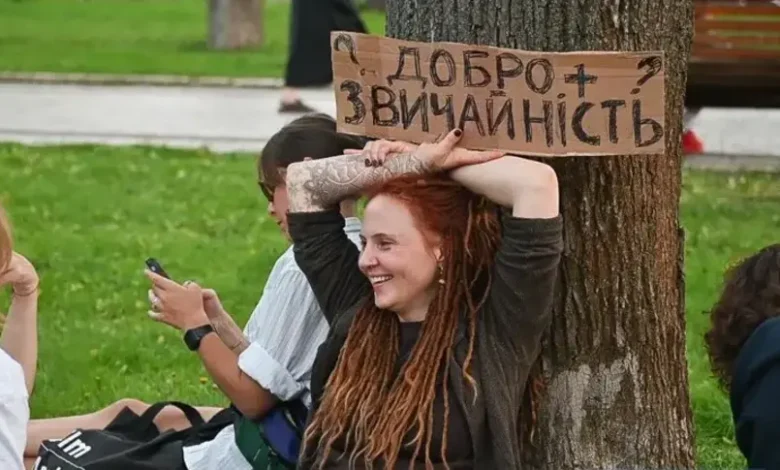
Law becomes especially sensitive where the legislator tries to inscribe moral assessments into it, because an unclear word in the code can affect court decisions, property disputes and the boundaries of permissible behavior. The draft of the new Civil Code contains many controversial provisions, in particular, the question arises because of the proposed term “common sense”, which can affect the assessment of people’s behavior in legal disputes.
Law works convincingly only when people understand the origin of the norms by which the court will evaluate their behavior. This is especially true of moral concepts, because they may sound noble, but without clear boundaries they turn into a tool that everyone uses in their own interests. The Ukrainian experience makes such a topic even more acute, because for several generations society has lived under different regimes, in different systems of coercion, survival, adaptation and inequality, which is why talking about “generally recognized” morality requires an honest explanation.
Tax reform expert Pavlo Sebastianovych drew attention to the term “common sense”, which appeared in the draft of the new Civil Code. The authors of the document explain it as a set of moral norms, principles, standards of ethical behavior and generally accepted ideas about proper behavior that have become established in society. According to this logic, human actions that do not meet such a criterion may have legal consequences, so the expert considers the question of the origin of this standard to be key.
Sebastianovich does not deny that law needs ethical support, because no code is able to describe all life conflicts and all the limits of human behavior. His reservation concerns something else: the legislator suggests that the judge use the conditional line of “popular morality,” although this line, according to the expert, could have been formed by a narrow circle of people without an open answer to the question of why their vision should become a general standard.
According to the expert, the authors of the code did not explain when, where and in what historical conditions in Ukraine those reference ideas about proper behavior arose, which they now plan to apply as a legal category. He believes that without such an answer, “common sense” turns into a word with a noble sound, but with a dangerous practical meaning, because each influential group will be able to invest its own benefit in it.
Sebastianovich ironically asks the question of whether such morality could have been formed in government offices during modern corruption scandals, in particular against the backdrop of talk about “Mindichgate”, kickbacks, schemes and shares. In his logic, it is important not to cover up the problem with a beautiful term, but to understand whether the government, which society regularly sees in scandals, can offer a moral standard for courts and citizens without public scrutiny.
He also recalls that Ruslan Stefanchuk called the new Civil Code the result of seven years of work. Sebastianovich asks the question in what atmosphere this “common sense” matured, if this period was accompanied by war, distrust of institutions, corruption stories, social exhaustion and constant explanations why many sharp decisions are postponed. In his assessment, long-term work on the text does not replace an honest answer about the content of the moral standard.
The expert then conducts his argument through previous political eras. He recalls the times of Viktor Yanukovych, when the symbols of power were motorcades, Mezhyhirya, demonstrative luxury and private comfort, detached from the lives of most citizens. In such a system, according to his logic, “proper behavior” was determined not by social justice, but by proximity to power, resources and impunity.
Sebastianovich also does not perceive the period after the Orange Revolution as an impeccable source of moral standards. He recalls “dear friends”, political agreements, mutual cover-ups and rhetoric about clean hands, which did not remove public claims to the quality of power. For him, this experience shows that loud words about renewal do not guarantee the emergence of rules that can be called good customs without verification.
A separate layer of his criticism concerns the nineties, when former Komsomol figures, new owners, power groups and people close to power divided factories, mines, steamships and other assets. Sebastianovich recalls that at that time the word “oligarch” became part of the real Ukrainian dictionary, and “shooters” and “dismantling” often served as a mechanism for resolving issues where law, competition and transparent rules were supposed to work.
The expert sees another source of distorted habits in the Soviet past. He recalls collective farms, work for “sticks”, shortages and a system in which “getting” meant more than “buying”. In that reality, people’s behavior was determined not by trust in the rules, but by dependence on the warehouse manager, commodity expert, store director or another person who controlled access to goods and opportunities.
Sebastianovich associates the most profound historical examples with Stalinism, the Holodomor and repressions. He recalls the times when denouncing one’s neighbor could be a way of self-preservation, silence saved from danger, and survival during famine occurred in conditions where people’s bread was taken away and normal moral ties were broken. Hence his sharp question: in whom does the legislator look for a source of good manners — in those who were dispossessed or in those who carried out the dispossession; in those from whom bread was taken away or in those who took it away.
According to Sebastianovich, the history of Ukraine in the 20th and 21st centuries was largely a history of ruptures in moral tradition. Each generation lived by different rules, often accepting them silently, because resistance could cost freedom, property, safety, or life. Because of this, he does not agree with the idea that there is a ready-made invisible “society” in which common and unquestionable standards of proper behavior have long been formed.
“In the audio recordings where respectable people discuss kickbacks, schemes and shares, we should probably have caught the voice of popular morality. Then it remains only to clarify: by what exact line it was encoded.
Maybe it was pressed during those seven years while the code itself was being written – in the silence of academic offices, in parallel with the war, corruption scandals and the era of “not the time”? I wonder if the authors checked their formulations with the news feed.
Stefanchuk says that the Civil Code is the result of 7 years of work. That is, it is likely that common sense matured in the “era of lies” of the predecessor of the current president? The same era – “what reforms do you… lack?”
Or earlier – during the reign of the “conman” whom the people decided to “get rid of”? Then the standard of good behavior was probably a motorcade with flashing lights, an estate in Mezhyhirya, and an ostrich farm as a private anti-stress.
And even earlier — during the “Orange” period, when “dear friends” took the seats, and the hands of one of the leaders “didn’t steal anything.” Perhaps good behavior is a mutual guarantee of the same hands?
Or let’s go even deeper — in the nineties, to the time of Kuchma, when young guys in crimson jackets and former Komsomol members divided factories, mines, and steamships. The era when the word “oligarch” first became a profession. “Dismantling”, “shooting” became a form of communication. This is where, apparently, the standard ideas about what is proper were forged,” the expert notes.
The expert connects the modern dimension of this problem with the gap in income and opportunities. He mentions the military salary at 20 thousand hryvnias, the subsistence minimum for millions of pensioners at about 2.5 thousand hryvnias, payments to military personnel outside the state at 840 hryvnias per month, and the lack of sufficient support for some internally displaced persons. Against this background, he compares such amounts with the remuneration of state managers at 100–200 thousand hryvnias, judges at 200–300 thousand hryvnias, as well as heads of state banks and state enterprises, who can receive about a million hryvnias per month.
“The creators of the code seem to be proceeding from the comfortable assumption that there is some invisible “society” in which “generally recognized ideas about what is proper” have already been established, and we can only read them. But the history of Ukraine in the 20th–21st centuries is, first of all, the history of the rupture of moral traditions. Each generation lived by different rules, because otherwise it had no chance of survival. And each generation silently accepted the rules established by those who had power.
Today, this power belongs to Hetmantsev, Mylovanov, Pyshny, Mindich (their name is legion) and, of course, Stefanchuk. The military salary is 20 thousand, the subsistence minimum for millions of pensioners is 2.5 thousand, the military off-duty is 840 UAH per month, IDPs are zero thousand. And the salaries of state managers are 100–200 thousand, judges are 200–300 thousand, the tops of state banks and state enterprises are a million UAH per month. The gap in the incomes of those who distribute budgets and those who depend on them is more than 100 times!
Hence the paradox. If we honestly look at our history, we will have to admit: our “common sense” is often the morality of the winner, the morality of the invader. The one who took the bread, not the one from whom it was taken. The one who ended up on the tapes, not the one who listens to the tapes.
And when today the legislator says: “We will measure your behavior by common sense,” it is worth asking: whose common sense do you mean? The common sense of the authorities of 1933? 1937? 1991? 2004? 2014? Or, perhaps, the one that has developed over the past seven years of writing the code itself?”, – the expert emphasizes.
Sebastianovich emphasizes that his claim is not directed against high salaries in the public sector as such. He speaks of the need for a clear and fair grid, where the remuneration of officials would be tied to the real subsistence minimum, and not to an artificially low figure. In this context, he mentions the benchmark of the actual subsistence minimum of about 7.5 thousand hryvnias and criticizes the situation when the state calculates people’s survival according to one number, and sets a completely different income scale for managers.
The expert also links this inequality with laws on confiscation of property from debtors. In his vision, the state first creates conditions with its decisions in which people find themselves in debt and poverty, and then offers mechanisms for confiscating their property. Because of this, the issue of “common sense” is not an abstract legal discussion for him, because the moral criterion in the law can work against those who have the least protection.
“I am not against high salaries for state managers, if not against the very idea of moral standards in law. But I want a clear salary scale where a minister receives no more than 10 subsistence minimums, like in Poland, like in the Baltic countries, like in Europe or the United States! That is, fair. And so that the subsistence minimum corresponds to the actual one — 7.5 thousand UAH, which was established by the Ministry of Social Protection, and not the fake 2.5 thousand, which was allocated for one pensioner by the Minister of Finance! And now the authorities are promoting laws on confiscation of property from debtors, which they themselves created!
All major legal systems sooner or later recognize that the norm cannot live by itself, without an ethical basis. The problem is different: one cannot refer to “generally accepted ideas” when society has not had an honest conversation about its own history. One cannot take “popular morality” off the shelf as a ready-made measuring device if we have never found out — who exactly, in whose interests, and with what materials filled this shelf,” the specialist believes.
Sebastianovich admits that major legal systems eventually come to an understanding: the norm cannot exist without an ethical basis. At the same time, he insists that referring to “generally accepted ideas” is dangerous without an honest conversation about one’s own history. “Folk morality” cannot be taken off the shelf as a ready-made measuring device until society finds out who filled this shelf, by whose rules, under what pressure, and in whose interests.
Therefore, the expert suggests conducting a major public audit before the appearance of “common sense” in the Civil Code. It should answer which customs Ukraine really considers good, why they should receive legal force, whether they have public support, and whether they stem from practices of fear, poverty, corruption, adaptation, or violence. Without such an audit, the moral category will remain too convenient for various interpretations.
In the end, Sebastianovich’s logic boils down to the main caveat: if the legislator does not explain whose “common sense” he is taking as a basis, this concept will be able to include the authors of the code, their opponents, those involved in scandals, investigators, officials, judges, and everyone who has their own “generally recognized” truth. Then the beautiful term risks becoming not the moral foundation of law, but old criminal “concepts” transferred to a new civil code shell.