The personnel shortage will be closed without mass immigration of migrants: who does the government want to attract to the labor market?

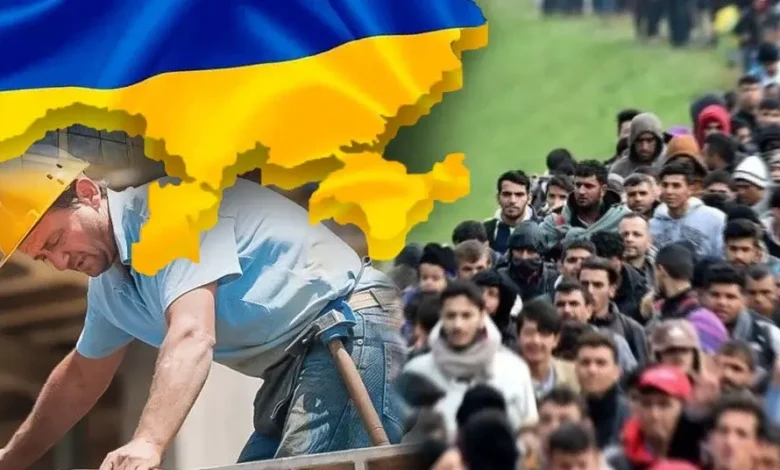
The Ukrainian labor market has entered a period of acute shortage of people, when the lack of workers affects the ability of businesses to expand production, fulfill orders, launch new projects and maintain stable operation of enterprises. Against this background, the issue of labor migration is increasingly appearing in public discussions, but the government has provided an explanation for the mass involvement of foreigners.
Human resource shortage as a constraint for the economy
Minister of Economy Oleksiy Sobolev stated that for annual GDP growth of 7%, Ukraine needs about 4.5 million workers over the next ten years. Such a scale of need means that the problem concerns not only the search for individual specialists, but the entire structure of the labor market, where businesses lack workers in production, construction, logistics, trade, the service sector and other areas.
Under such conditions, the state should look for not one quick tool, but several sources of replenishment of the labor force. The government’s position is that the country’s internal resources should be used first, since a significant part of working-age people either work unofficially or do not participate in the economy at all.
Despite the shortage of personnel, the attraction of labor migrants from other countries is not currently identified as a priority. This approach is explained by the fact that Ukraine has a significant internal labor reserve, as well as millions of citizens abroad, whose return could become an important factor for the economy.
Individual enterprises can hire foreign workers for specific jobs, especially where the shortage of people is already blocking the implementation of projects. However, spot hiring in construction or production is not equal to the state policy of mass importation of migrants. The government’s emphasis is shifted to Ukrainians who can work in the national economy provided that they are legally employed, retrained, supported in their return, or created acceptable working conditions.
Internal reserve: who can return to work
According to Sobolev, there are about 30 million people in the territory controlled by Ukraine, but only 10.5 million are officially employed. Another approximately 2.6 million people are employed in the shadow sector, that is, they perform work without full participation in the system of taxes, social insurance and labor guarantees.
The government estimates the additional internal reserve at at least two million people. This includes young people, citizens aged 50+, people who have not worked officially for a long time, as well as certain categories that are outside the legal field of employment. For the economy, this means that part of the personnel shortage can be closed without external labor imports if mechanisms are created for people to return to work and the share of shadow employment is reduced.
Attracting young people to the labor market requires not only vacancies, but also a clear entry into the profession, when the first experience does not become a barrier due to lack of experience. For employers, this means the need to train workers on the spot, adapt them to real processes and offer conditions under which young people will remain working in Ukraine.
People aged 50+ constitute another important reserve, as they have experience, discipline and professional skills, but often face a biased attitude in the labor market. Their return or more active involvement can help areas where practical experience, responsibility and the ability to quickly integrate into the work process without long basic training are valued.
A certain part of potential workers is outside the economy due to informal employment, legal problems, loss of qualifications or a long break in work. For such people, it is not general calls for employment, but specific return tools that become important: legal vacancies, retraining, simplified access to work, support and clear rules.
Return of Ukrainians from Abroad
Sobolev calls Ukrainians who are abroad the second major source of personnel. According to the minister, more than 6 million citizens remain abroad, and some of them may consider returning if Ukraine has a clear trajectory for life after moving.
Sobolev noted that among the main conditions for returning, people name money for moving, housing, school, hospital and work. This list shows that the decision to return depends not only on salary or availability of vacancies. Families assess whether they will be able to find housing, place children in an educational institution, receive medical care and have a stable source of income after returning.
The Ministry of Social Policy is opening Ukrainian hubs to maintain contact with citizens who are abroad. Such platforms should help with communication, information and preparation of return programs.
This is important for the labor market, because the return of people cannot be reduced to just job advertisements. A person who has lived abroad for several years needs information about housing, documents, children’s education, medical services, jobs, and adaptation conditions. Without such a package of solutions, returning will remain difficult even for those who maintain ties with Ukraine.
Shadow employment as a hidden reserve
According to Sobolev, the shadow sector is of particular importance, in which, according to the data provided, about 2.6 million people are employed. For the state, this is a loss of tax revenues and social contributions, and for the workers themselves, the risk of being left without protection in the event of illness, dismissal, injury, or pension accruals.
Legalizing such employment can increase the official number of employees without actually moving people between countries or industries. However, this requires conditions under which it will be more profitable for the employee and the employer to work openly than to remain in unofficial arrangements.
For business, the government’s position means that a quick universal solution through the mass involvement of migrants is not expected. Companies will have to compete for workers within the country, invest in training, retention, retraining and adaptation of people who have not previously worked in a particular field.
At the same time, enterprises that already have a critical shortage of workers may continue to look for point solutions, including hiring foreigners for individual projects. However, the general state logic remains different: first, the return of Ukrainians to legal employment, then work with citizens abroad, and only after that – limited use of labor migration where it is impossible to fill the need without it.
The government’s position boils down to the fact that the personnel problem is planned to be solved through the Ukrainian labor resource. At the heart of this approach are people who already live in Ukraine but do not work officially, citizens who may return from abroad, youth, older workers and those who can be attracted through training, retraining or legalization of employment.
Mass import of migrants in this model is not seen as the main path for the economy. Foreign workers may remain part of individual business solutions, but the main focus is on getting Ukrainians back to work and increasing the number of people participating in the formal labor market.