Deportation of Ukrainians from the EU: the head of the State Migration Service explained why Ukrainians are increasingly being forcibly returned home

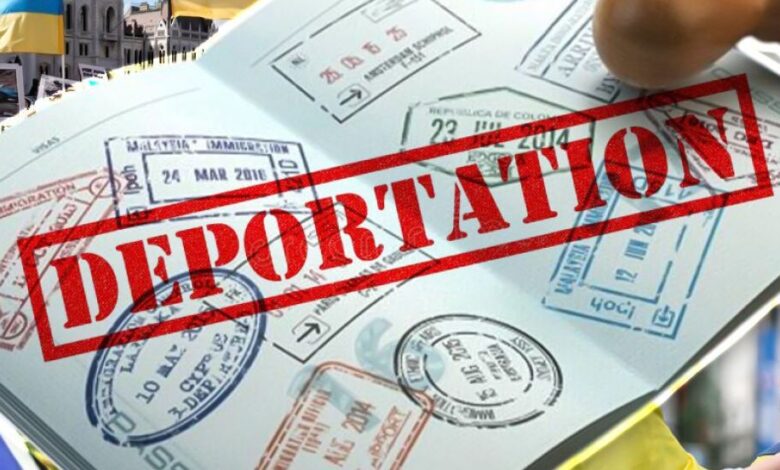
After several years of massive stay of Ukrainians in the countries of the European Union, the migration policy of the host countries has become stricter towards those who violate the rules of residence, do not renew their documents or lose the grounds for legal status. European countries continue to leave protection mechanisms for Ukrainians, but they are increasingly checking whether a person actually meets the requirements of the country of residence. The Head of the State Migration Service of Ukraine, Natalia Naumenko, drew attention to the increase in cases of forced return of Ukrainians from the EU and named the main reasons for which the readmission procedure is launched.
The head of the State Migration Service attributes this to the fact that after the first years of broad support for Ukrainians, European states began to more meticulously monitor compliance with their own rules. Asylum, temporary protection or other legal status gives the right to stay only on condition that a person fulfills the established requirements, executes documents in a timely manner and does not violate the legislation of the country of residence.
Naumenko believes that this primarily refers to cases of forced return of Ukrainian citizens who have violated the rules of stay in the countries of the European Union. The EU can return such people to Ukraine under the readmission procedure. This is a mechanism provided for by international agreements between states, which allows the return of its own citizens, as well as third-country nationals or stateless persons, if they are illegally staying in the territory of another contracting party or have lost the legal grounds for further stay.
Several categories of Ukrainians may fall under readmission. First of all, these are citizens who entered the EU outside of official checkpoints, in particular, illegally crossed the border across a river, a mountain area or another unofficial route. Also at risk are Ukrainians who did not renew the documents necessary for legal stay abroad in time, including temporary protection status. A separate category is made up of citizens of Ukraine who committed offenses on the territory of the European Union.
“We see the interest of European countries in increasing the returns of our citizens under the readmission procedure. We have quite a few requests from European countries (Poland, the Czech Republic, Germany) regarding the return of our citizens — both men and women — to Ukraine,” the head of the State Migration Service emphasized.
Nataliya Naumenko calls the first reason for forced return a violation of migration legislation. Such cases include illegal border crossing within the EU, overstaying the permitted period of stay, or working without proper permits.
For Ukrainians, the risk often arises when a person is in Europe without a clearly formalized status. For example, a citizen may enter without a visa, stay longer than the permitted period, and not submit documents for temporary protection or another legal form of residence. In such a situation, the migration authorities of the host country may consider further residence as illegal.
A separate problem is employment without appropriate permits. In some countries, Ukrainians have the right to work after obtaining a certain status, but this right does not always arise automatically. If a person starts working without following local procedures, such a situation may become a basis for claims from migration or labor authorities.
The head of the State Migration Service calls the untimely processing of documents the second reason. Some Ukrainians lose their legal status due to expired certificates, untimely extension of permits, ignoring letters from migration agencies, or untimely registration at the place of residence.
For European services, an expired document often means the loss of legal grounds for stay. Even if a person previously had temporary protection or another permit, missing the application deadline can cause problems that are difficult to quickly fix later.
It is especially dangerous to ignore official notifications from migration agencies. Such letters may contain requirements to appear for an appointment, provide additional documents, confirm the address of residence or update data. If a person does not respond to such notifications, the authorities of the host country can make decisions without their participation.
Natalia Naumenko calls the third reason for readmission the commission of administrative or criminal offenses. European law enforcement agencies can initiate the forced return of foreigners who violate the law, pose a threat to public order or have committed a crime in the territory of the host country.
Temporary protection does not exempt a person from liability before the law of the state that accepted them. If a Ukrainian citizen violates the rules, engages in illegal activities, or has serious problems with law enforcement, this may affect his or her right to remain in the country.
In such cases, the consequences may go beyond a fine or court decision. Under certain circumstances, the host country may initiate the procedure for returning a person to Ukraine if it considers that there are no longer grounds for further residence.
According to Naumenko, the gradual increase in readmission cases is due to the fact that European countries are moving from emergency admission of Ukrainians to stricter administrative control. The first years after the start of the full-scale war were a period of rapid asylum, when EU countries created simplified mechanisms for registration, access to housing, work, medicine, and social support.
Over time, the rules began to be detailed, and control over their implementation became stricter. Migration authorities check whether a person actually lives at the specified address, has valid documents, does not violate the terms of stay, and works in accordance with local legislation.
For Ukrainians, this means that status abroad requires constant attention. It is not enough to issue documents once and consider the issue closed for the entire period of stay. In many countries, it is necessary to update data, confirm the address, extend permits, keep documents about work or study, and monitor changes in rules.
The position of the head of the State Migration Service boils down to the fact that Ukrainians abroad need to be responsible about their own legal status. Any violation of migration deadlines, unauthorized employment, ignoring official notifications, or conflict with the law can create a risk of forced return.
First of all, it is worth checking the validity period of the certificate, temporary protection status, or other document that gives the right to reside. You also need to keep confirmation of registration, carefully read letters from migration services, and not postpone submitting applications for extension of permits.
Naumenko emphasizes that work requires special attention. Before finding a job, it is worth finding out whether a specific status gives the right to work without additional permission, or whether a separate procedure is required. In different EU countries, the rules may differ, so it is risky to rely on the experience of acquaintances from another country.
Natalia Naumenko’s statement is actually a warning to Ukrainian citizens who are in EU countries and believe that temporary protection status or long-term residence abroad automatically guarantees the right to stay there without additional conditions.
The State Migration Service records a significant number of requests from European Union countries for the return of Ukrainian citizens to Ukraine. At the same time, there is currently no joint EU decision that would unify the approach to such returns.
European countries continue to accept Ukrainians, but support does not cancel the obligation to comply with laws, migration procedures and employment rules. If a person loses legal status, misses deadlines, violates the law or fails to comply with the requirements of the host country, the readmission procedure can be a real consequence.