Europe is interested in ensuring that some Ukrainians do not return home: Ella Libanova

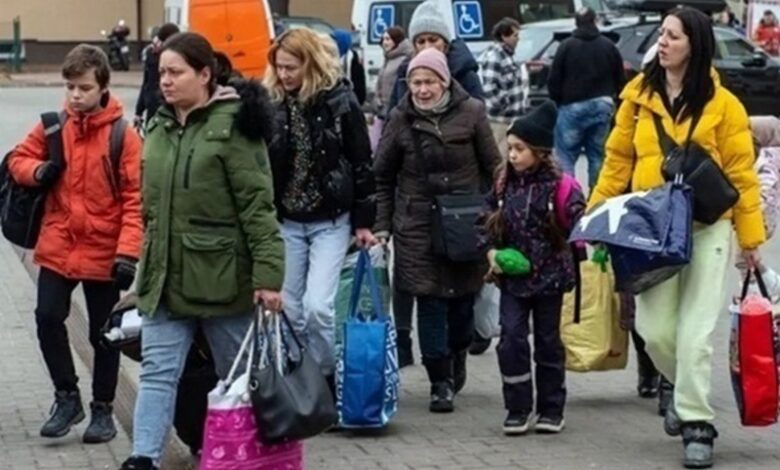
The mass exodus of Ukrainians to European countries since the start of the full-scale war has long become not only a humanitarian issue related to shelter and security, but also a topic that is increasingly being considered in demographic and economic terms. For countries with a noticeable aging population, the composition of newcomers in terms of age, working capacity, and prospects for long-term stay is of great importance, so the discussion about the return of Ukrainians is increasingly going beyond purely social assistance and touching on the interests of the labor market, the system of supporting older generations, and the future personnel situation.
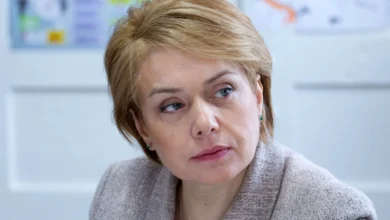
Director of the Institute of Demography and Quality of Life Research of the NAS of Ukraine Ella Libanova believes that European countries are interested in ensuring that some of the Ukrainians who left because of the war remain there. She voiced her position, explaining such an interest by the age structure of the European population and the need for people able to work.
In her commentary, the demographer linked the attitude of European countries towards Ukrainian migrants to the general demographic situation on the continent. According to her, Europe is aging, and a significant part of older people is no longer participating in the labor market, which is why the demand for those who can replenish the labor force is growing.
Libanova noted that Ukrainians are an obvious human resource for European countries. In conditions where the share of the elderly population is growing, states need new workers, and that is why keeping some of the Ukrainians in Europe seems beneficial to them.
According to Libanova, European countries are most interested in Ukrainian teenagers and young women under the age of 40. She emphasized that she has no doubts about teenagers at all, and young women, in her opinion, are also among the categories that they would like to see there in the future. These groups have a longer life and work horizon, and therefore are of greater interest to countries facing an aging population. In her explanation, this interest stems from demographic logic, where younger age means both longer participation in the labor market and a potential contribution to the future population structure.
Separately, the demographer drew attention to the age composition of Ukrainians who left for Europe. According to her, older people among them make up only 6% of the total number, and this figure clearly shows why European countries can consider Ukrainian migrants as a demographically attractive group.
Such a proportion means that among those who ended up in European countries, not pension age categories prevail, but people associated with a longer period of active life. In her interpretation, it is this circumstance that increases interest in Ukrainians from countries where the share of the elderly population has long been growing.
Libanova’s comments also included a separate assessment of young Ukrainian men. She suggested that, despite the statements of German Chancellor Friedrich Merz, it is also disadvantageous for Europeans to return to Ukraine, although she considered this topic in a slightly different context. European countries are well aware that Ukraine has problems with mobilization potential, and they perceive Ukrainians as protection from Russian aggression. In this explanation, she linked the motive for supporting Ukraine not with an emotional attitude, but with the awareness of the security role that Ukraine plays for all of Europe.
The demographer actually combined two arguments that determine the attitude of European countries towards Ukrainians. The first concerns demography and economics, since the aging of the population creates a demand for younger and able-bodied people. The second is related to security, because European countries, according to her, realize the importance of Ukraine as a barrier to Russian aggression.
Thus, in her interpretation, interest in Ukrainian teenagers, young women, and, more broadly, in the working-age part of Ukrainians grows out of a combination of long-term demographic needs and an understanding of Ukraine’s current role in the European security system. The topic of returning Ukrainians home in Europe has for many states not only a humanitarian, but also a completely pragmatic dimension.